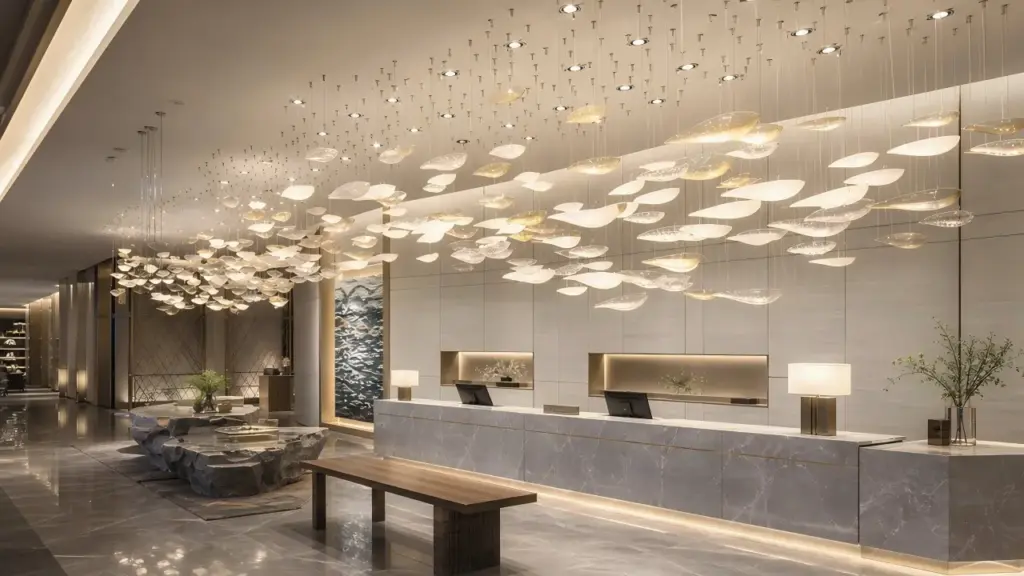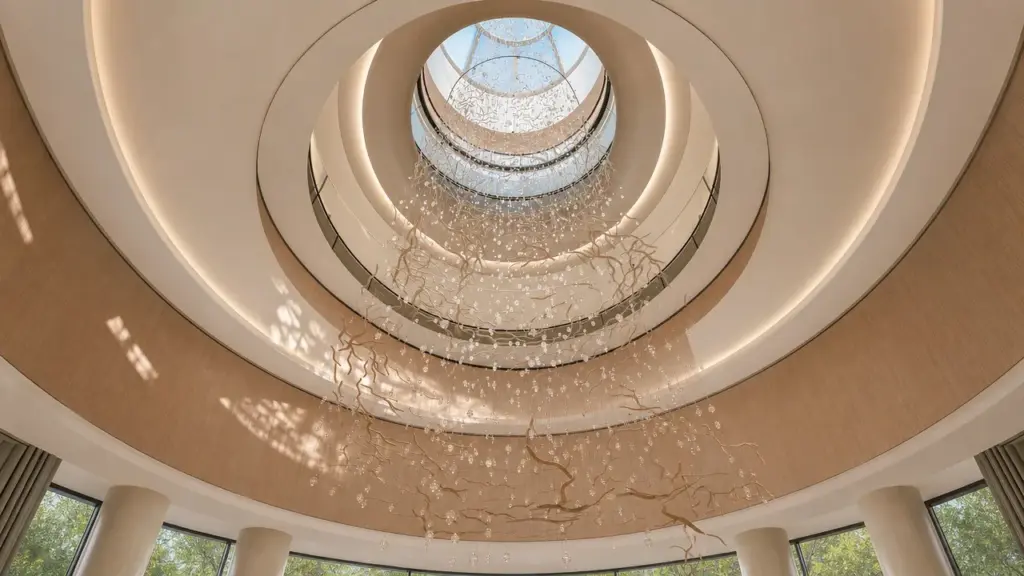
Eine Kronleuchterrenovierung in einem Luxushotel beginnt selten mit einer einfachen Produktfrage. Meist steht ein bestehender Raum unter Druck: Die Lobby wirkt müde, ein Ballsaal braucht neue Szenen, ein historischer Kronleuchter soll erhalten bleiben, oder eine Marke möchte nach einer Renovierung moderner wirken. Die falsche Entscheidung ist teuer in beide Richtungen. Ein vorschneller vollständiger Ersatz kann wertvolle Identität, Zeit und Budget zerstören. Ein zu defensives Retrofit kann dagegen alte Technik, schlechte Farbwiedergabe, Wartungsprobleme und schwache Markenwirkung konservieren.
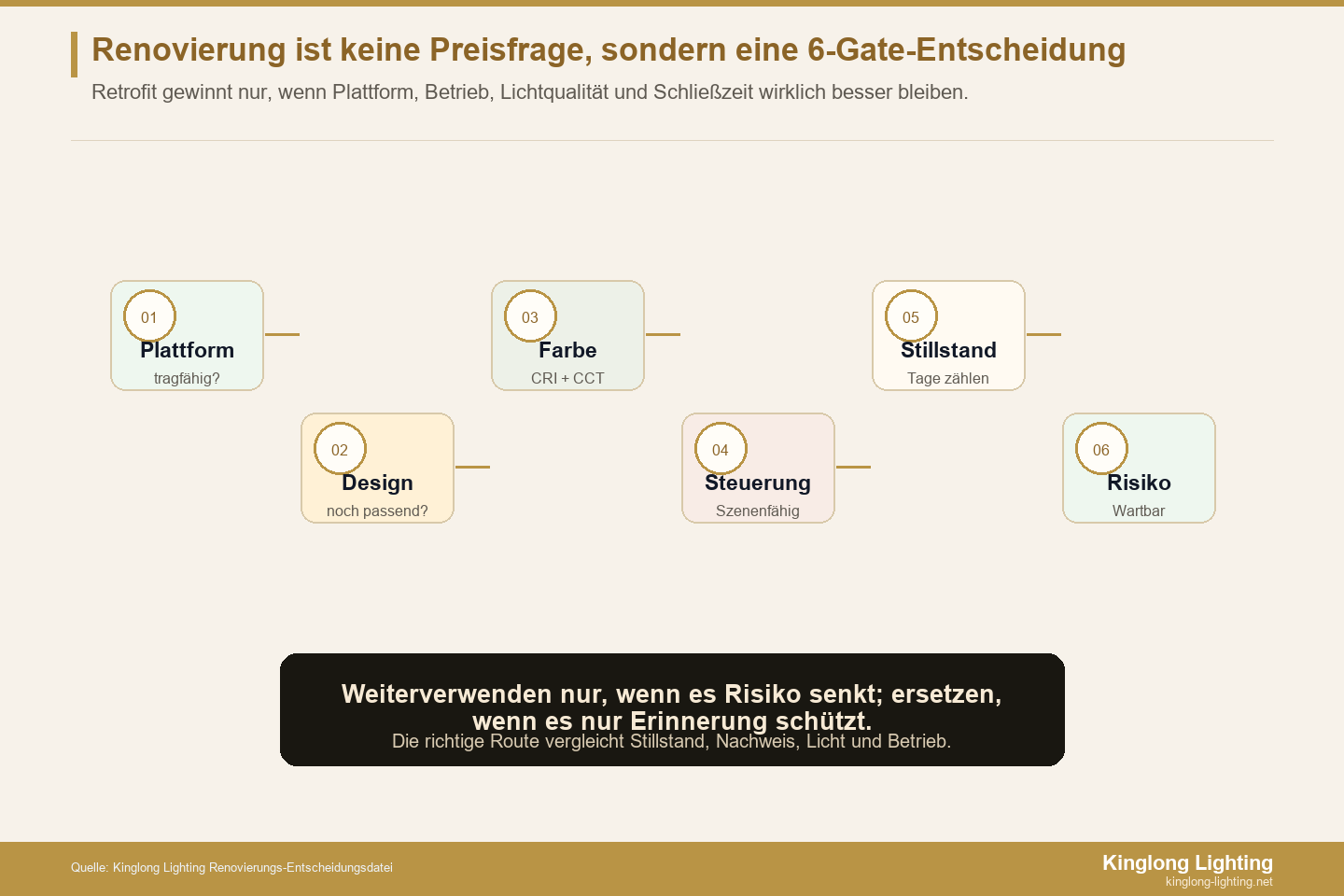
Die bessere Entscheidung entsteht aus sechs Gates: bestehende Plattform, Designstrategie, Lichtqualität, Steuerung, Stillstand und langfristiges Betriebsrisiko. Retrofit gewinnt, wenn das alte Objekt noch eine gute technische und emotionale Plattform ist. Vollständiger Ersatz gewinnt, wenn Raumstrategie, Marke, Lichttechnik oder Wartung so stark geändert wurden, dass Weiterverwenden nur noch Risiko versteckt.
Wichtigste Erkenntnisse
- Retrofit ist kein Sparreflex: Es lohnt sich nur, wenn Struktur, Proportion, Material und Wartungszugang noch tragfähig sind.
- Vollständiger Ersatz ist kein Luxusreflex: Er ist sinnvoll, wenn Raumstrategie, Deckenstruktur, Steuerung oder Markenanspruch grundsätzlich verändert wurden.
- Stillstand entscheidet oft stärker als Stückpreis: Eine billigere Route kann teurer sein, wenn Lobby oder Ballsaal länger geschlossen bleiben.
- Farbe und Steuerung machen Renovierung spürbar: Gäste merken schlechte CCT, flache Farbwiedergabe und grobe Dimmung schneller als technische Teams erwarten.
- Eine Renovierungsdatei schützt die Entscheidung: Fotos, Lasten, Muster, Treiber, Szenen, Kistenfolge und Wartung sollten vor Bestellung verglichen werden.
Die Entscheidung beginnt damit, was offen bleiben muss
Bei einer Luxushotel-Renovierung ist Schließzeit oft die härteste Randbedingung. Eine Lobby kann vielleicht abschnittsweise arbeiten, ein Ballsaal aber nur in kurzen Zeitfenstern zwischen Events. Ein historischer Kronleuchter kann emotional wichtig sein, aber Demontage, Reinigung, Neuverdrahtung und Wiedermontage können mehr Zeit benötigen als ein neuer modularer Kronleuchter. Deshalb muss die erste Frage lauten: Welche Räume, Wege und Umsätze müssen während der Renovierung offen bleiben?
Retrofit funktioniert, wenn der alte Kronleuchter noch eine gute Plattform ist
Retrofit ist stark, wenn der vorhandene Kronleuchter die richtige Größe, passende Proportion, sichere Struktur und wertvolle Materialidentität besitzt. Dann kann eine technische Erneuerung viel bewirken: LED-Umrüstung, neue Treiber, bessere CCT, gereinigte Kristalle, reparierte Metallteile, aktualisierte Dimmung und neue Szenen. Gäste erleben den Raum frischer, ohne dass das Hotel seine visuelle Erinnerung verliert.
Die Plattform muss jedoch auditierbar sein. Gewicht, Aufhängung, Korrosion, elektrische Leitungen, Kristallzustand, Ersatzteilverfügbarkeit und Zugänglichkeit gehören in die Prüfung. Ein Kronleuchter, der nur aus Nostalgie erhalten wird, aber keine zuverlässige Plattform mehr ist, verschiebt das Problem in die Zukunft.
Vollständiger Ersatz gewinnt, wenn sich die Raumstrategie geändert hat
Ein vollständiger Ersatz ist sinnvoll, wenn der Raum nicht mehr dieselbe Geschichte erzählen soll. Ein Ballsaal kann von klassisch-formal zu flexibler Eventnutzung wechseln. Eine Lobby kann nach Rebranding offener, lokaler oder luxuriöser wirken sollen. Eine Treppe kann neue Blickachsen bekommen. In solchen Fällen ist ein Retrofit oft zu eng, weil die alte Geometrie den neuen Raum weiterhin dominiert.
Auch technische Gründe können Ersatz erzwingen: fehlende Tragwerksfreigabe, unzugängliche Treiber, zu schlechte Dimmfähigkeit, starke Materialalterung, nicht mehr verfügbare Ersatzteile oder eine Form, die mit moderner Steuerung und Wartung nicht sinnvoll zusammenarbeitet. Dann ist ein neuer, modularer Kronleuchter nicht Verschwendung, sondern Risikoreduktion.
Retrofit und Ersatz nach Evidenz vergleichen, nicht nach Gewohnheit
Viele Projekte beginnen mit einer Präferenz: Der Eigentümer möchte behalten, der Designer möchte ersetzen, oder der Einkauf möchte den niedrigeren Erstpreis. Diese Präferenz sollte in eine Vergleichstabelle gezwungen werden. Erst wenn beide Routen mit denselben Kriterien bewertet werden, wird sichtbar, welche Lösung wirklich weniger Risiko trägt.
| Kriterium | Retrofit prüfen | Vollständigen Ersatz prüfen |
|---|---|---|
| Struktur | alte Aufhängung, Gewicht, Korrosion und Sicherung | neuer Lastpfad, Module, Anker und sekundäre Sicherung |
| Lichtqualität | CRI, CCT, Dimmkurve und Treiberkompatibilität im Bestand | neue LED-Spezifikation, Optik und Szenen von Anfang an |
| Marke | bestehende Identität bleibt glaubwürdig | neue Raumstrategie braucht neue Silhouette |
| Stillstand | Demontage, Werkstatt, Wiedermontage, Test | Vorproduktion, schnelle Montage, weniger Überraschung |
| Wartung | Ersatzteile und Zugang langfristig gesichert? | Module, Treiber und Ersatzteile neu dokumentiert |
Diese Tabelle verhindert, dass Retrofit automatisch als billig und Ersatz automatisch als teuer gilt. Manchmal ist Retrofit günstiger und schneller. Manchmal dauert es länger, weil alte Teile unvorhersehbar sind. Manchmal ist Ersatz teurer in der Anschaffung, aber stabiler im Betrieb. Die Evidenz muss entscheiden.
Die Tabelle sollte außerdem nicht nur als interne Planungsnotiz dienen. Sie gehört in die Freigabedatei, damit Eigentümer, Designer, Einkauf und Betreiber dieselben Risiken sehen. Wenn ein Team nur über Anschaffungspreis spricht, verschwinden Nachtarbeit, Gerüstzeit, Fahrstuhlblockierung, Ersatzteilbeschaffung, Musterwiederholung und spätere Wartung aus dem Gespräch. Gerade in Luxushotels entsteht der wirkliche Unterschied oft dort, wo die Gäste nichts sehen sollen: hinter der Decke, in der Treiberposition, in der Montagefolge und im Serviceplan. Ein sauberer Vergleich zwingt beide Routen, diese unsichtbaren Punkte offenzulegen.
Farbe und Steuerung entscheiden, ob Gäste die Renovierung fühlen
Viele Kronleuchterrenovierungen scheitern nicht an der Form, sondern an Lichtqualität. Wenn ein alter Kronleuchter mit neuen LED-Quellen zu kalt wirkt, verliert der Raum Wärme. Wenn die Farbwiedergabe schwach ist, wirken Stoffe, Stein und Gesichter flach. Wenn die Dimmung grob springt oder flackert, wirkt der renovierte Raum technisch. Für Luxushotels sind CRI 90 als Minimum, passende CCT und saubere Niedrigdimmung zentrale Freigaben.
Steuerung ist ebenso wichtig. Ein alter Kronleuchter, der früher nur ein- und ausgeschaltet wurde, muss heute vielleicht Lobby-Morgen, Abend, Event, Reinigung und Nachtbetrieb unterstützen. Wenn Retrofit diese Szenen nicht zuverlässig liefern kann, bleibt der Betrieb eingeschränkt. Wenn ein neuer Kronleuchter diese Szenen von Anfang an integriert, kann vollständiger Ersatz die bessere Gästewirkung liefern.
Die Musterprüfung sollte deshalb nicht bei einem einzelnen leuchtenden Modul enden. Retrofit- und Ersatzroute sollten unter denselben Materialproben, derselben Ziel-CCT und derselben Dimmkurve verglichen werden. Ein alter Kristall kann nach Reinigung sehr schön reagieren, aber mit falscher LED spektral flach wirken. Ein neues Modul kann im Musterraum überzeugend sein, aber im bestehenden Raum zu hell oder zu kalt erscheinen. Die Freigabe sollte Fotos, Video, Dimmwerte und Kommentare der Designseite enthalten, damit die Entscheidung nicht später als subjektiver Eindruck neu verhandelt wird.
Eine 6-Gate-Renovierungsdatei legt versteckte Kosten offen
Die 6-Gate-Datei macht Unsicherheit sichtbar. Gate 1 prüft die bestehende Plattform. Gate 2 prüft, ob die alte Designlogik noch zur neuen Marke passt. Gate 3 prüft Farbe und Farbwiedergabe. Gate 4 prüft Steuerung und Treiber. Gate 5 vergleicht Stillstand, Zugang und Montagefolge. Gate 6 bewertet langfristige Wartung. Ein Gate bleibt offen, bis ein Nachweis vorliegt.
Versteckte Kosten liegen oft zwischen den Gates. Ein Kronleuchter kann strukturell brauchbar sein, aber keine Ersatzteile haben. Eine neue Leuchte kann markenstark sein, aber eine längere Tragwerkskoordination brauchen. Ein Retrofit kann weniger Material kosten, aber mehr Nachtarbeit auslösen. Die Datei zwingt diese Kosten an die Oberfläche, bevor das Hotel Schließzeiten, Fracht oder Produktion freigibt.
Ein praktischer Weg ist, jedes Gate mit drei Statuswerten zu führen: bestätigt, offen oder blockierend. Bestätigt bedeutet, dass ein Foto, eine Zeichnung, ein Test, ein Muster oder eine lokale Prüfung vorliegt. Offen bedeutet, dass die Frage noch geklärt werden kann, ohne die Route zu kippen. Blockierend bedeutet, dass eine Entscheidung erst weitergehen darf, wenn ein Risiko gelöst ist. Diese einfache Statuslogik verhindert, dass ein optimistischer Terminplan eine ungeprüfte Decke, einen unbekannten Treiberweg oder eine nicht getestete Dimmung überdeckt.
Wie Kinglong Lighting eine Renovierungsentscheidung unterstützen kann
Kinglong Lighting kann eine Renovierung unterstützen, indem vorhandene Leuchten als Plattform geprüft und neue Optionen mit derselben Evidenzstruktur dargestellt werden. Für Retrofit sind Fotos, Maße, Gewicht, Aufhängung, Materialzustand, gewünschte CCT, Steuerung und Wartungszugang wichtig. Für Ersatz sind Raumpläne, Deckenhöhe, Blickachsen, neue Markensprache, Terminplan und Budgetrahmen entscheidend.
Der wertvollste Beitrag ist nicht nur ein Angebot, sondern ein Entscheidungsnachweis. Wenn beide Routen mit Bildern, technischen Daten, Musterlogik, Stillstand und Wartung verglichen werden, kann der Eigentümer bewusst entscheiden. Für komplexe Hotelrenovierungen ist eine frühe Projektabstimmung sinnvoll, bevor die falsche Route politisch oder budgetär festgelegt wird.
Bei Retrofit kann Kinglong Lighting zum Beispiel prüfen, ob eine bestehende Form durch neue Lichtquellen, gereinigte oder ersetzte Elemente, neue Treiber und eine servicefähige Verdrahtung wieder belastbar wird. Bei vollständigem Ersatz kann die neue Leuchte modularer geplant werden: kleinere Kisten, klarere Montagefolge, dokumentierte Ersatzteile, zugängliche Treiber und ein Lastpfad, der vor Produktion mit dem Projektteam abgestimmt wird. Der Nutzen entsteht, wenn beide Wege mit denselben Fragen beantwortet werden, statt dass eine Route nur ästhetisch und die andere nur technisch beschrieben wird.
Renovierungsübergabe vor der FAQ
Vor FAQ, Einkauf oder Auftrag sollte das Projektteam eine kurze Übergabe erstellen: bestehender Zustand, gewünschte neue Wirkung, offene Gates, empfohlene Route, Risiken, Schließzeit und nächste Nachweise. Diese Übergabe verhindert, dass spätere Gespräche wieder bei Geschmack anfangen. Sie zeigt, warum Retrofit oder Ersatz gewählt wurde und welche Bedingungen diese Wahl tragen.
Diese Übergabe sollte auch festhalten, welche Annahmen ausdrücklich nicht bestätigt sind. Wenn das Gewicht des alten Kronleuchters geschätzt wurde, muss das sichtbar bleiben. Wenn ein Treiberzugang erst nach einer Pilotöffnung bekannt wird, darf er nicht wie ein gelöster Punkt erscheinen. Wenn ein neues Design noch keine finale Musterfarbe hat, sollte der Einkauf nicht nur nach Stückpreis vergleichen. Die Übergabe ist damit kein bürokratischer Anhang, sondern ein Schutz gegen spätere Missverständnisse zwischen Design, Technik und Betrieb.
Verwandte Leitfäden
- Installations-Rework bei großen Hotel-Kronleuchtern vermeiden
- Beschaffungsrahmen für Hotelbeleuchtungsprojekte
- Hotel-Ballsaalbeleuchtung und Szenenplanung
Eine Renovierungsentscheidungsdatei sollte beweisen, wann Wiederverwendung kein Risiko mehr reduziert
Die folgenden Arbeitsregeln helfen, eine Renovierung sauber zu führen. Sie schützen nicht eine bevorzugte Route, sondern die Entscheidung selbst.
Den vorhandenen Kronleuchter als Plattform auditieren
Ein Plattformaudit umfasst Struktur, Elektrik, Oberfläche, Kristall, Glas, Treiber, Ersatzteile, Reinigung und Demontageweg. Die Frage lautet nicht, ob der Kronleuchter schön oder historisch ist. Die Frage lautet, ob er eine sichere, wartbare und lichttechnisch sinnvolle Basis für die nächsten Jahre bleibt.
Das Audit sollte den Kronleuchter nicht isoliert betrachten. Die Decke, die Wegeführung, der mögliche Lift, der Zeitpunkt der Renovierung, die Staubschutzanforderungen und die Räume unterhalb der Leuchte gehören dazu. Ein Objekt kann als Leuchte brauchbar sein, aber als Baustellenaufgabe ungeeignet. Umgekehrt kann ein neuer Kronleuchter visuell stärker sein, aber an einem engen Transportweg scheitern, wenn Module zu spät geplant werden. Plattform bedeutet deshalb immer: Objekt plus Raum plus Betrieb.
Kosmetische Auffrischung von funktionaler Erneuerung trennen
Reinigung, Politur und Ersatz einzelner Elemente können eine Leuchte sichtbar verbessern, lösen aber keine Steuerungs- oder Farbwiedergabeprobleme. Funktionale Erneuerung betrifft LED, Treiber, Dimmung, Verkabelung, Sicherung und Wartungszugang. Beide Ebenen müssen getrennt bewertet werden.
Diese Trennung hilft auch bei Budgetgesprächen. Eine kosmetische Auffrischung kann als schnelle sichtbare Maßnahme sinnvoll sein, wenn die Technik schon stabil ist. Eine funktionale Erneuerung kann dagegen Pflicht sein, auch wenn Gäste die neuen Treiber nie sehen. Wird beides vermischt, entsteht oft ein Mittelweg, der hübscher aussieht, aber die eigentlichen Betriebsprobleme nicht löst. Die Datei sollte deshalb klar sagen, welche Kosten Wirkung kaufen und welche Kosten Risiko reduzieren.
Stillstand vergleichen, nicht nur Kaufpreis
Ein niedrigerer Materialpreis kann durch längere Demontage, Werkstattarbeit und Wiedermontage verloren gehen. Ein neuer Kronleuchter kann höhere Anschaffungskosten haben, aber durch Vorproduktion und modulare Montage weniger Schließzeit verursachen. Für Hotels ist der Umsatzverlust oft entscheidend.
Die Route einfrieren, bevor das Hotel eine Schließung zusagt
Das Hotel sollte keine Schließzeit kommunizieren, bevor die Renovierungsroute technisch bestätigt ist. Offene Gates können Termine sprengen. Eine eingefrorene Route enthält Nachweise, Verantwortliche und die Bedingungen, unter denen ein Gate wieder geöffnet werden muss.
Ersatz als disziplinierte Option nutzen, nicht als Standard
Vollständiger Ersatz sollte nicht aus Bequemlichkeit gewählt werden. Er muss zeigen, warum Wiederverwendung kein Risiko mehr reduziert. Wenn er diese Begründung liefert, kann Ersatz die professionellere und langfristig günstigere Entscheidung sein.
Häufig gestellte Fragen
Ist ein Kronleuchter-Retrofit günstiger als vollständiger Ersatz?
Nicht immer. Retrofit kann günstiger sein, wenn Struktur, Material und Zugang gut sind. Es kann teurer werden, wenn Demontage, Werkstatt, Ersatzteile, Neuverdrahtung und längere Schließzeit hinzukommen. Entscheidend ist der Vergleich von Total Cost und Stillstand.
Wann sollte ein Hotel einen originalen Kronleuchter behalten?
Ein Hotel sollte ihn behalten, wenn er eine sichere Plattform bleibt, zur neuen Raumstrategie passt, wertvolle Identität trägt und mit moderner Lichtqualität sowie Steuerung erneuert werden kann. Nostalgie allein reicht nicht als Freigabegrund.
Welche Nachweise sollte ein Retrofit-Lieferant liefern?
Er sollte Zustand, Gewicht, Aufhängung, elektrische Sicherheit, LED-Spezifikation, Treiber, Dimmtest, Ersatzteile, Reinigungsweg und Montagefolge dokumentieren. Bei Luxushotels sollten auch Muster für CCT, CRI, Finish und Kristallwirkung geprüft werden.
Kann ein neuer Kronleuchter die alte Designsprache bewahren?
Ja, wenn Proportion, Material, Lichtfarbe und zentrale Motive bewusst übernommen werden. Ein neuer Kronleuchter kann historische Sprache modernisieren, ohne sie zu kopieren. Wichtig ist, die alte Identität als Designbrief zu übersetzen, nicht als starre Reproduktion.