Owners can avoid a rushed decorative-lighting supplier choice by defining the allowance’s scope, assigning unresolved decisions and working backward from installation dependencies. Keep the budget flexible where necessary, but do not postpone every technical and commercial question until the purchase order. An early shortlist can support design coordination without becoming an unconditional production commitment.
A lighting allowance is not a procurement plan
A budget allowance does not by itself establish the scope, interfaces or approvals needed to choose a decorative-lighting supplier. For an owner, the practical question is not simply whether money has been reserved. It is whether the team knows what that money is expected to buy, what remains undecided and who can resolve those decisions before other trades commit.
A provisional sum is money set aside for work that cannot yet be fully described and quantified for measurement. RICS NRM 2 distinguishes defined and undefined provisional sums according to the information supplied. Its defined-work description addresses the work, its building connections, its extent and specific limitations; incomplete information can leave the work undefined. This is a measurement framework, not a substitute for interpreting your signed contract. Ask the quantity surveyor or contract adviser how the allowance is treated in that project.
- Keep budget approval separate from technical readiness and authority to order.
- Shortlist against an explicit scope, with unresolved assumptions visible.
- Set decision dates around fixing, controls, samples and installation dependencies.
- Compare the same installed package, rather than matching fixture prices alone.
An allowance can be sensible when design is genuinely developing. The risk arises when “lighting to be selected later” has no next decision, responsible person or deadline. Then the owner discovers the constraint only when the ceiling package, wiring arrangement or opening programme leaves little room to choose.
Define the lighting package before comparing suppliers
For owner-led procurement, a useful allowance brief records fixture quantities, locations, interfaces, evidence and exclusions before bids are compared. It need not pretend the design is complete. It should distinguish confirmed information from assumptions so every shortlisted manufacturer prices the same unresolved questions.
Start with a fixture schedule linked to room names and drawing revisions. A description such as “public-area chandeliers” leaves substantial room for different interpretations: lobby features, restaurant pendants and ballroom installations can have different mounting, access and controls needs. Record the intended fixture groups, quantities, visual references, finish direction and any known size or weight limits. Where a dimension remains open, identify who will confirm it and what decision depends on it.
The interior designer should own the intended appearance, not silently inherit electrical or structural approval. The electrical designer defines the relevant supply and controls requirements. Structural and installation questions go to the competent project specialists. Procurement then distributes a coordinated brief and records bidder assumptions. The owner representative decides whether the remaining uncertainty is acceptable for the proposed commitment. One person can coordinate the register without being qualified to approve every technical entry.
Confirm fixture scope and installation interfaces
For each fixture group, describe where the luminaire attaches to the building, where its driver or power supply sits and how maintenance access works. These details can affect both product selection and work by other trades. An approved rendering may establish the desired appearance while leaving the fixing arrangement entirely unresolved.
CIBSE LG14 considers consultation, design, specification, commissioning and handover of lighting controls. For the allowance brief, this makes a useful distinction: specifying a dimming label does not describe the whole controls task. Record who supplies drivers, who coordinates the controls interface and who will demonstrate the intended scenes.
If a ceiling detail is already approaching approval, flag an unknown mounting load or inaccessible driver location immediately. Ask the relevant designer to resolve it before the ceiling commitment, rather than assuming the eventual supplier can accommodate whatever is built. The issue is a dependency, not a reason to buy an unconfirmed fixture quickly.
Specify product evidence and controls responsibilities
The allowance brief should identify the product documents the project team needs to evaluate a proposed fixture, and when those documents will be reviewed. Agree the relevant drawings, material samples, product test evidence and controls information with the project’s technical advisers. Do not turn a general certification logo into a promise that every custom configuration is suitable for the destination market.
IEC 60598-1:2024 addresses general luminaire safety requirements and tests. Its relevance here is the subject of the evidence: the luminaire, not just an attractive finish sample. The applicable standards, national requirements and evidence for the proposed product still need confirmation by the project’s qualified advisers.
The DALI Alliance product database lists certified components, not luminaires. A listed driver can therefore help verify a component claim, but it does not establish the complete decorative fixture’s safety or prove the installed system will deliver the desired scenes. Ask the electrical and controls teams what they will check and witness for the proposed combination.
Work backward from installation, not the purchase order
A useful procurement rule is to close installation interfaces before selecting a supplier against an allowance. Treat that as the basis for a firm award, not a ban on earlier manufacturer discussions. Kinglong Lighting’s hospitality lighting capabilities provide a starting point for reviewing hotel spaces and design-to-production needs; ask which inputs and responsibilities apply to your specific package.
The RIBA Plan of Work describes technical design as completing the information needed to manufacture and construct, with responsibilities influenced by procurement strategy. This supports assigning the lighting information explicitly, whether it comes from the design team or a specialist. It does not establish a standard lead time for custom chandeliers.
Begin with the installation milestone and work backward through site readiness, delivery, manufacture, approved drawings and samples, technical review and supplier selection. Obtain actual durations and their starting conditions from the shortlisted manufacturers and responsible project teams. “Production after approval” is incomplete if nobody has scheduled the approval or allowed for a rejected sample. Likewise, a delivery date is not useful if access, storage or receiving arrangements remain unassigned.
- Brief ready: issue the same fixture schedule, interfaces and open-question register to prospective suppliers.
- Shortlist ready: establish feasible options, evidence availability, commercial assumptions and approval dependencies.
- Award ready: confirm the agreed scope, responsible parties, exclusions, programme and authority to commit.
- Production ready: release the agreed drawings, samples and configurations through the project’s approval process.
Early engagement can be limited to feasibility discussions or a separately authorized design-development task. Record what that engagement permits, what it costs and what it does not authorize. A preliminary selection should not be mistaken for permission to purchase materials or commence manufacture. Where the programme relies on such a commitment, the owner needs a conscious commercial decision rather than an assumption embedded in an email.
Escalate when an unresolved lighting decision would change an imminent building commitment. The project manager can then resequence the dependency, authorize further investigation or bring the owner a bounded decision. Merely asking the supplier to “confirm faster” cannot resolve missing structural or controls information.
Compare the same installed scope against the allowance
An apparent saving is credible only after procurement identifies the missing scope and compares bids on the same basis. A lower fixture price can be a valid advantage; it can also omit samples, drivers, packaging, installation assistance or commissioning that another bidder has included. Keep those differences visible before recommending a supplier.
For bespoke work, Kinglong Lighting’s custom lighting manufacturing process helps frame questions about drawing review, samples and manufacturing. Ask for project-specific inclusions rather than importing a generic capability description into the contract. In particular, distinguish installation guidance from physical installation, and a sample approval from approval of the complete building interface.
| Comparison item | Question to resolve | Responsible review |
|---|---|---|
| Fixture scope | Same quantities, dimensions, finish and configuration? | Designer and procurement |
| Design development | Which drawings, samples and revisions are priced? | Designer and manufacturer |
| Building interfaces | Who supplies supports, drivers, wiring and access? | Project technical team |
| Delivery and installation | Same delivery basis, packaging, site work and assistance? | Procurement and contractor |
| Completion | Who handles scene testing, documents and operator handover? | Controls team and operator |
| Commercial adjustments | What exclusions, taxes, mark-ups and change rules apply? | Quantity surveyor or contract adviser |
Request aligned bids or show the identified differences separately; do not rank an incomplete quotation as the lowest total cost. Where a missing item cannot yet be priced, carry it as a visible uncertainty rather than entering zero. Compare that normalized scope with the allowance, then separate a genuine price gap from a scope gap.
CIBSE’s lighting commissioning guidance covers controls, interfaces with other services and handover. Those completion activities explain why the commercial review should extend beyond delivered hardware. Decide which party prices and performs them; citing the guidance does not assign responsibility to a manufacturer automatically.
If comparable bids exceed the allowance, the owner has a design-and-budget decision, not simply a negotiation problem. Review which visual characteristics matter most, which interfaces are fixed and which fixture groups can be simplified without compromising the agreed intent. Give bidders the same revised brief. Otherwise, successive discounts may describe different products and leave the owner unable to explain the eventual recommendation.
An illustrative hotel package: separate what can proceed
An illustrative package can contain both scoped and unresolved fixture groups; approval can follow those boundaries rather than the package label. Separating the groups helps the owner choose the next action without assuming that every fixture is equally ready or that a partial approval resolves the remaining work.
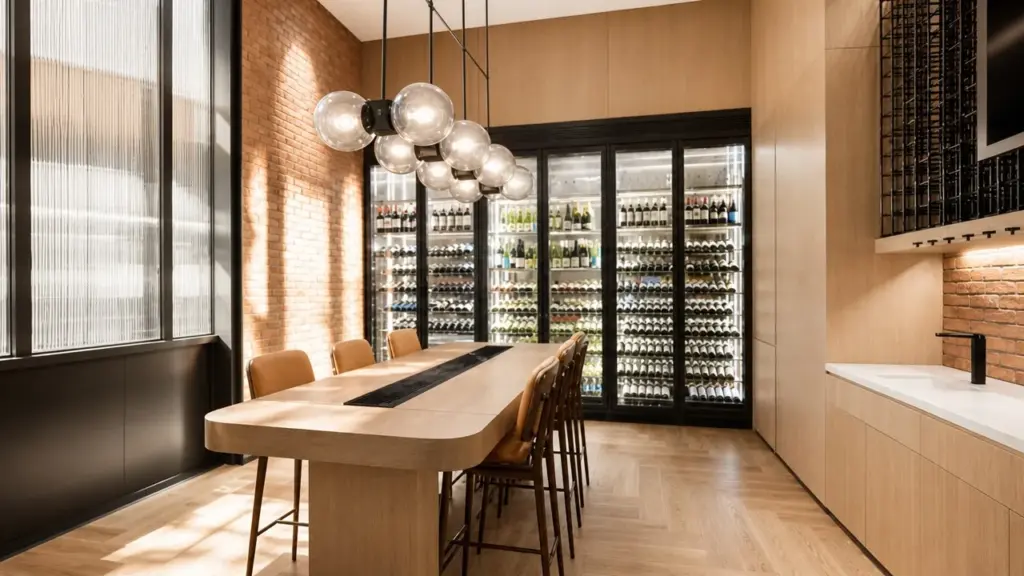
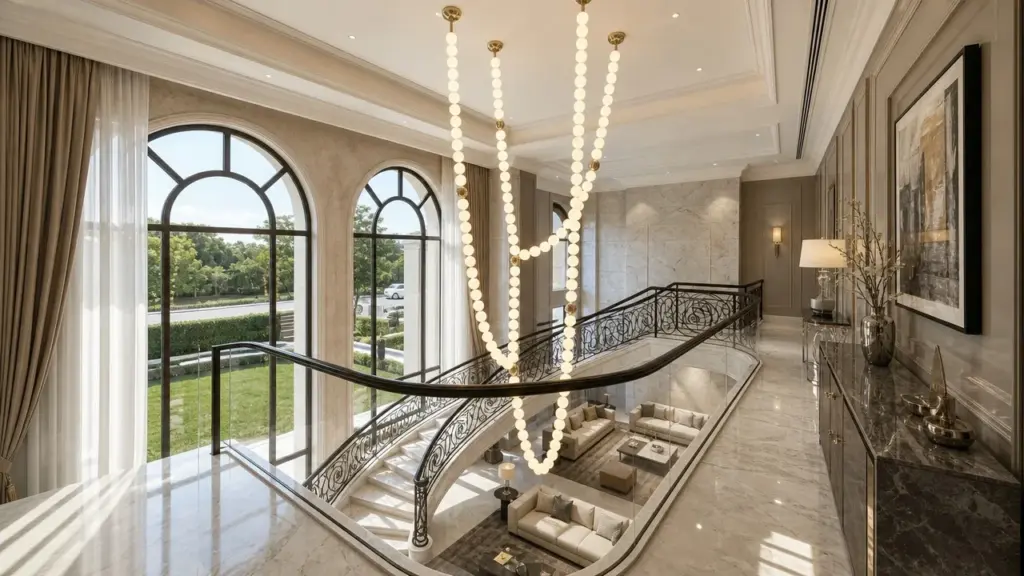
Visual references help describe the intended character, but cannot verify the fixing or controls arrangements for your package. Use images to start the conversation, then request relevant records before treating a reference as evidence of comparable scope. For a visual starting point, review the project showcase.
Three chandeliers remain unresolved; twelve sconces can proceed
Consider an illustrative hotel public-area refurbishment with 15 decorative fixtures: 3 feature chandeliers and 12 wall sconces. These are assumed quantities, not a Kinglong project record. The sconce locations, dimensions, finishes and mounting details are confirmed. The chandeliers have an approved appearance, but the ceiling loads and driver locations remain open. The owner has approved a package allowance, while the contractor needs coordinated ceiling information.
In this illustrative package, the 12 scoped sconces can progress independently while the 3 unresolved chandeliers await coordinated interface decisions. That assumes the project team confirms the groups have no unresolved shared dependency and that a separate commitment is commercially permitted. Procurement can advance the sconce approval against its agreed specification, rather than freezing every item or prematurely releasing the chandeliers. The owner retains a chandelier shortlist and asks the technical team to close the load and driver questions before an unconditional award.
The electrical and structural designers resolve the open interfaces with the contractor and candidate manufacturers. Procurement issues the same revised chandelier scope to each bidder, including the drawing revision, supports responsibility and driver arrangement. Before award, the owner representative checks the coordinated information, quotation inclusions and milestone dependencies together. If any of those still conflict, the affected chandelier decision remains open. The example illustrates a staged buying method; it predicts neither a saving nor a delivery result, and any partial order still follows the project’s actual authorization and contract procedures.
Use a provisional-sum risk checklist before award
Use the checklist to assign each unresolved decision to a named owner before it affects a dependent commitment. If the issue is missing scope, resolve that first; changing materials will not clarify who supplies the supports or programs the controls. If the remaining issue is a like-for-like budget gap, the decorative lighting value-engineering guide can support a structured review of design and commercial trade-offs.
- Allowance basis — quantity surveyor: Is its contractual treatment clear? Escalate an unexplained assumption about valuation, mark-ups or included work to the contract adviser before presenting a firm recommendation.
- Fixture schedule — designer: Are groups, quantities, locations and drawing revisions aligned? Pause the affected comparison when bidders are working from different schedules.
- Fixing and access — technical team: Are supports, loads and maintenance arrangements coordinated? Escalate before a ceiling or structural commitment makes a proposed fixture impractical.
- Electrical and controls — electrical designer: Are supply, drivers, dimming interfaces and test responsibilities stated? Retain the affected item as unresolved when a compatibility assumption replaces review.
- Product evidence — technical approver: Does the proposed configuration have the documentation needed for this market and project? Do not treat a component listing or company logo as complete product evidence.
- Commercial comparison — procurement: Are delivery, samples, installation-related work and handover inclusions comparable? Ask for clarification before a missing cost becomes an apparent saving.
- Programme and authority — owner representative: Are approval dates realistic and commitments authorized? Escalate when the next required decision has no responsible approver or would miss a dependent milestone.
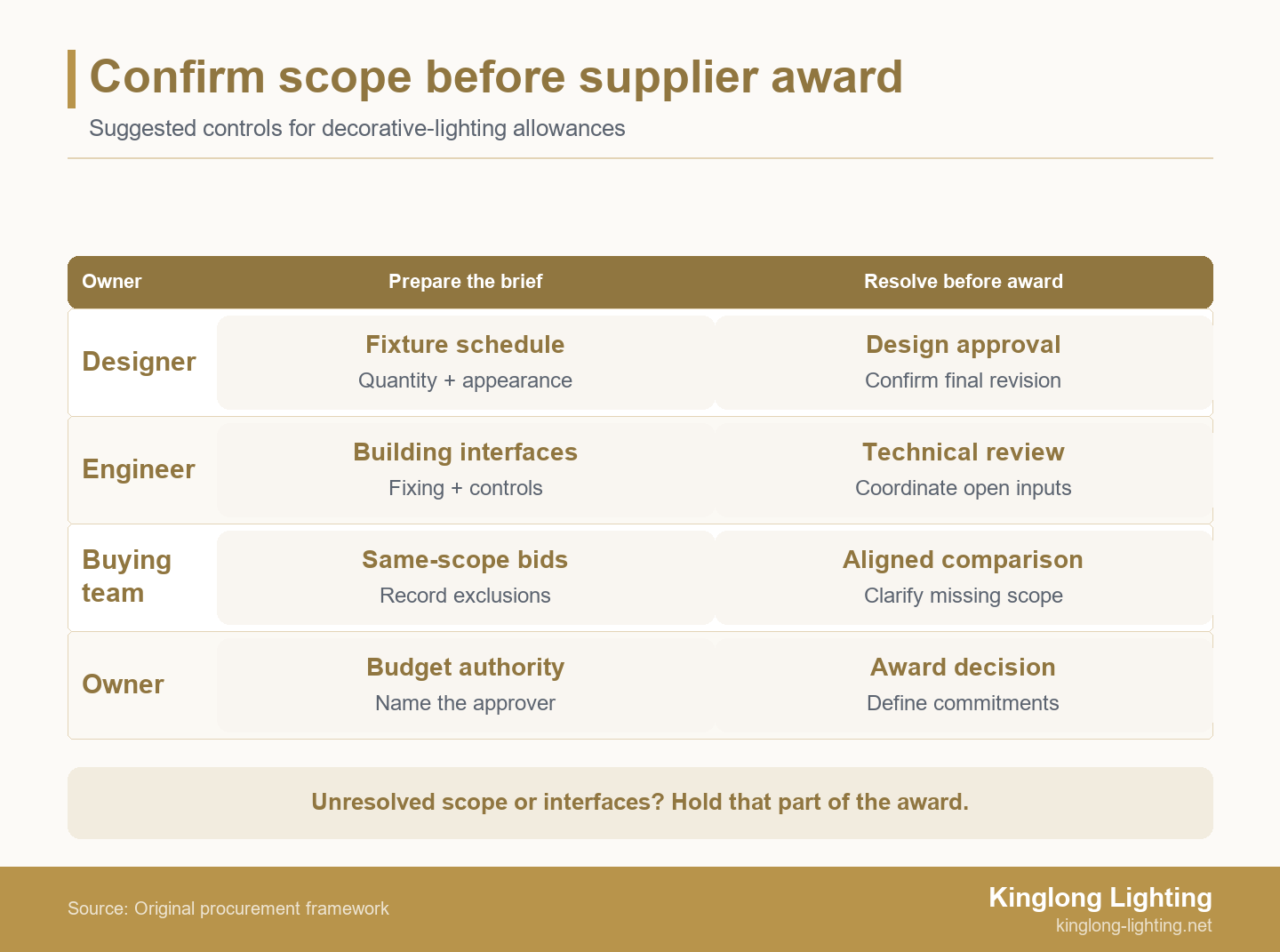
Use red flags to distinguish an investigation from a commitment. A missing sample decision may call for design review; an unresolved load requires specialist coordination; an unpriced exclusion requires commercial clarification. Each needs a different response. Record the next action, responsible person, needed evidence and decision date in the project register. Closing an issue means the relevant information has been reviewed, not merely that a supplier has replied.
The award recommendation can then state what is agreed, what remains conditional and which responsibilities stay with other parties. Where a group cannot proceed, explain the consequence and the permitted alternative: resequence, narrow the commitment or defer that group. This gives the owner an intelligible choice instead of presenting urgency as proof that the only available supplier is the right one.
Take a fixture schedule and the unresolved-item register into the next supplier discussion; the aim is a scope everyone can evaluate, not just a price that fits the current allowance. To prepare further specification and procurement questions, review the lighting resources.
Questions owners ask about lighting provisional sums
Can the owner shortlist suppliers before the final design?
Yes, an owner can shortlist suppliers against a bounded brief while explicitly reserving unresolved design and commercial approvals for a later decision. State whether the engagement is feasibility discussion, paid development or a purchase commitment. A shortlist should identify what each candidate can evaluate and what information is still needed. It should not imply exclusivity, authority to manufacture or acceptance of unconfirmed interfaces.
Does a provisional sum guarantee that installation is included?
No, installation coverage depends on the actual contract and pricing documents, so the owner should obtain a clear inclusion and responsibility statement. Check physical installation, supports, access equipment, electrical connection, assistance and commissioning separately. “Installation support” can mean something different from undertaking site work. Ask the project’s contract adviser to resolve unclear allocation; do not infer coverage from the allowance’s title or a manufacturer’s general service page.
Should every provisional sum become a fixed price immediately?
No, forcing a fixed price while material scope remains unresolved can merely hide assumptions rather than give the owner a reliable commitment. A better sequence is to close the inputs that materially affect the quotation, preserve any genuine remaining uncertainty and agree how changes will be handled. If an earlier commitment is commercially necessary, identify its scope, conditions and authorization explicitly instead of calling an incomplete package fully settled.