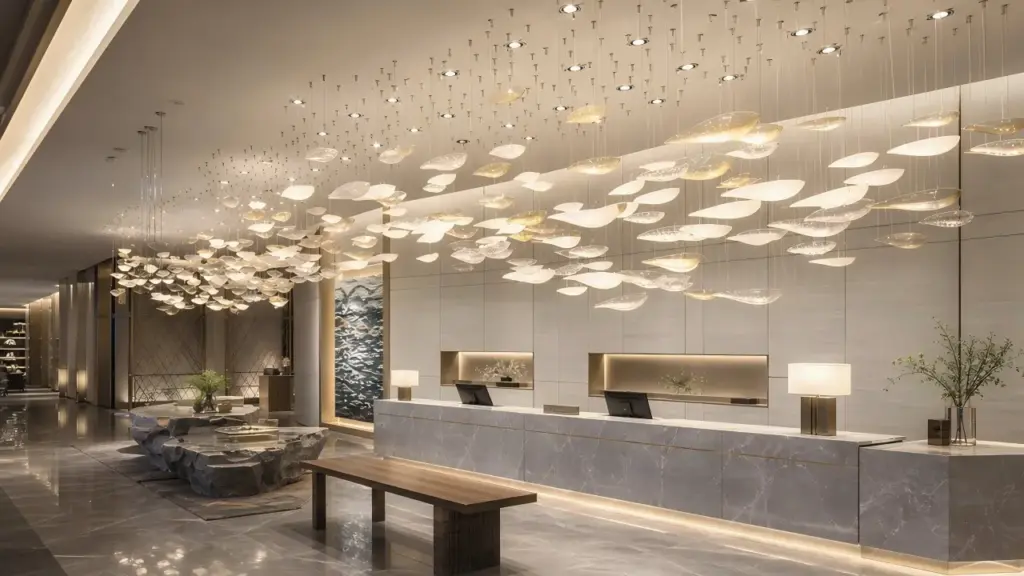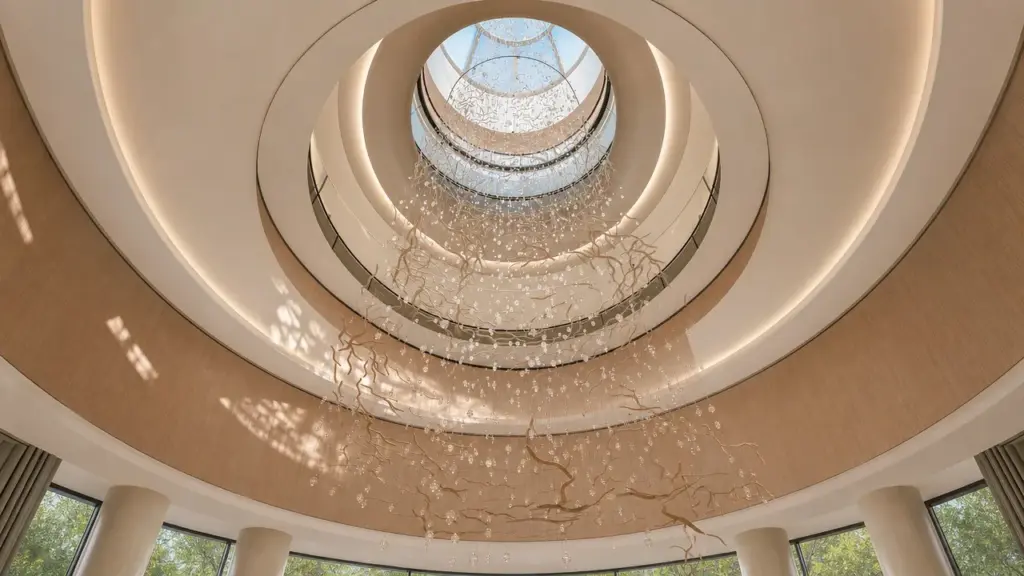
La aprobación de la maqueta de la lámpara de araña no debería publicar las especificaciones finales del hotel porque la muestra se ve hermosa; debería publicarlos porque se han cerrado las pruebas de escala, acabado, calidad de la luz, estructura, control, acceso y embalaje. La maqueta es el último momento económico para exponer un error. Una vez que comienza la producción, el mismo error se convierte en una revisión del dibujo, un problema de transporte, un retraso en el sitio o un compromiso con el cliente.
Para una lámpara de araña de hotel personalizada, la aprobación es un traspaso gestionado entre la intención del diseño y la realidad de la fabricación. El diseñador quiere atmósfera, verdad material y proporción. El propietario quiere control de costes y visibilidad de riesgos. El contratista quiere un dispositivo que llegue al sitio en un paquete edificable. El fabricante necesita una lista de materiales cerrada, una ruta de prueba, un control de acabado y una secuencia de instalación. Un buen proceso de aprobación de una maqueta de lámpara de araña convierte esas necesidades en competencia en evidencia con nombre en lugar de un debate sobre gustos.
Conclusiones clave
- Etapa de aprobación: Trate la maqueta como un punto de control de liberación, no como una muestra decorativa.
- Siete pruebas: Escala cercana, acabado, calidad del color, estructura, controles, acceso y logística antes de la producción.
- La evidencia primero: Adjunte fotografías, medidas, referencias de acabados, datos de pruebas, revisiones de dibujos y abra comentarios en el mismo archivo de aprobación.
- Control de cambios: Cualquier revisión posterior a la maqueta debe indicar si cambia el costo, el tiempo de entrega, las pruebas, el embalaje o la instalación.
- Rol del proveedor: Kinglong Lighting puede admitir maquetas de hoteles personalizadas con dibujos, visualización 3D, coordinación de muestras y transferencia de producción.
Por qué la maqueta es una etapa de salida, no una muestra de estado de ánimo
La maqueta fallida más cara no es una muestra fea. Es una bella muestra que esconde una decisión de producción no resuelta.
La frase “aprobación de maqueta” a menudo suena visual, pero la aprobación de la lámpara de araña de un hotel es en parte ingeniería, en parte adquisiciones y en parte gestión de marca. La biblioteca de Iluminación IES ayuda a enmarcar esto porque las decisiones sobre iluminación se encuentran dentro de un amplio cuerpo profesional de orientación de aplicaciones, controles, mantenimiento y prácticas de diseño. Ese contexto es importante porque una lámpara de araña en el vestíbulo de un cinco estrellas no es una decoración aislada. Interactúa con la iluminancia, el deslumbramiento, la apariencia del color, las escenas de control, la coordinación del techo y el acceso de mantenimiento.
El riesgo escondido en una muestra perfecta
Una muestra puede parecer correcta bajo la luz de la sala de exposición y aun así no ser la adecuada para el hotel. La densidad del cristal puede ser demasiado pesada para el soporte de techo aprobado. El acabado metálico puede parecer más cálido a 2700 K que a 3000 K. El driver puede encajar en la florón de muestra pero entrar en conflicto con el panel de acceso final. La caja de envío puede proteger un módulo de 1 m pero no un anillo ensamblado de 5 m. El riesgo es una brecha de responsabilidad: cada parte ve un objeto atractivo, pero nadie ha cerrado la cadena desde la aprobación del diseño hasta la instalación.
El alcance de la maqueta debe incluir los sistemas invisibles.
La revisión de muestra debe cubrir las partes que los invitados no ven. Las preguntas frecuentes sobre DOE TM-30 ayuda a enmarcar esto porque la evaluación del color moderna utiliza más de una puntuación familiar, por lo que la apariencia del color debe revisarse con un método y un objetivo designados, no de memoria. La Concepto de luz WELL v2 también refuerza que la luz afecta el confort visual y la experiencia humana. Por lo tanto, la maqueta debe registrar la elección del driver, el comportamiento de atenuación, el material óptico, el color objetivo, el riesgo de deslumbramiento y la ruta de mantenimiento, no sólo el acabado decorativo.
Las siete aprobaciones que los diseñadores deben cerrar
Según nuestro análisis, un paquete de maqueta de 7 etapas es el conjunto de control mínimo práctico para una lámpara de araña de hotel personalizada porque cada etapa protege un costo posterior diferente. Si quedan dos etapas sin resolver, el expediente no está completo en un 71 por ciento de manera útil; está bloqueado en el punto donde la etapa faltante aún puede obligar a volver a trabajar. Es por eso que el formulario de aprobación no debe ofrecer una línea de firma. Debería exponer qué etapa se acepta, se acepta condicionalmente o aún está abierta.
| Etapa de aprobación | Lo que comprueba el diseñador | Pruebas para adjuntar | Liberar riesgo si se omite |
|---|---|---|---|
| Escala | Diámetro, caída, línea de visión, densidad. | Vista 3D, plano del techo, sección de la habitación. | La luminaria domina o desaparece en el volumen del vestíbulo. |
| Finalizar | Tono metálico, claridad del vidrio, textura. | Muestra física, código de acabado, foto aprobada. | Diferentes lotes producen discrepancias visibles |
| Calidad del color | CCT, reproducción cromática, impresión de haz | Registro de nota fotométrica, lámpara o módulo LED | El material luce opaco después de la instalación. |
| Estructura | Suspensión, florón, ruta de carga del techo. | Plano de taller, nota de peso, detalle de fijación. | Refuerzo tardío o rediseño del techo. |
| Controles | Curva de atenuación, escenas, acceso del driver. | Protocolo de control, tabla de escena, ubicación del driver. | Escenas parpadeantes, con zumbidos o inestables |
| Mantenimiento | Limpieza, sustitución de módulos, alcance. | Croquis de acceso, lista de repuestos, secuencia de limpieza. | Un hermoso artefacto se vuelve costoso de mantener |
| Logística | Tamaño del módulo, caja, recorrido de elevación, orden de instalación | Plano de embalaje, recuento de cajas, ruta del sitio | Daño o retraso en el sitio después de la entrega |
La conclusión es simple: la aprobación del modelo sólo tiene sentido cuando cada elemento verificado tiene un documento coincidente. Un “aprobado” verbal es débil. Un dibujo marcado, un conjunto de fotografías fechadas, una referencia de acabado, una nota de rendimiento y un archivo de revisión de producción crean un registro de decisiones a partir del cual la fábrica puede construir y el equipo del proyecto puede defender.
Cree un paquete de aprobación controlado
El paquete de aprobación debe ser lo suficientemente breve para los diseñadores ocupados y lo suficientemente estricto para las adquisiciones. La primera página registra el nombre del proyecto, el código del dispositivo, la fecha de la maqueta, la versión de muestra, el revisor responsable y el estado de aprobación. La segunda página contiene fotografías en condiciones de iluminación acordadas. La tercera página captura los comentarios por etapa: aceptados, revisados o no aplicables. La cuarta página enumera el dibujo y la versión de la lista de materiales que utilizará la producción.
Un sólido paquete de aprobación también nombra al propietario de la decisión para cada etapa. No se debe obligar al diseñador a aprobar el acceso del driver. No se le debe pedir al ingeniero que juzgue la calidez decorativa sin una referencia de acabado. No se debe dejar que el departamento de adquisiciones interprete si un comentario sobre el diseño cambia el costo. Cuando cada etapa tiene un propietario responsable y un elemento de prueba requerido, el equipo del proyecto puede aprobar rápidamente sin desdibujar la responsabilidad. Ésta es la diferencia entre una reunión hermosa y una versión de fabricación utilizable.
Para las lámparas de araña personalizadas, ese registro de propiedad también es útil meses después, cuando un contratista pregunta por qué se eligió una cubierta, una longitud de cristal o una ubicación para el driver.
Calculado a partir de una revisión de 7 etapas: 1 etapa logística sin resolver / 7 etapas = 14,3 por ciento de la lista de verificación, pero aún así puede afectar el 100 por ciento del tiempo de instalación porque la lámpara no se puede recibir, levantar o ensamblar de manera segura si la caja y la ruta del sitio son incorrectas. Es por eso que nunca se debe aprobar una maqueta con “la logística se confirmará más adelante” a menos que la orden de producción se mantenga explícitamente antes de la liberación del embalaje.
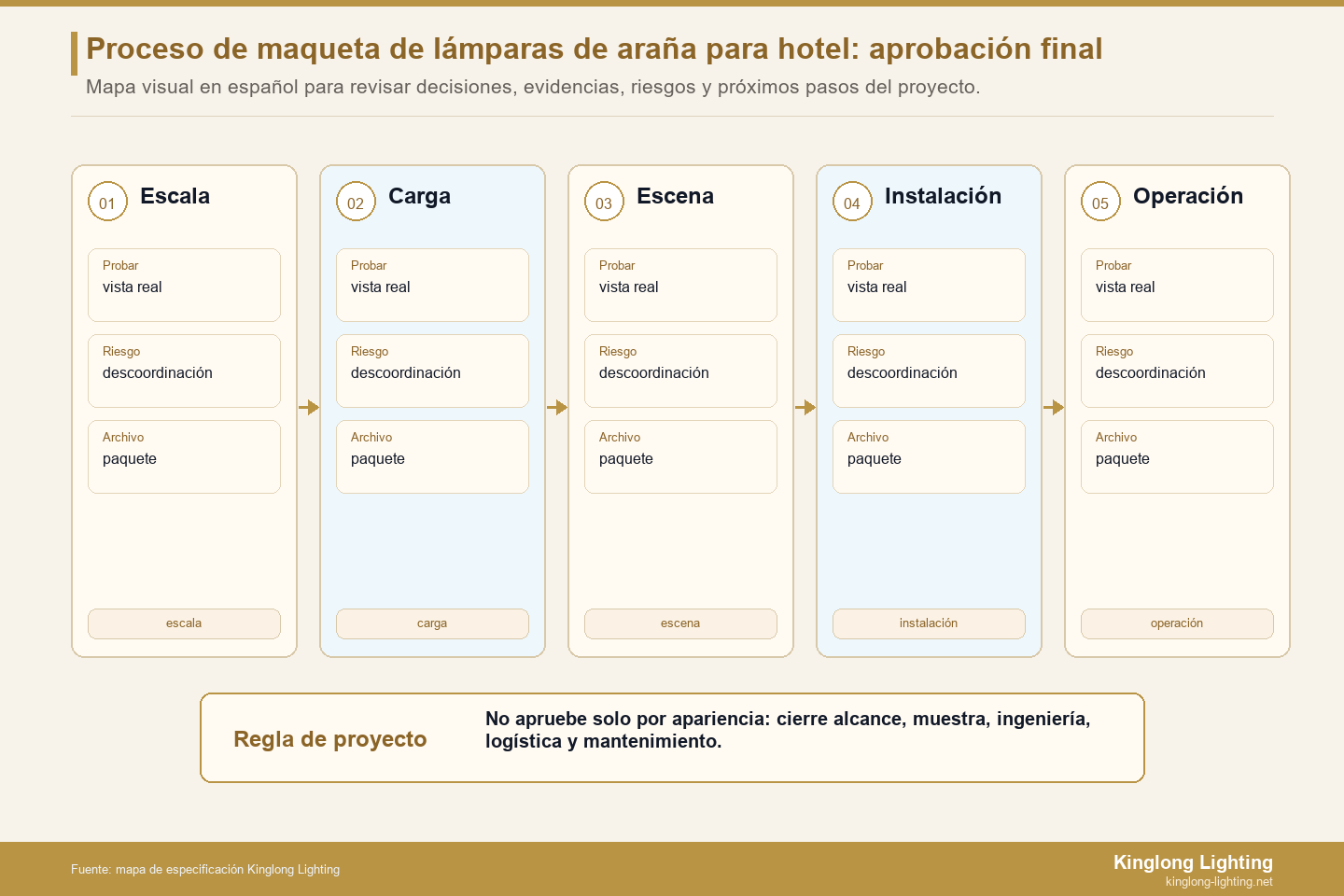
Conecte la aprobación con las pruebas, los controles y los requisitos de destino
La aprobación de la maqueta no reemplaza la evidencia del producto. Le indica al equipo qué versión se debe probar, comprar, empaquetar e instalar. Para la revisión de seguridad y mercado de destino, fuentes oficiales como Pruebas y certificación de luminarias UL y el Familia estándar de luminarias IEC 60598 Muestre por qué la evidencia del producto debe coincidir con la configuración real del dispositivo. Para la operación del edificio, Norma ANSI/ASHRAE/IES 90.1 proporciona energía y controla el contexto que puede afectar la intención de control de la lámpara.
El mecanismo es el control de cambios. Si el diseñador cambia la longitud del cristal después de la maqueta, eso puede alterar el peso, el brillo, el embalaje o el tiempo de instalación. Si la adquisición cambia un driver, eso puede alterar el comportamiento de atenuación o la evidencia de certificación. Si el contratista del techo mueve un panel de acceso, el mantenimiento puede resultar poco práctico. Por lo tanto, cada cambio posterior a la maqueta debe etiquetarse como solo visual, que afecta el rendimiento, la estructura, los costos o el cronograma.
Cómo apoya Kinglong Lighting el traspaso
Kinglong Lighting resulta más útil cuando el archivo de maqueta se convierte en una herramienta de producción. La flujo de trabajo de personalización puede conectar dibujos de proyectos, muestras de materiales, decisiones de acabado y requisitos de producción. La Plataforma de diseño Mofun puede admitir la revisión de escala y composición antes de bloquear una muestra física. Para proyectos hoteleros, Kinglong Lighting debe recibir los requisitos de la marca del hotel, la información del techo, el CCT deseado, la referencia de acabado, los requisitos de control y las restricciones de instalación antes de la aprobación final.
El siguiente paso suave es específico. Envíe los comentarios marcados de la maqueta, la revisión del dibujo, la referencia de acabado, el mercado de destino y la ventana de instalación a través del consulta de araña personalizada. Solicite un paquete de aprobación de producción que indique la versión de muestra aprobada, las exclusiones abiertas, la ruta de prueba, el plan de embalaje y el contacto responsable. Esa solicitud agiliza la aprobación porque elimina la ambigüedad antes de que comience la fabricación.
Guías relacionadas
- Marco de adquisiciones de iluminación para hoteles
- Retrabajo de la instalación de lámparas de araña de hoteles grandes
- Sorpresas en el costo total de la lámpara de araña del hotel
Tarjeta de acción de aprobación de maqueta
- Abra la revisión con el código exacto del dispositivo, la versión del dibujo y la versión de muestra.
- Registra las decisiones de las 7 etapas: escala, acabado, color, estructura, controles, acceso y logística.
- Adjunte fotografías, muestras, medidas y comentarios abiertos en un paquete de aprobación con fecha.
- Marque cada cambio posterior a la maqueta como que afecta visualmente, el rendimiento, la estructura, el costo o el cronograma.
- Envía el paquete aprobado a Kinglong Lighting antes de la aprobación de producción.
Un archivo de maqueta de lámpara de araña de hotel debe definir exactamente lo que se aprueba.
Una maqueta no es una muestra decorativa de ambiente. Es una etapa de aprobación que debería indicarle al equipo del proyecto qué versión puede avanzar hacia los dibujos, las pruebas, la compra, el embalaje y la instalación. Si la maqueta sólo confirma que un acabado parece atractivo, el archivo sigue siendo débil. La aprobación debe indicar qué se aprobó, qué es condicional, qué falló y qué aún necesita evidencia antes de que comience la producción.
Definir la autoridad de la maqueta.
El archivo debe indicar si la maqueta aprueba únicamente la apariencia, el rango de acabado, el comportamiento de la fuente, la atenuación, el tamaño del módulo, los supuestos de instalación o la aceptación del propietario. Estas son decisiones diferentes. Un diseñador puede aprobar el acabado mientras el ingeniero aún necesita detalles sobre el peso y la suspensión. Un propietario puede aprobar el aspecto mientras el instalador aún necesita las dimensiones de la caja y la ruta de elevación. Un buen archivo de maqueta evita que esas decisiones se colapsen en una línea de firma.
Registre muestras fallidas como evidencia útil
Las muestras fallidas deben permanecer en el registro porque explican lo que rechazó el equipo. Un acabado puede ser demasiado amarillo, un tono demasiado opaco, un cristal demasiado nítido o un rango de atenuación demasiado estrecho. Estos fallos ayudan al proveedor a evitar repetir el mismo camino y dan al comprador una razón para la selección final. Kinglong Lighting puede utilizar notas de muestras fallidas para refinar la lógica del material, acabado, CCT, driver, suspensión o módulo antes de bloquear el plano de producción.
Conecte la aprobación con los planos y la logística
La maqueta aprobada debe conectarse directamente con los planos de taller, la lista de materiales, las fotografías de muestra, las notas de control, los supuestos de instalación, el diseño de la caja y la ruta del sitio. La revisión de las 7 etapas es importante porque una etapa logística no resuelta puede bloquear toda la instalación incluso si el dispositivo parece perfecto. Si el embalaje, el acceso o la elevación aún están abiertos, el archivo debe indicar si la producción se mantiene antes de la liberación del embalaje.
Evite la deriva posterior a la maqueta
Después de la aprobación del modelo, los cambios deben clasificarse. Algunos son refinamientos cosméticos. Algunos reabren la ingeniería, las pruebas, los costos o el cronograma. El archivo debe nombrar quién puede aprobar cada clase de cambio. Sin ese límite, un ajuste tardío o un cambio de densidad pueden enviarse por correo electrónico y alterar silenciosamente la versión que todos pensaban que estaba aprobada.
El paquete de maqueta final debe incluir fotografías, etiquetas de muestra, comentarios abiertos, CCT y notas de atenuación, revisión del dibujo, supuestos de instalación, estado de logística y aprobación del propietario. Ahí es donde una muestra visual se convierte en una herramienta de control de producción.
El paquete también debe mantener un breve registro de cambios después de la aprobación. Si el equipo aprueba la maqueta y luego cambia el acabado, la densidad del cristal, el driver, la longitud de la suspensión, el método de embalaje o la ruta del sitio, el registro debe indicar si ese cambio es inofensivo, condicional o un elemento de reaprobación formal. Esto mantiene la lámpara final ligada a la muestra que todos recuerdan.
Ese registro de cambios debe ser visible para el departamento de adquisiciones, no solo para el equipo de diseño. Un cambio que parezca estético puede afectar el precio, el tiempo de entrega, la evidencia de certificación, el embalaje o la mano de obra de instalación. Cuando el impacto comercial aparece junto al impacto visual, el propietario puede aprobar el cambio con una comprensión más clara del costo y el cronograma.
El mismo control debe llevarse a cabo en la orden de compra. La versión publicada debe nombrar la muestra aceptada, la revisión del dibujo, el código de acabado, la suposición del driver, el método de embalaje y cualquier punto de retención que quede antes del envío. Si compras emite un pedido sin esos enlaces, la fábrica puede fabricar una lámpara de araña que coincida con el precio pero no con la intención de la maqueta.
Preguntas frecuentes
¿Qué se debe incluir en la aprobación de la maqueta de lámpara de araña?
Incluya la versión de muestra aprobada, dibujos, referencia de acabado, fotografías, color objetivo, notas estructurales, requisitos de control, acceso de mantenimiento, plan de embalaje, comentarios abiertos y estado de aprobación final.
¿Puede un diseñador aprobar una lámpara de araña únicamente a partir de fotografías?
Las fotografías pueden respaldar una revisión temprana, pero la aprobación final para una lámpara de araña de hotel personalizada también debe verificar la escala, el acabado bajo la luz acordada, los detalles estructurales, los controles y la evidencia logística.
¿Cuándo debería la fábrica comenzar la producción después de la aprobación del modelo?
La producción debe comenzar solo después de que el paquete de aprobación indique la versión del dibujo final, la versión de muestra, las decisiones sobre los materiales, la ruta de prueba y cualquier condición que permanezca abierta.