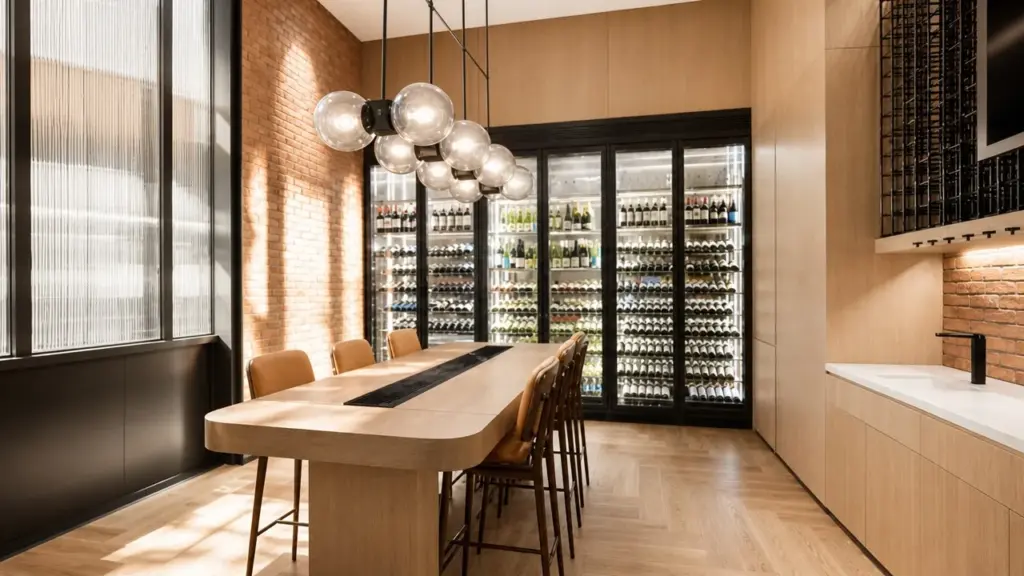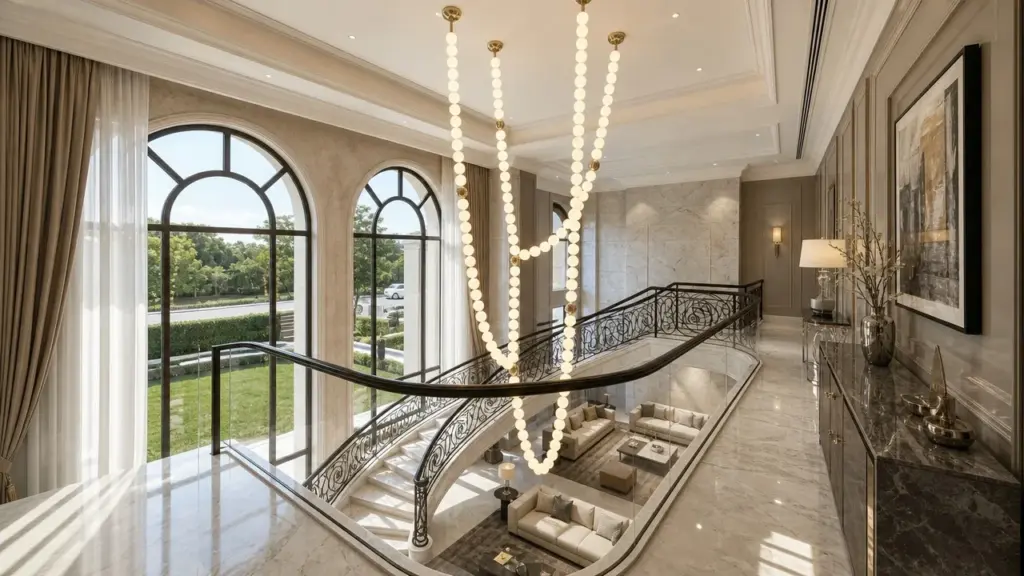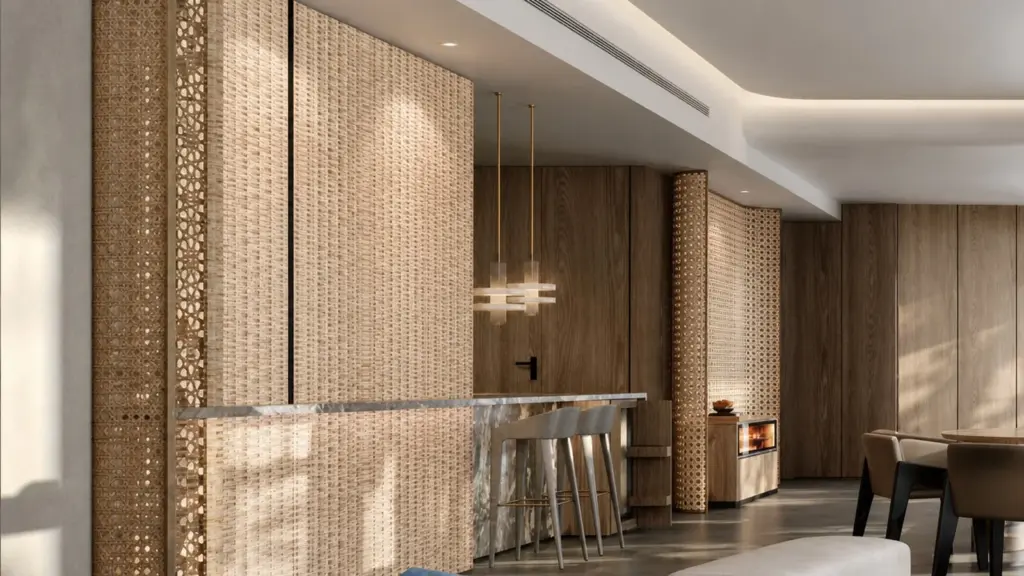
Hotel Lighting Project Timeline: A Realistic 16-Week Roadmap is a project-control topic before it is a decorative lighting topic. The buyer is not only choosing a chandelier, sconce, or decorative lighting package. The buyer is deciding how design intent, supplier proof, site constraints, production sequence, and final acceptance will stay aligned.
The common failure is to treat hotel lighting timeline as a document or meeting that can be cleaned up late. By then, the ceiling interface, samples, control scenes, packaging, shipping terms, and installation responsibilities may already point in different directions.
Kinglong Lighting approaches this kind of article from the manufacturer’s side of the table. A useful lighting supplier should help the project team turn preferences into evidence, evidence into release gates, and release gates into a handover file the hotel can actually operate.
Key Takeaways
- Proof beats preference: every key decision should name the evidence needed before release.
- The supplier file must be useful on site: drawings, samples, labels, and access notes should reduce installation questions.
- Local review still matters: factory information supports local professionals but does not replace them.
- Acceptance should be defined early: final quality cannot be judged only by whether the fixture turns on.
- Soft CTA belongs before FAQ: buyers should know what to send when they ask Kinglong Lighting for help.
A timeline should protect the opening date, not flatter it
A hotel lighting timeline that looks aggressive on paper often becomes slower on site because samples, drawings, freight, and commissioning were compressed unrealistically.
A realistic schedule works backward from the final room test. It gives the brief, RFQ, sample, drawing, production, logistics, installation, and commissioning stages their own proof gates so one late decision does not quietly consume the entire opening buffer.
The WBDG building commissioning page is useful because commissioning turns design intent into verified operation and handover evidence. For hotel owners, designers, and procurement teams planning a decorative lighting package under opening pressure, that turns the discussion into a 16-week roadmap with stage gates and buffer logic instead of a preference argument.
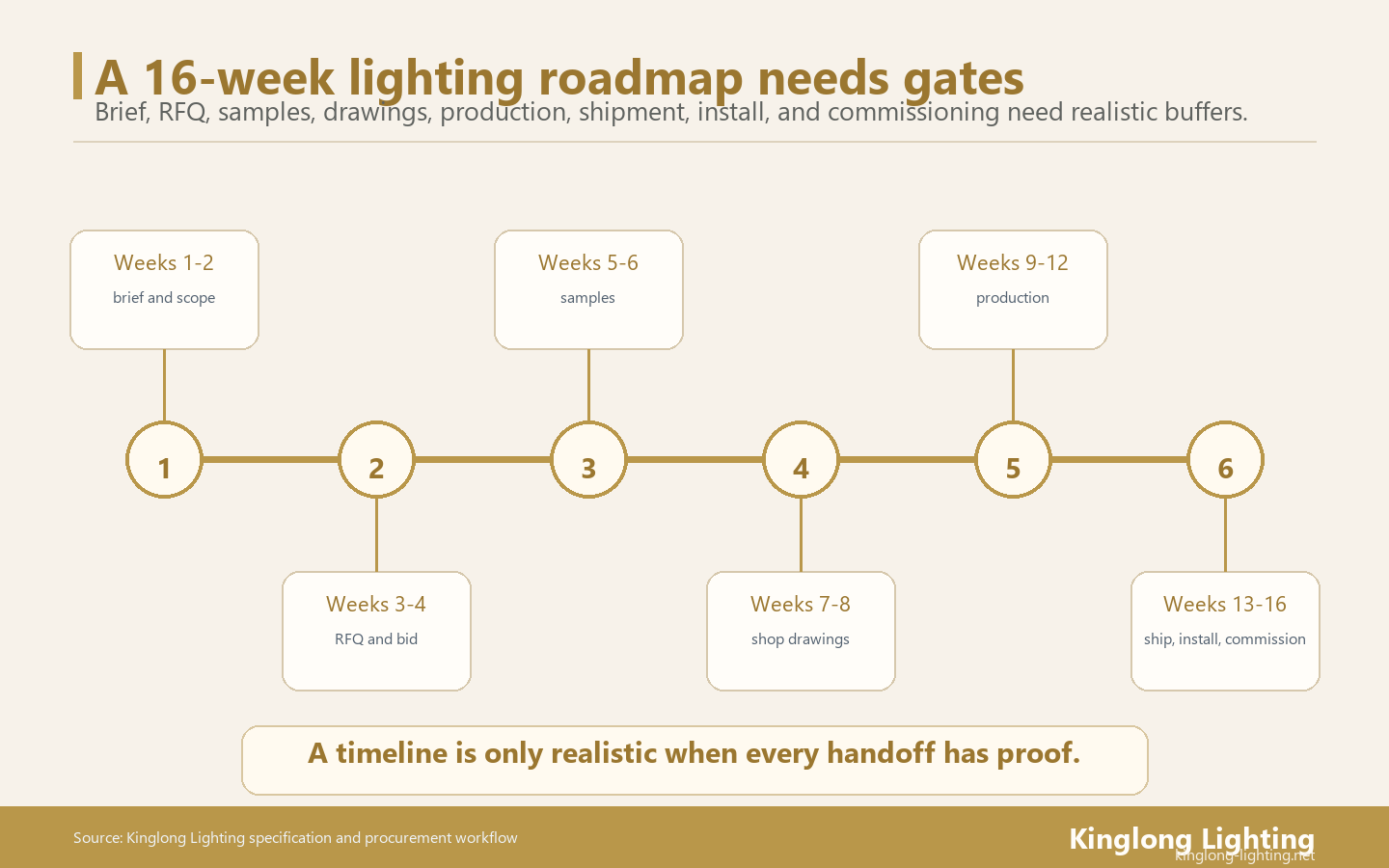
Weeks 1-2: freeze the brief and scope
The first two weeks should remove ambiguity before suppliers price the package.
The UL 1598 standard page is useful because decorative chandeliers remain luminaires that need product and installation evidence. For hotel owners, designers, and procurement teams planning a decorative lighting package under opening pressure, that turns the discussion into a commissioning-aware scope and acceptance view instead of a preference argument.
The room schedule is the first milestone
Timeline start becomes important when the project asks suppliers to hurry before scope is stable. The project team should not treat this as a late coordination detail, because the choice changes cost, sequence, drawing responsibility, and the evidence a buyer can reasonably approve. If the issue is left open, the supplier may quote an attractive fixture while the building team silently carries an unresolved constraint.
The practical answer is to name room schedule, fixture counts, drawings, finish targets, and scene intent before release. That proof gives the owner a decision rule: do not start the schedule with unclear quantities. It also keeps Kinglong Lighting’s role honest. The factory can provide drawings, samples, product information, packing logic, and manufacturing options, while local professionals still confirm the building, code, and site-specific safety requirements.
Opening pressure should not erase proof
Opening pressure becomes important when the hotel compresses evidence stages to protect a public date. The project team should not treat this as a late coordination detail, because the choice changes cost, sequence, drawing responsibility, and the evidence a buyer can reasonably approve. If the issue is left open, the supplier may quote an attractive fixture while the building team silently carries an unresolved constraint.
The practical answer is to name stage gates that show what can be shortened and what cannot before release. That proof gives the owner a decision rule: compress review time only after risk is visible. It also keeps Kinglong Lighting’s role honest. The factory can provide drawings, samples, product information, packing logic, and manufacturing options, while local professionals still confirm the building, code, and site-specific safety requirements.
Weeks 3-6: RFQ, bid review, and samples
The middle of the early schedule should produce comparable bids and physical proof.
The ICC Incoterms 2020 page is useful because international delivery responsibility should be named before production and shipment. For hotel owners, designers, and procurement teams planning a decorative lighting package under opening pressure, that turns the discussion into supplier evidence and sample plan instead of a preference argument.
Bid review needs evidence windows
Bid review becomes important when suppliers respond with different inclusions and the buyer chooses too quickly. The project team should not treat this as a late coordination detail, because the choice changes cost, sequence, drawing responsibility, and the evidence a buyer can reasonably approve. If the issue is left open, the supplier may quote an attractive fixture while the building team silently carries an unresolved constraint.
The practical answer is to name a normalized comparison of sample, drawing, packing, and documentation scope before release. That proof gives the owner a decision rule: shortlist on proof before negotiating price. It also keeps Kinglong Lighting’s role honest. The factory can provide drawings, samples, product information, packing logic, and manufacturing options, while local professionals still confirm the building, code, and site-specific safety requirements.
Samples need decision time
Sample timing becomes important when sample review is squeezed into a single meeting without revision allowance. The project team should not treat this as a late coordination detail, because the choice changes cost, sequence, drawing responsibility, and the evidence a buyer can reasonably approve. If the issue is left open, the supplier may quote an attractive fixture while the building team silently carries an unresolved constraint.
The practical answer is to name sample purpose, review owner, and revision window before release. That proof gives the owner a decision rule: reserve time for the sample to answer a real risk. It also keeps Kinglong Lighting’s role honest. The factory can provide drawings, samples, product information, packing logic, and manufacturing options, while local professionals still confirm the building, code, and site-specific safety requirements.
Weeks 7-12: drawings and production
The production phase works only when drawings have closed the interface risks.
Shop drawing review deserves its own gate
Drawing timing becomes important when drawings are treated as paperwork while ceiling trades move ahead. The project team should not treat this as a late coordination detail, because the choice changes cost, sequence, drawing responsibility, and the evidence a buyer can reasonably approve. If the issue is left open, the supplier may quote an attractive fixture while the building team silently carries an unresolved constraint.
The practical answer is to name current dimensions, canopy, suspension, driver, and module notes before release. That proof gives the owner a decision rule: hold production when the drawing cannot be installed as shown. It also keeps Kinglong Lighting’s role honest. The factory can provide drawings, samples, product information, packing logic, and manufacturing options, while local professionals still confirm the building, code, and site-specific safety requirements.
Production buffers protect custom work
Production buffer becomes important when custom finishes, glass, crystals, and modules are scheduled as if they were stock items. The project team should not treat this as a late coordination detail, because the choice changes cost, sequence, drawing responsibility, and the evidence a buyer can reasonably approve. If the issue is left open, the supplier may quote an attractive fixture while the building team silently carries an unresolved constraint.
The practical answer is to name material arrival, sample match, assembly, inspection, and packing buffer before release. That proof gives the owner a decision rule: protect the unique work instead of spending all buffer on late approvals. It also keeps Kinglong Lighting’s role honest. The factory can provide drawings, samples, product information, packing logic, and manufacturing options, while local professionals still confirm the building, code, and site-specific safety requirements.
Weeks 13-14: shipping and site readiness
Shipment is not a passive wait. The site must be ready to receive fragile decorative lighting.
The OSHA aerial lifts page is useful because overhead installation and service need planned access, qualified operation, and site hazard awareness. For hotel owners, designers, and procurement teams planning a decorative lighting package under opening pressure, that turns the discussion into delivery terms, crate list, receiving plan, and site access instead of a preference argument.
Freight assumptions need named owners
Freight timing becomes important when the fixture is ready but documents, insurance, or destination handoff are unclear. The project team should not treat this as a late coordination detail, because the choice changes cost, sequence, drawing responsibility, and the evidence a buyer can reasonably approve. If the issue is left open, the supplier may quote an attractive fixture while the building team silently carries an unresolved constraint.
The practical answer is to name Incoterms, packing list, documents, and receiving responsibility before release. That proof gives the owner a decision rule: do not treat goods-ready as site-ready. It also keeps Kinglong Lighting’s role honest. The factory can provide drawings, samples, product information, packing logic, and manufacturing options, while local professionals still confirm the building, code, and site-specific safety requirements.
Installation access should be confirmed before arrival
Site readiness becomes important when crates arrive before lift route, protection, or staging are prepared. The project team should not treat this as a late coordination detail, because the choice changes cost, sequence, drawing responsibility, and the evidence a buyer can reasonably approve. If the issue is left open, the supplier may quote an attractive fixture while the building team silently carries an unresolved constraint.
The practical answer is to name unloading, staging, lift, floor protection, and electrician schedule before release. That proof gives the owner a decision rule: make the site ready before the boxes arrive. It also keeps Kinglong Lighting’s role honest. The factory can provide drawings, samples, product information, packing logic, and manufacturing options, while local professionals still confirm the building, code, and site-specific safety requirements.
Weeks 15-16: installation and commissioning
The final stage should test the installed room, not only connect the fixture.
The DOE lighting design page is useful because lighting should be planned around whole-space quality, efficiency, and use rather than fixture appearance alone. For hotel owners, designers, and procurement teams planning a decorative lighting package under opening pressure, that turns the discussion into safe access, scene test, punch list, and handover record instead of a preference argument.
Commissioning should have a scheduled slot
Final acceptance becomes important when commissioning is squeezed after installation delays. The project team should not treat this as a late coordination detail, because the choice changes cost, sequence, drawing responsibility, and the evidence a buyer can reasonably approve. If the issue is left open, the supplier may quote an attractive fixture while the building team silently carries an unresolved constraint.
The practical answer is to name scene testing, dimming review, alignment check, damage review, and handover notes before release. That proof gives the owner a decision rule: reserve acceptance time before the opening date. It also keeps Kinglong Lighting’s role honest. The factory can provide drawings, samples, product information, packing logic, and manufacturing options, while local professionals still confirm the building, code, and site-specific safety requirements.
Electrical review remains local
Electrical timing becomes important when the supplier file is mistaken for final local approval. The project team should not treat this as a late coordination detail, because the choice changes cost, sequence, drawing responsibility, and the evidence a buyer can reasonably approve. If the issue is left open, the supplier may quote an attractive fixture while the building team silently carries an unresolved constraint.
The practical answer is to name fixture data plus qualified local installation review before release. That proof gives the owner a decision rule: keep local code and site safety outside the rush of decorative acceptance. It also keeps Kinglong Lighting’s role honest. The factory can provide drawings, samples, product information, packing logic, and manufacturing options, while local professionals still confirm the building, code, and site-specific safety requirements.
16-week hotel lighting roadmap table
Use this table as a compact release gate. It is not a legal contract, but it shows which proof should be visible before the next project stage.
| Decision | Risk if vague | Proof to request | Release rule |
|---|---|---|---|
| Weeks 1-2 | unclear scope | room schedule | freeze before RFQ |
| Weeks 3-4 | unequal bids | proof checklist | normalize before price |
| Weeks 5-6 | sample drift | master sample | approve or revise |
| Weeks 7-12 | drawing/production conflict | current shop drawings | release only closed gates |
| Weeks 13-16 | site and commissioning squeeze | receiving and handover plan | protect acceptance time |
How Kinglong Lighting supports hotel lighting timeline
Kinglong Lighting can support hotel lighting timeline by connecting design intent to factory evidence: drawings, finish samples, driver notes, packing logic, installation assumptions, and handover records. The useful output is a project file that reduces avoidable questions for designers, procurement teams, contractors, and owners.
Kinglong Lighting can connect this work to the hotel lighting solution and the custom chandelier manufacturing workflow. The point is not to turn a technical article into a catalogue page. The point is to give hotel owners, designers, and procurement teams planning a decorative lighting package under opening pressure a practical next step when the project file already shows real risk.
When the issue reaches budget, sample, delivery, or site timing, the safer action is to send the hotel lighting timeline brief with drawings, destination, room schedule, target finish, control expectation, and the proof items already requested in this article.
Soft next step for timeline planning
The next step should be a focused file, not a vague request for price. Buyers get better answers when they send the supplier the same evidence they expect the supplier to return.
- Build the schedule backward from commissioning.
- Reserve sample and drawing review windows.
- Name delivery responsibility before production ends.
- Confirm site readiness before crates arrive.
- Protect a final acceptance slot before opening.
FAQ
Is 16 weeks enough for hotel lighting?
It can be enough for a controlled package, but only if scope, samples, drawings, production, freight, installation, and commissioning each have clear gates. Complex custom chandeliers or unclear site constraints may need more time.
Where do hotel lighting timelines usually slip?
They usually slip at sample approval, shop drawing coordination, shipping handoff, site readiness, and commissioning. These stages depend on multiple parties, so they need buffers and named owners.
Should production start before shop drawings are final?
Only with clear risk acceptance. For large custom chandeliers, production should normally wait until dimensions, suspension, canopy, driver access, module sequence, and finish references are confirmed.
How can Kinglong help protect the timeline?
Kinglong can provide drawings, sample planning, production status, packing notes, delivery assumptions, and handover records. The buyer still needs local site and electrical teams to close building-specific tasks.