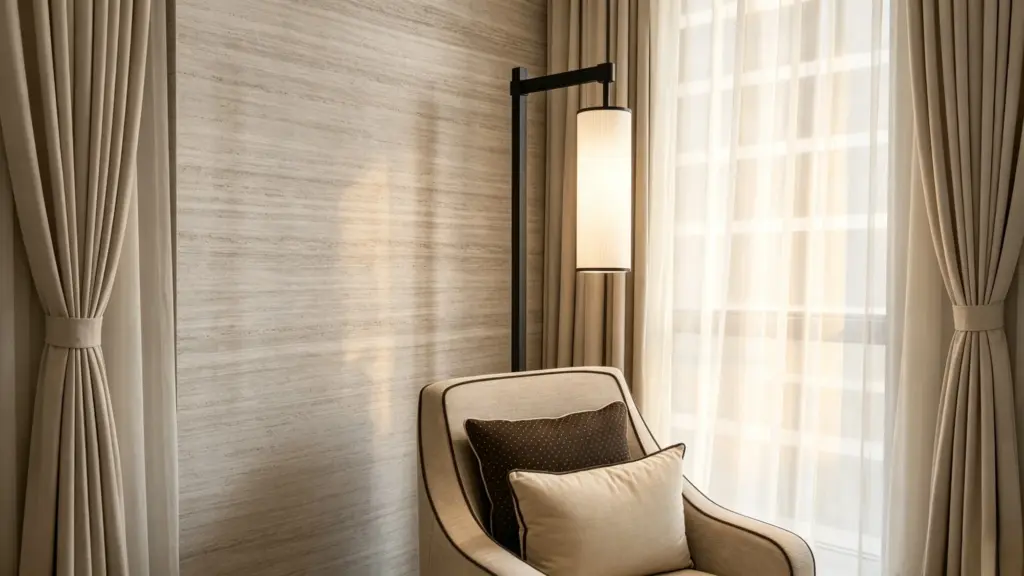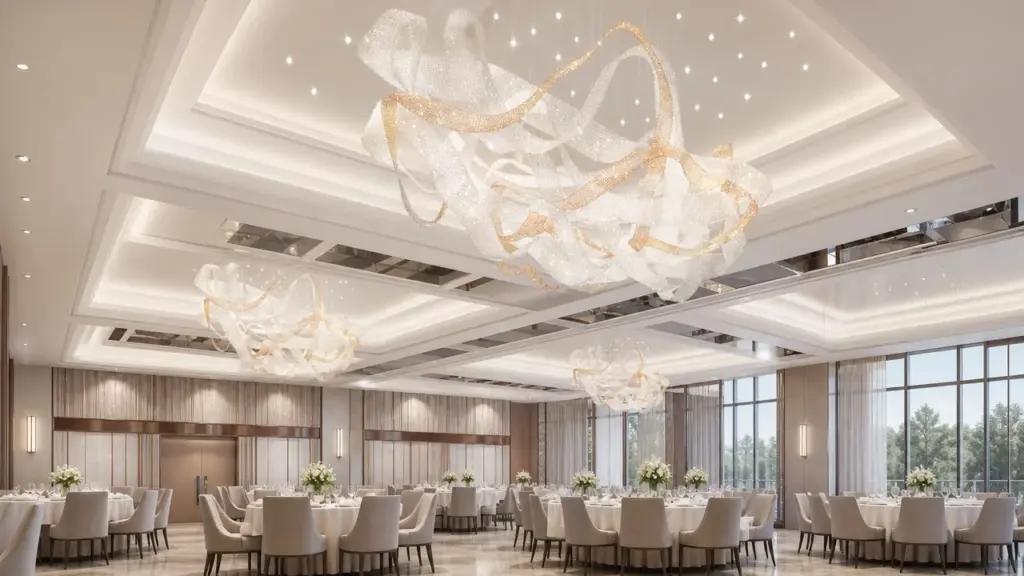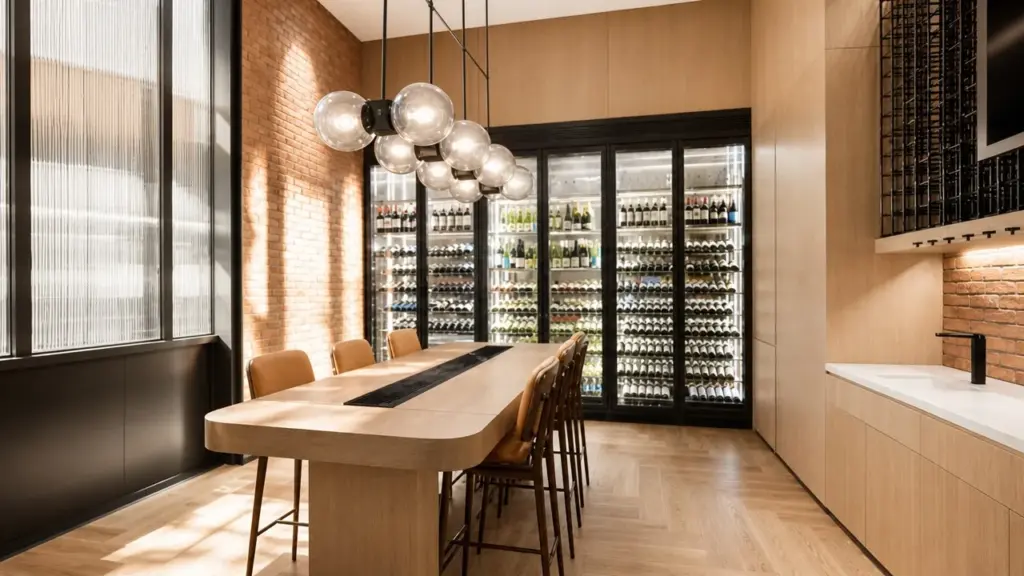
Hotel executive lounge lighting works when privacy, brand cohesion, and atmosphere are controlled as separate zones instead of one dim luxury scene. The lounge is not simply a smaller lobby. It is a hybrid space where guests check email, hold quiet conversations, eat breakfast, take calls, read, meet colleagues, and unwind at night. If the lighting is only warm and decorative, the room can look premium while making guests feel exposed.
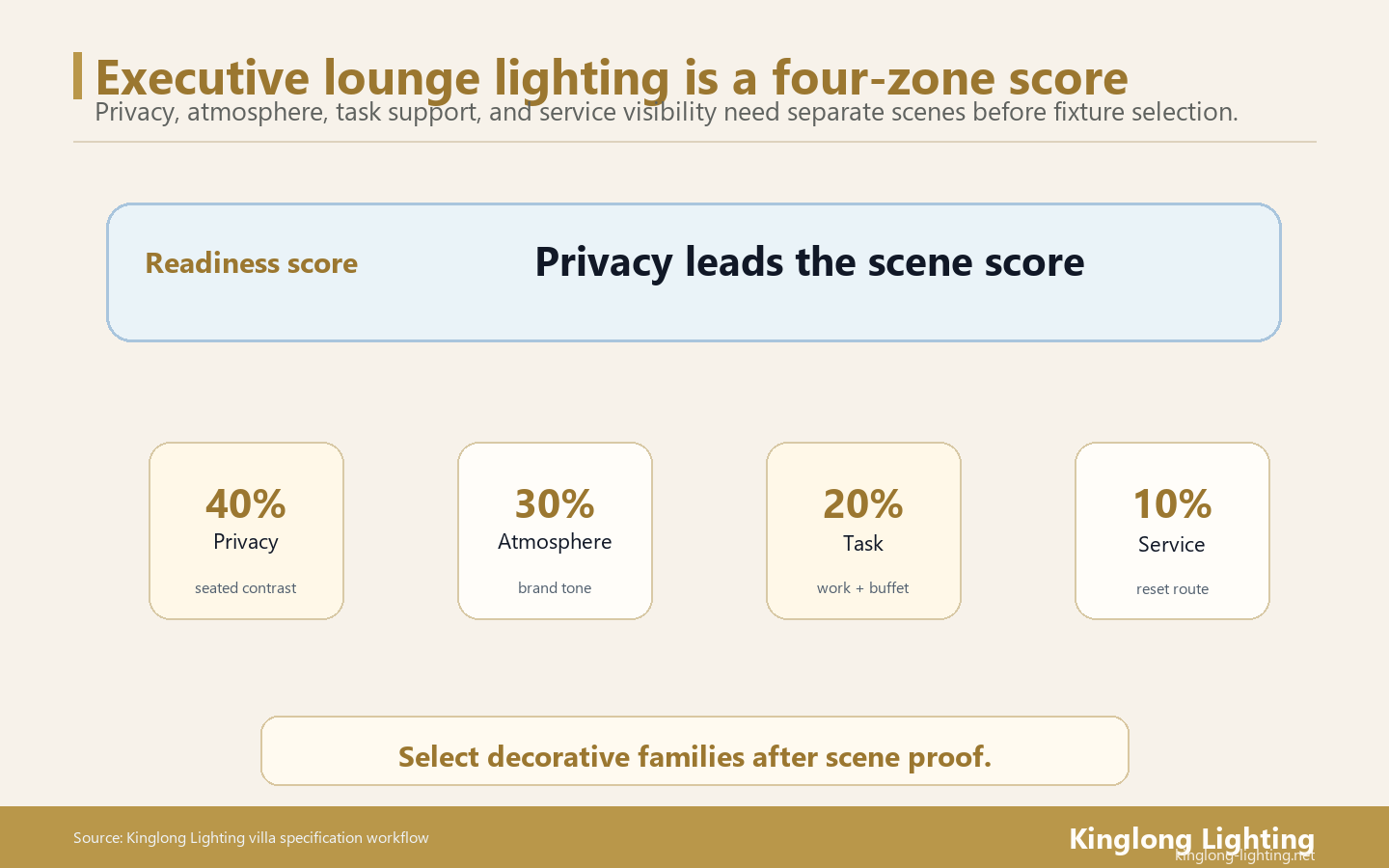
Based on our analysis of a four-zone executive lounge, a practical readiness score gives 40% weight to privacy, 30% to atmosphere, 20% to task support, and 10% to service visibility. Under that model, a lounge can lose the guest experience even when it photographs beautifully. If work tables, soft seating, buffet, and arrival path all dim together, the hotel cannot protect both privacy and service quality in morning, afternoon, and evening scenes.
Key Takeaways
- Privacy is a lighting outcome: Guests should feel shielded, not spotlighted, when working or talking quietly.
- Brand cohesion is not uniformity: Decorative fixtures should share material language without flattening every zone.
- Atmosphere needs scenes: Breakfast, work, cocktail, and late-evening modes should not use one dimming level.
- Low glare matters: Executive lounges punish bright downlights, exposed sources, and harsh reflections.
- Procurement proof: Ask for zone plan, CCT, dimming protocol, finish samples, and mockup views before release.
Treat the lounge as four rooms inside one room
The executive lounge fails when arrival, work, dining, and soft seating are lit as if they have the same social contract.
Arrival lighting should transition guests from corridor to lounge without exposing the entire room at once. Work lighting should support laptop use, reading, and short calls without casting a spotlight on the guest’s face. Dining lighting should make food and materials look fresh without turning the buffet into a cafeteria. Soft seating should create privacy, warmth, and comfortable facial modeling. The decorative layer can tie these zones together, but it should not erase their differences.
The IES Lighting Library is relevant because executive lounge lighting is a design application problem, not only a fixture selection problem. The so what for hotel specifiers is that the lighting schedule should name the zone behavior before it names the decorative family. A pendant, wall sconce, table lamp, and cove can all support the brand, but each must be assigned a job.
Privacy depends on contrast and source position
Guests feel private when faces are modeled gently, sightlines are controlled, and background brightness does not make them visible from every seat. Overhead downlights directly above lounge chairs can make guests feel watched. A wall sconce or shaded table light can create a softer pool of light while keeping the surrounding zone calm. The decision is not simply lower light. Too little light makes work uncomfortable and can make staff service clumsy. Privacy comes from controlled contrast, shielding, and scene separation.
Brand cohesion depends on material rhythm
An executive lounge should feel connected to the wider hotel brand without copying the lobby chandelier at smaller scale. If the lobby uses crystal and brass, the lounge might use brass details with softer glass, textured shades, or indirect glow. If the hotel brand is minimal, the lounge can use fewer decorative points but tighter control of wall, table, and shelf lighting. Kinglong Lighting’s hospitality lighting scope matters because custom decorative fixtures can carry the brand language while still being sized for quiet guest behavior.
Use visual comfort and color quality as guardrails
Executive lounge atmosphere is not just dimness; it is comfortable light that protects faces, food, finishes, and screens.
WELL’s Light concept keeps the discussion tied to visual comfort and human experience. For an executive lounge, that means source shielding, glare control, useful task light, and enough vertical brightness for orientation. A guest should be able to read a document, see a colleague’s face, identify the buffet, and move through the room without feeling that the lighting has been designed only for a night photograph.
DOE guidance on TM-30 helps frame this because color rendition uses a multi-metric vocabulary. The lounge application is straightforward: food, leather, timber, brass, fabric, and skin tone should be reviewed under the same light sources planned for the room. If a decorative lamp makes the bar beautiful but makes breakfast food look dull, the scene is not ready.
Build a zone-based readiness score
A lounge can look expensive and still fail if the private work zone and public service zone share one lighting scene.
Use a simple model before fixture approval. Score each zone from 1 to 5 for privacy, atmosphere, task support, and service visibility. Weight privacy at 40%, atmosphere at 30%, task support at 20%, and service visibility at 10%. A work table with strong task light but poor shielding may score 2 for privacy, 3 for atmosphere, 5 for task, and 3 for service, giving a 3.0/5 result. A soft seating zone with shielded lamps, warm vertical glow, and quiet contrast may score 4, 5, 3, and 2, giving a 4.0/5 result.
The point is not to turn atmosphere into false precision. The point is to reveal trade-offs. If every zone scores high on atmosphere but low on privacy, the lounge may photograph well and still feel uncomfortable. If service visibility is high everywhere, the room may feel operational rather than exclusive. If task support is low, business travelers may avoid the space during the day.
Result: the trade-off is visible, so the room should leave the scoring exercise with a scene brief, not a decorative mood board only. The brief can say that arrival needs a soft first impression, work tables need shielded task light and screen comfort, dining needs clean color rendition, and soft seating needs lower facial exposure from the entrance. That language gives the lighting designer, interior designer, operator, and supplier a shared way to discuss fixture scale and controls. It also prevents a common procurement shortcut: buying one attractive family of pendants and sconces, then expecting dimming to solve privacy, buffet visibility, brand tone, and staff reset. Dimming helps, but it cannot repair poor source position, glare, or missing task light.
A useful lounge package therefore includes two drawings for the same space: one for decorative family and one for scene behavior. The first protects brand consistency. The second protects guest behavior, staff operation, and the quiet feeling that makes an executive lounge worth reserving.
When both drawings agree, procurement can approve with fewer subjective arguments about whether the lounge feels “luxury enough.”
Specify scenes before selecting decorative families
| Scene | Privacy requirement | Brand requirement | Evidence to request |
|---|---|---|---|
| Breakfast | Comfortable faces and food visibility | Fresh material color | CCT, color rendition, buffet mockup |
| Work afternoon | Shielded task light and screen comfort | Quiet premium detail | Glare check and table light position |
| Evening lounge | Lower exposure from entrance and corridor | Warm decorative hierarchy | Dimming scene and sightline views |
| Service reset | Staff visibility without guest drama | Clean backbar and shelves | Separate service scene |
ASHRAE’s Standard 90.1 keeps controls in the building-performance conversation, while UL’s luminaire testing and certification reminds buyers that decorative fixtures still need safety and market evidence. The practical procurement meaning is that lounge beauty should be paired with dimming, driver access, lamp replacement, and safe product documentation.
Connect lounge atmosphere to Kinglong custom lighting
Kinglong Lighting’s custom lighting manufacturing process is useful when the lounge needs brand cohesion without copying public-area fixtures. Send material palette, seating plan, ceiling height, target CCT, scene list, table locations, and any privacy concerns. The Mofun Design Platform can help the design team review whether pendants, sconces, and decorative accents support the room rhythm without overexposing guests.
If the lounge is already in design development, ask Kinglong Lighting to review the fixture family by zone. The next step should not be “make it warmer.” It should be “show which fixtures protect privacy, which ones carry brand identity, and which ones support service.” That is the difference between a premium-looking lounge and a lounge guests actually choose to use.
Related Guides
- Hotel Lobby Color Temperature Standards
- Ballroom Lighting Layered Design
- Hotel Corridor Lighting Continuity
Executive Lounge Action Card
- Map arrival, work, dining, and soft seating zones.
- Assign privacy, brand, task, and service responsibilities.
- Check glare from seated guest positions.
- Review CCT and color rendition with materials and food.
- Send plans and scene needs through the executive lounge lighting inquiry.
An executive lounge release file should protect privacy before drama
Executive lounge lighting has to do quiet work. Guests may be reading, taking calls, eating breakfast, meeting colleagues, waiting between flights, or winding down in the evening. A chandelier or decorative pendant family can support the brand atmosphere, but it should not behave like a lobby centerpiece. The release file should protect privacy, seated comfort, food presentation, work support, and service visibility before the team selects the final decorative family.
Score the lounge by zones, not by fixture beauty
A four-zone score helps the team see where the room can fail. Privacy carries the most weight because seated guests do not want to feel exposed from the entrance or buffet route. Atmosphere matters because the lounge should still feel premium and connected to the hotel’s brand. Task support matters because guests need to read, work, and see food clearly. Service visibility matters because staff must reset and maintain the room without making the lighting feel operational. If one decorative family is expected to solve all four zones, the project is probably relying too much on dimming and not enough on source position.
Test brightness from seated eye level
The mock-up should include seated views, not only standing views. A pendant that feels soft from below can become a glare point when a guest looks across the room. A sconce that photographs warmly can reflect sharply on a dark wall or polished tabletop. The file should record source shielding, shade opacity, dimming range, CCT target, material response, and the difference between morning, afternoon, and evening scenes. This gives the designer and Kinglong Lighting a practical way to adjust scale, shade, source, or circuiting before production.
Coordinate food, work, and evening scenes
Executive lounges change function during the day. Breakfast needs clean color and buffet visibility. Afternoon work needs low glare and enough task light. Evening service needs lower contrast and a warmer atmosphere without making the path unsafe. The release file should name these scenes and state which fixtures or channels carry each one. If the food scene and privacy scene use the same uncontrolled decorative source, one of them will likely suffer.
Keep service routes visible without breaking mood
Service access should be planned as part of the design. Staff need to clear tables, refresh food, inspect fixtures, and handle occasional replacement without turning the lounge into a back-of-house space. The file should identify driver access, cleaning route, removable parts, spare strategy, and the scene used during service. Kinglong Lighting can use that information to keep the fixture elegant while still practical for daily operation.
The final approval should freeze the scene logic, source shielding, material proof, circuit grouping, service route, and owner sign-off. Decorative refinement can continue inside that boundary, but privacy and comfort should not be reopened after the purchase order.
The review note should also name what will be checked after installation. Lounge lighting can look correct during mock-up and still feel too bright after furniture, screens, buffet equipment, and evening service patterns are in place. A short post-installation scene review gives the operator a way to adjust levels without changing the fixture intent.
Frequently Asked Questions
What makes executive lounge lighting different from lobby lighting?
An executive lounge needs more privacy and task comfort. Lobby lighting can be more public and theatrical, while lounge lighting must support work, dining, quiet conversation, and evening atmosphere.
What CCT works best for an executive lounge?
Many lounges use warm white light for atmosphere, but the final CCT should be tested with food, faces, finishes, and screens. Dimming scenes are usually more important than one fixed CCT.
Should decorative fixtures be custom?
Custom fixtures help when the lounge needs a brand-specific material rhythm, special scale, or matching public-area identity. They should still be specified with glare, controls, maintenance, and safety evidence.