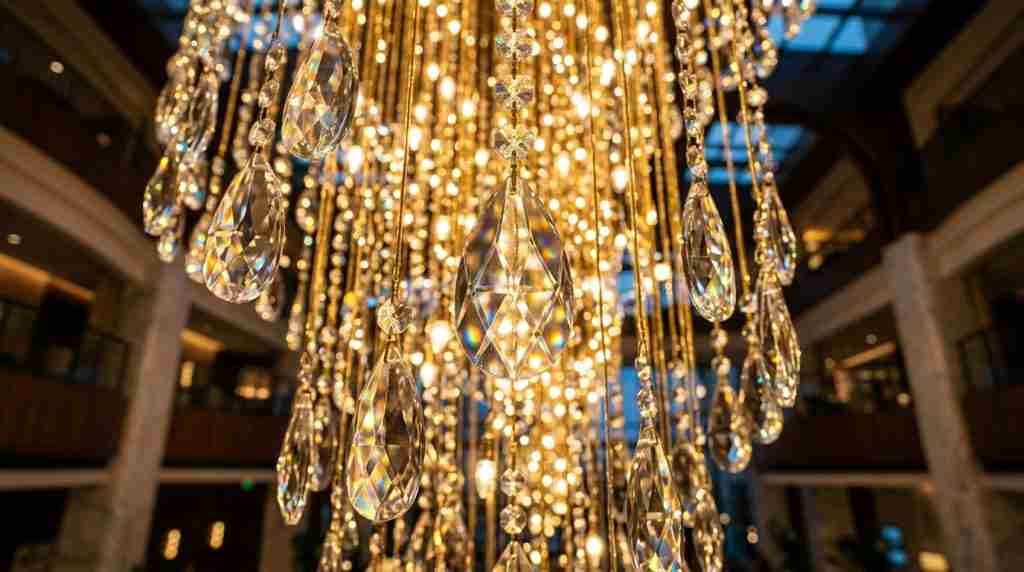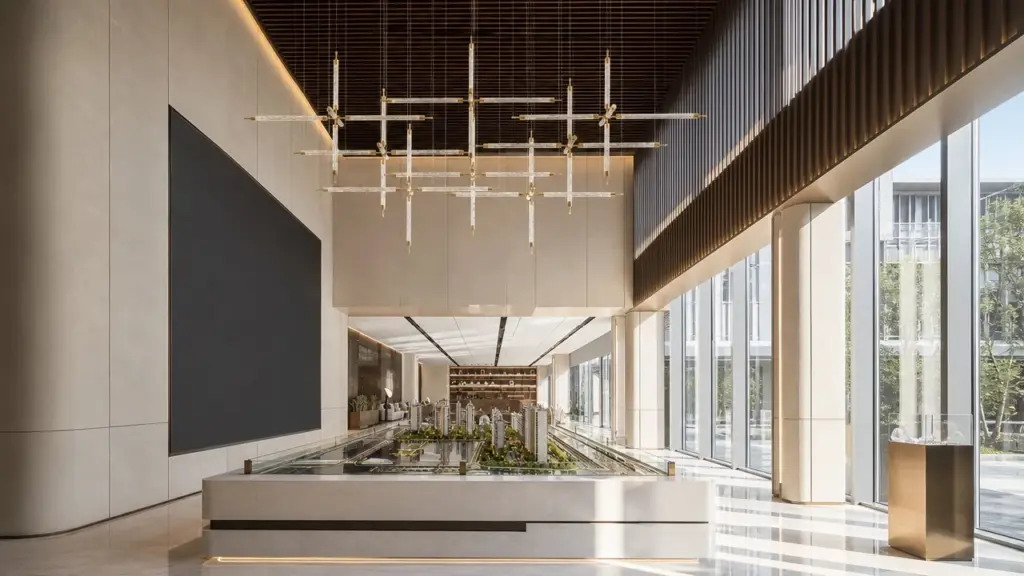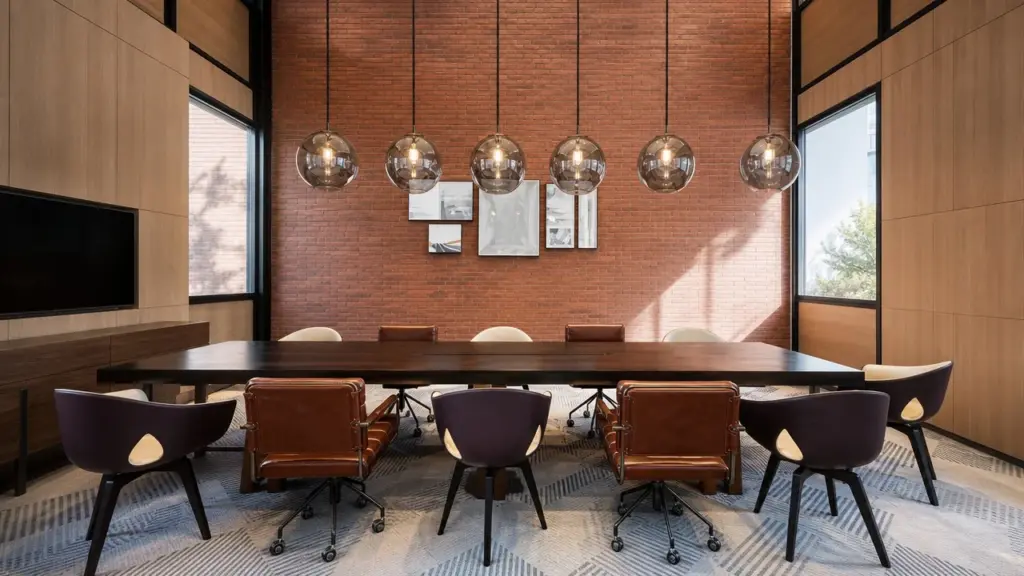
Sheraton Grand hotel lobby lighting succeeds only when chandelier scale and material choices support a public-space role because the lobby is not a static photo backdrop; it is an arrival hall, meeting point, work-social setting, and brand memory in one volume. A chandelier that is large but visually thin can feel weak. A chandelier that is rich but oversized can fight the lobby. The case-study question is how scale and material become hospitality behavior, not just ornament.
This analysis uses public Sheraton brand context and Kinglong Lighting’s public hospitality project references. It is not an official Sheraton specification and does not imply that Sheraton or Marriott endorses any supplier. The point is to show how a high-volume hotel lobby should turn brand positioning, ceiling geometry, guest circulation, and material palette into a chandelier decision that can be approved and manufactured.
Key Takeaways
- Public-space fit: Sheraton’s public-space narrative makes lobby lighting a social and functional anchor, not only a decorative object.
- Scale discipline: Diameter, drop, visual density, and viewing distance must be reviewed together.
- Material logic: Gold metal, crystal, glass, and warm light can create hospitality warmth only when controlled by finish samples and mock-up evidence.
- Manufacturing link: Large fixtures need modular construction, packing, ceiling coordination, and maintenance access planned before release.
- Kinglong relevance: Kinglong Lighting’s public project and hospitality pages provide a useful lens for custom hotel lobby chandelier discussions.
Start with the lobby’s public role
A grand lobby chandelier should tell guests where they are and what to do next.
The official Sheraton brand page describes public space as a place where guests and locals connect, work, gather, and use hospitality amenities throughout the day. Marriott Bonvoy Traveler’s Sheraton design strategy coverage reinforces the public-space idea by discussing community-oriented lobby functions. For lighting designers, the implication is practical: the chandelier should support arrival, orientation, gathering, and dwell time. It is not only a sculpture in the ceiling.
That public role changes the way the fixture is judged during the day. In the morning, the chandelier may sit above coffee, check-in, and work pauses. At midday, it may become a wayfinding marker for visitors who are not staying overnight. In the evening, it may need to support a warmer social scene without making laptop work or casual meetings uncomfortable. A Sheraton-style lobby chandelier therefore needs a lighting narrative across time, not only a peak-night photograph.
Arrival distance changes chandelier scale
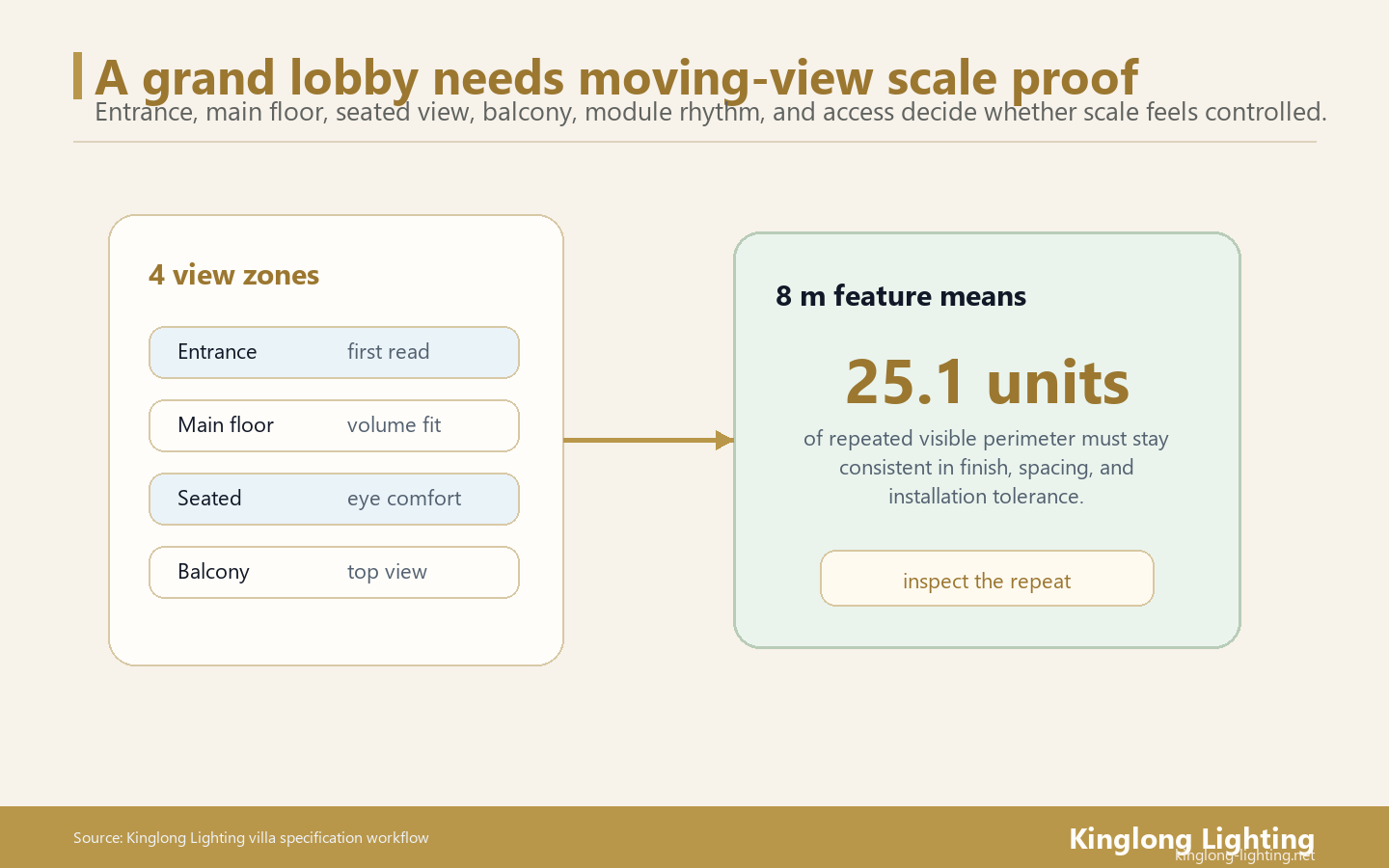
A lobby chandelier is judged from several distances: exterior approach, entry threshold, reception queue, lounge seating, elevator approach, and upper-level balcony if present. Scale is therefore not just diameter. It is apparent size across a moving guest journey. Based on our analysis, a 4-zone view review is the minimum useful scale check for a grand lobby: entrance view, main floor view, seated view, and upper-level or long-axis view. If the chandelier works from only one zone, it may be a strong photograph but a weak public-space anchor.
Visual density matters as much as diameter
Two chandeliers with the same diameter can feel completely different. A sparse ring reads light and architectural. A dense crystal body reads ceremonial and luxurious. A vertical cascade reads dramatic. A low, wide composition reads social and room-defining. The hidden risk is choosing diameter before density. A large but transparent fixture may disappear in a tall volume, while a smaller but denser fixture may create a stronger center of gravity.
Read the Kinglong Sheraton reference as a scale problem
Kinglong Lighting’s public projects page includes a Sheraton Hotel Changsha grand lobby installation reference, and its hospitality page describes a monumental 8-metre gold crystal chandelier anchoring a grand lobby. The valuable lesson is not merely that a large chandelier was made. It is that an 8 m-class feature forces every hidden decision into the open: ceiling support, modular assembly, finish consistency, optical density, packing, installation sequence, cleaning, and future access.
Calculated from an 8 m diameter feature, 3.14 x 8 equals about 25.1 units of repeated visible perimeter. That simple number changes procurement thinking because a finish mismatch, crystal spacing error, or installation tolerance repeats around a long visual edge. The bigger the ring or body, the more small deviations become visible. The decision rule is to inspect repeating modules, not only a single decorative detail.
| Scale choice | Guest effect | Manufacturing concern | Approval evidence |
|---|---|---|---|
| Large diameter | Creates arrival authority | Module alignment and ceiling load | Ceiling plan, shop drawing, module test |
| Deep drop | Adds drama and vertical memory | Cleaning access and sightline conflict | Section drawing and maintenance route |
| High density | Feels ceremonial and luxurious | Weight, packing, and installation labor | Weight note, crate plan, install sequence |
| Warm metal | Humanizes a large volume | Batch consistency and fingerprinting | Finish master and batch control note |
| Crystal sparkle | Creates memory and movement | Glare, replacement, and cleaning | Mock-up video and spare-part plan |
The conclusion is that scale is a system. The hotel team approves a relationship between room volume, material density, structural route, visual warmth, and serviceability.
Use material choices to balance community and grandeur
Sheraton’s public-space positioning points toward hospitality that is open and social rather than remote. Material choices should therefore soften grandeur. Gold metal can add warmth, but too much polish may feel formal or reflective. Crystal can deliver sparkle, but uncontrolled brilliance can create glare from seated positions. Hand-blown glass can soften the image, but it may need tighter tolerance control when used in a repeated module. Fabric shades can add warmth, but they change maintenance and fire-performance questions.
Service rhythm matters as much as the first impression. A lobby team may clean visible surfaces daily, host events weekly, and coordinate deep maintenance during narrow low-occupancy windows. Materials that look luxurious in a sample can become a burden if they collect dust, show fingerprints, or require fragile replacement parts. The case-study lesson is to choose materials that support the brand story and the operating team at the same time.
The DOE TM-30 FAQ helps frame this because color quality can be discussed with richer information than one shorthand score. For Sheraton-style public space, that means the mock-up should show how the selected light source renders brass, stone, wood, upholstery, glass, and skin tone. The WELL v2 Light concept helps frame this because visual comfort belongs in the lighting discussion, so sparkle must be controlled from guest eye level, not judged only from below.
Turn scale and material into an approval matrix
The approval matrix should ask where a scale or material decision creates risk. Large diameter increases visual authority but also increases tolerance exposure. Dense crystal creates luxury but increases weight and cleaning. Warm metal creates hospitality but increases finish-batch sensitivity. Dimming creates scene flexibility but adds driver and control compatibility risk. The best case-study output is therefore not a single recommendation. It is a map of trade-offs that designers and owners can sign.
The mechanism is repetition. In a small decorative pendant, one material flaw may be isolated. In a grand lobby chandelier, the same flaw can repeat dozens or hundreds of times. That is why production approval should inspect finish master, module spacing, crystal clarity, suspension detail, and packing protection before shipment.
How Kinglong Lighting can support a Sheraton-style lobby brief
Kinglong Lighting can support this kind of project by organizing the brief around five files: a scale file, a material file, a control file, a structural coordination file, and a logistics file. The Mofun Design Platform can support scale visualization. The customization workflow can connect finish samples, drawings, and production versioning. The contact route is the practical place to ask for a project-specific review.
The soft next step is to send Kinglong Lighting the lobby dimensions, ceiling height, reflected ceiling plan, desired guest impression, Sheraton public-space context, finish palette, control requirement, and installation route. Ask for a proposal that separates the 8 m-class visual concept from module construction, weight, material samples, testing route, packing, and site support. That separation helps the owner approve beauty without losing control of the build.
Related Guides
- Hotel Chandelier Mock-Up Approval
- Hotel Lobby Color Temperature Standards
- Large Hotel Chandelier Installation Rework
Sheraton-Style Lobby Action Card
- Review scale from entrance, reception, seated, and long-axis views.
- Approve visual density separately from diameter and drop.
- Test warm metals, crystal, and glass under the proposed light source.
- Require module alignment, finish batch, packing, and maintenance evidence for large fixtures.
- Send the scale and material brief to Kinglong Lighting for custom review.
A Sheraton-style lobby review packet should protect scale through movement
A large lobby chandelier should be judged as guests move, not only as a still image. Entrance distance, reception queue, lounge seating, elevator approach, and upper-level views can each change the perceived size and density of the same fixture. A Sheraton-style public space also needs the chandelier to support a social lobby role. The review packet should therefore connect scale, material warmth, comfort, and service access before the team treats the fixture as ready for production.
Convert diameter into repeatable module control
An 8 m feature is not only a large circle or body. It is a long repeated perimeter where small differences in finish, crystal spacing, suspension, or module alignment become visible. The supplier file should mark repeat units, joint positions, tolerances, packing sequence, and inspection points. If the design uses a ring, clustered modules, glass drops, or warm metal ribs, the buyer should know how repeatability will be checked. Scale becomes safer when it is broken into inspectable parts.
Test material warmth from the guest’s eye level
Warm metals, glass, crystal, stone, wood, and upholstery can shift under different sources and scenes. The lobby mock-up should show the materials from guest eye level, seated distance, and long-axis view. A finish that looks rich from below can feel heavy or dull from the reception line. A crystal density that looks impressive in a render can feel sharp near lounge seating. The review packet should show how material choices support community and grandeur without creating glare or visual fatigue.
Attach access planning to the design decision
Public lobbies are hard to close after opening. That makes access planning part of the design decision, not a later operations note. The packet should define lift route, ceiling access, driver location, removable modules, spare parts, cleaning method, and the expected maintenance window. Kinglong Lighting can use this information to design the fixture in modules that preserve the visual idea while keeping service possible. A lobby chandelier that cannot be maintained will eventually damage the public-space story it was meant to support.
Use the final packet to freeze what matters
The final release should freeze the scale envelope, visible module rhythm, finish master, light source behavior, control scene, access route, and packing logic. Decorative refinement can still happen inside that boundary, but weight, module size, service access, and material proof should not drift. That distinction lets the hotel team improve the design without reopening the entire approval path.
The practical goal is simple: the chandelier should feel generous from every important lobby view and still be buildable, installable, and serviceable after the opening photo has passed.
Use mock-up review to test the social lobby
The mock-up should include the parts of the lobby where guests wait, meet, and pass through. A fixture that looks correct from the entry may feel too dense above seating or too weak from the long axis. The review should also test how the chandelier sits with reception lighting, lounge lamps, daylight, and polished surfaces. That gives the team a social-space answer, not only a decorative answer.
The packet should close with a short view-by-view decision note. Each view should say whether scale, density, warmth, and service access pass, need adjustment, or require a new sample. That keeps the lobby review practical for both design and purchasing.
Frequently Asked Questions
What makes Sheraton-style lobby lighting different from purely luxury lobby lighting?
Public Sheraton brand context emphasizes gathering and public-space use, so the chandelier should support arrival, orientation, community, and comfort, not only ceremonial luxury.
How large should a grand hotel lobby chandelier be?
There is no universal diameter. Review room volume, ceiling height, viewing distance, circulation, visual density, maintenance access, and structural route before setting size.
Why are material samples important for large lobby chandeliers?
Small finish or crystal differences repeat across a large fixture. Physical samples, mock-up photos, and batch controls help prevent visible inconsistency after installation.