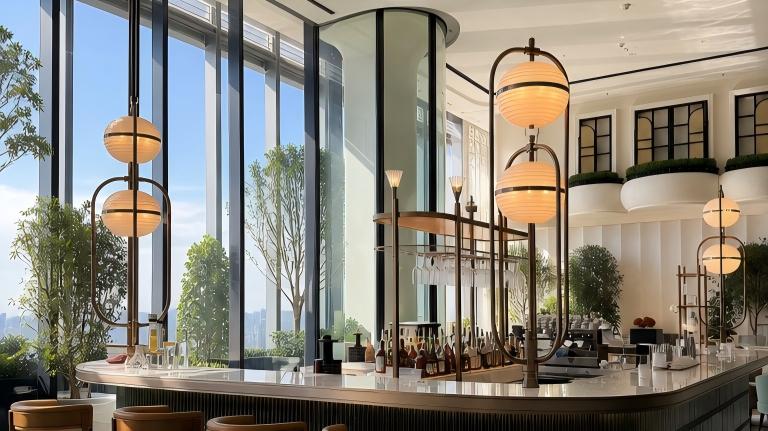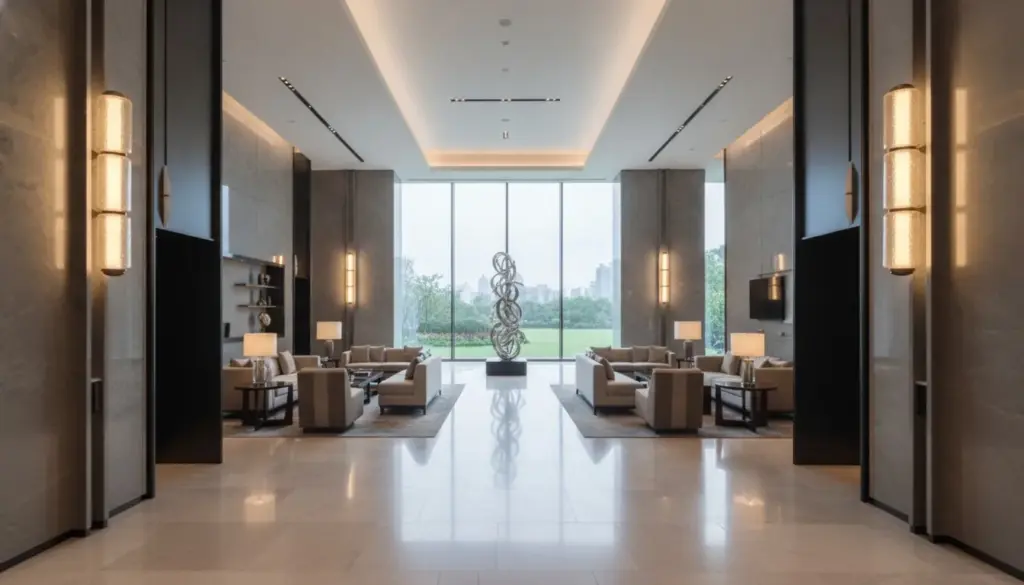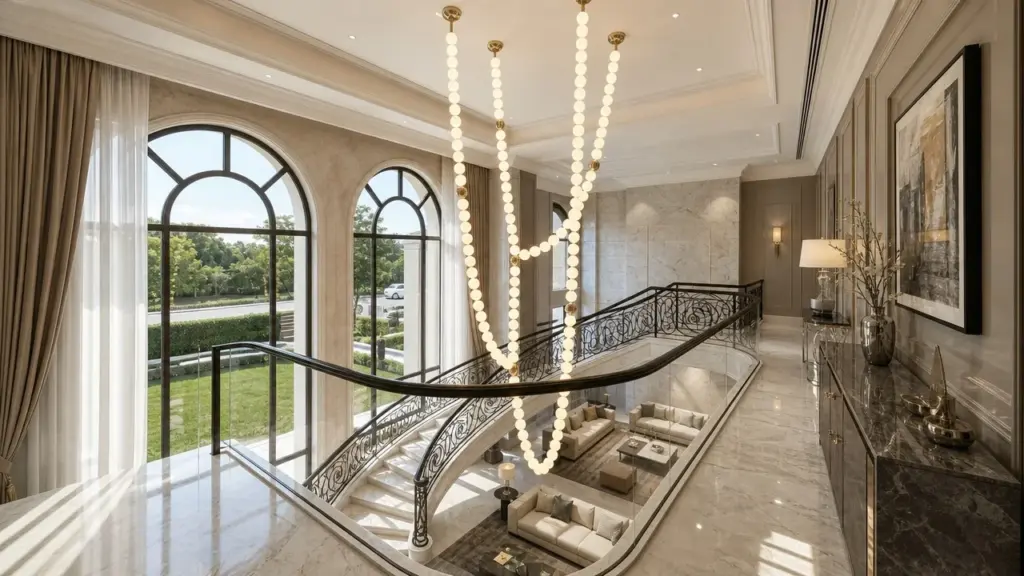
Put the owner’s design and spending priorities and the operator’s guest and staff requirements into one lighting brief. For each fixture or room type, name the person who can approve the decision, the evidence they need and what that approval permits. Use the same fixture and controls revision for the design, operating and technical checks before the authorized buyer releases production.
In a Southeast Asian hotel development, that may mean keeping a bedside sconce’s approved finish while holding the affected order line until the night scene and driver access have been demonstrated. A recorded decision lets the team continue the approved work and gives the supplier a specific correction to price and test.
What the Owner and Operator Should Agree
- Decision authority. Name who accepts the design, operating behavior, technical evidence and expenditure under the project’s appointments.
- Evidence in use. Test guest actions, housekeeping and service access on the same referenced configuration.
- Order conditions. Record the accepted version, any held activity and who can release it.
Agree Who Can Approve Each Lighting Decision
Assign a named reviewer and release authority to each lighting decision under the project appointments. Ask the owner’s representative to define the design priorities, the scope and price boundary, and which changes need spending approval. Ask the operator’s representative to name the people who can accept guest-facing behavior and staff workflows. For background when specifying fixture types and finishes, consult Kinglong Lighting’s lighting project resources.
CapitaLand Ascott Trust’s disclosure for Riverside Hotel Robertson Quay describes technical advisory services that include reviewing concept and interior design, setting furniture, fixtures and equipment requirements, and advising on pre-opening systems and processes. Ask the hotel operator which requirements it sets or reviews under its appointment. Then find the separate written delegation for accepting the actual fitting, approving a premium or committing the order. CapitaLand Ascott Trust disclosure for Riverside Hotel Robertson Quay.
Accor describes Design and Technical Services from concept and detailed design through construction or conversion and pre-opening assistance. A project team can ask its own operator which reviews it will join and which documents, samples and tests it expects at each one. Write the agreed review dates and authority into the procurement programme. Accor design and technical services.
Give the interior designer, technical reviewers and hotel operator different questions to resolve at the mock-up. Ask who can accept the appearance, who can verify the electrical and controls behavior, and who can authorize an added cost or delay. If the same company provides technical services and operates the hotel, record which appointment it acts under for each decision.
Translate Guest and Staff Needs into Testable Scenes
Walk through the room from the guest’s point of view. At arrival, check which controls are obvious from the doorway and what turns on by default. At the bed, verify that someone can switch on a reading light or follow the intended route to the bathroom without lighting the whole room. Have the operator describe what should happen when a guest leaves and then returns, and check the response using the intended room controls.
Run the same room with housekeeping. Specify who can invoke a cleaning setting, which surfaces staff need to see, and how the room returns to the guest setting. In a public area, the list might include breakfast setup, evening service and the reset after an event. Give each scene a trigger, expected fixture behavior and someone who can accept the result. Put staff overrides, permissions and the intended recovery after a power interruption into the functional test where relevant.
The DALI Alliance describes a scene as a way to recall predefined levels or colours for selected lights. If the project uses DALI, ask the controls contractor to identify which fittings respond, what they recall and how the user activates the scene. Run the test with the proposed drivers and the relevant room controls. Record the result on the fixture and controls revisions actually tested. DALI Alliance explanation of scene recall.
Singapore Tourism Board reported that The Fullerton Hotel Singapore and The Fullerton Bay Hotel Singapore implemented LED lighting as an energy-saving measure. For a different hotel, agree the energy objective with engineering, then confirm how low-use periods, staff overrides and guest controls will work in the actual rooms. Define how the project will verify the agreed behavior at commissioning. Singapore Tourism Board hotel examples.
Use a built room or a representative mock-up to see the fixtures at their normal viewing angles. Ask the operator to run the controls without a designer prompting each step. Determine whether the effect depends on daylight, other fittings or finishes nearby. If you need to communicate a guest-facing lighting arrangement when preparing the brief, refer to published hospitality lighting examples.
Agree Criteria for Energy, Upkeep and Design
Compare appearance, energy and maintenance criteria on the same offered fixture configuration. Write down the exact finish, driver reference, diffuser and mounting arrangement. Ask the designer to state which visual features the owner considers essential. Have engineering identify the controls, access and performance information it must see. If an offer moves a component into the joinery, ask for the specific revised drawing and show who will service it.
Singapore Tourism Board and the Singapore Hotel Association identify energy conservation and sustainable sourcing and procurement as focus areas of their Hotel Sustainability Roadmap. Use the hotel’s own brief to agree what the fixture supplier must document and whether it feeds a specific project target or certification submission. Record who assesses that evidence for the project. Singapore Hotel Sustainability Roadmap announcement.
Compare options on the same reviewed scope. Ask which operating states are included in any energy estimate, and which hours and control assumptions the estimate uses. For maintenance, check what can be cleaned in place, how engineering can reach a replaceable part, and which spares arrive with the order. Different finishes or concealed fastening can change staff time and consumables. Have housekeeping review an agreed cleaning method on a representative part and engineering review the safe service procedure with the relevant consultant or installer.
Keep recurring service work visible alongside the purchase price. Ask engineering and housekeeping which fixtures can be serviced during an ordinary room turnover and which might require taking a room out of use. Use their own staffing and access assumptions if the owner wants to compare operating costs. Where the project has several room types, record the expected number of affected fittings and the location of the proposed spares. If the supplier changes the spare part reference, update the parts list and reconfirm which fixtures can use it before accepting the offer.
When the owner asks for a different price, have the supplier identify which parts or services change, including spares, scene setup or mock-up work. Keep the design feature the owner values visible beside the operating check that would be affected. If the cheaper option shifts responsibility to the installer, ask for that scope and cost before comparing totals. Kinglong Lighting’s hospitality lighting development process describes materials and technical development that can help frame the evidence request. Confirm what the supplier will actually provide for this project.
Use the Mock-Up to Resolve Conflicting Priorities
Put the guest use, operating task, test evidence and named approver on one lighting brief line, then carry accepted results into the order. Record the room type, fixture tag, drawing and control versions above the worksheet. Set each row to accepted, retest or hold, then name the person and evidence needed to close the open items. Keep approved requirements visible when a revision changes one part of the design.

| Decision | Evidence to record | Who reviews or acts |
|---|---|---|
| Appearance and scope | Approved finish, sample reference and agreed supply list | Owner representative and design lead |
| Guest and staff use | Observed response to arrival, reading, night and cleaning controls | Operator lead with housekeeping and controls specialists |
| Service access | Reviewed access detail, demonstrated service method and needed spares | Hotel engineering and appointed technical reviewer |
| Commercial release | Accepted revision and written scope, price and any open hold conditions | Delegated approver and procurement lead |
Illustrative example. On a Southeast Asian hotel fit-out, the owner’s design team accepts the metal finish and silhouette of a bedside sconce. In the mock-up, the night button also turns on the sconce, although the operator expects that button to light only the path to the bathroom. Engineering also finds that reaching the proposed driver would require removing a finished joinery panel. The owner wants to retain the sconce appearance and avoid reworking every room.
Separate the fixes. The controls contractor revises the night scene to leave the sconce off, while the supplier and joinery team propose a service access detail that preserves the visible sconce design. Review the cost and programme for that revision. Reproduce the sequence from the bedside button and check that the reading function still works. Use the revised assembly to demonstrate the access method after the relevant technical reviewer agrees the detail.
In the illustrative room, retain the accepted finish while the bedside assembly remains on hold until night behavior and service access pass on its revised configuration. The buyer can authorize the revised mock-up if the project permits. If both tests pass, the designated technical and operating reviewers record the result, the owner’s authorized representative confirms the resulting scope and any extra cost, and procurement records the production release for the accepted revision. If either check fails, hold the affected bedside assemblies and identify what the next sample must show.
A mock-up can pass visually while its cost remains unresolved. Price the revised joinery and service opening as separate lines if they transfer work between trades. Send that difference to the owner’s authorized approver after the technical and operating reviewers have confirmed the change works. Use the original and revised scopes to compare the proposed lighting changes.
Carry the Accepted Requirements into the Order
Carry the accepted fixture details, scenes, service evidence and release conditions into the order and handover. Reference the signed worksheet, approved physical sample, drawings and control schedule in the order documents. Record which party supplies each component and who is responsible for settings and on-site tests. If a pending item affects only a named area or fixture, define precisely which work can proceed and which needs written approval. Ask the supplier to acknowledge the same references and conditions.
Specify what the hotel receives at handover. That can include the final drawings, fixture and driver references, a controls schedule or backup where agreed, approved cleaning methods, spare parts and an account of any changes from the mock-up. Agree who can adjust scenes after handover and who keeps a copy of the accepted settings. Have the operator’s engineering team walk through a service example with the installed arrangement and the relevant project specialist.
Before opening, repeat the operating checks where the actual controls, furniture or room dimensions differ from the mock-up. Assign who witnesses the tests and who owns any follow-up. Keep a signed record of the affected rooms so the operator knows what can enter service under the project’s approval process. If a replacement part or different programming changes a previously accepted behavior, reopen the affected line and record the new evidence.
Where the lighting package has several suppliers, confirm who owns the end-to-end room check. The decorative fixture supplier may supply the specified fitting and driver, and another party may configure the room system. The commissioning record should identify the lighting designer, site team or other appointed coordinator who will bring the results together. Agree the contact for resolving fixture and control questions after handover.
Kinglong Lighting provides a contact form for custom decorative lighting inquiries. Mention your hotel’s stage, the room or public area, the fixture types and the operating or service checks still open. Have the relevant brief and approval references ready when you request a hotel lighting brief discussion.
Frequently Asked Questions
What if the operator joins after design approval?
Confirm which approved items affect the operator’s work and give the new team a defined period to review those decisions. Start with what the guest must do, what housekeeping must see and what engineering must be able to reach. Record any new requirement as a proposed change with its cost, timing and authorized decision owner.
Can a substitute use the original mock-up approval?
Retest a proposed substitute against the affected guest or staff checks before accepting it. Ask what changed in the shade, driver, controls response or access detail and keep earlier evidence only where it still applies. Tie the new result to the offered revision and obtain the same approvals required for the affected scope.
Do we need a full mock-up for every room type?
A representative room can cover shared details when the project verifies that the differences leave the accepted results applicable. Compare fixture positions, joinery, sightlines and the final control layout. Test the changed condition separately if it affects an agreed behavior or service access, and write down which room types the evidence covers.