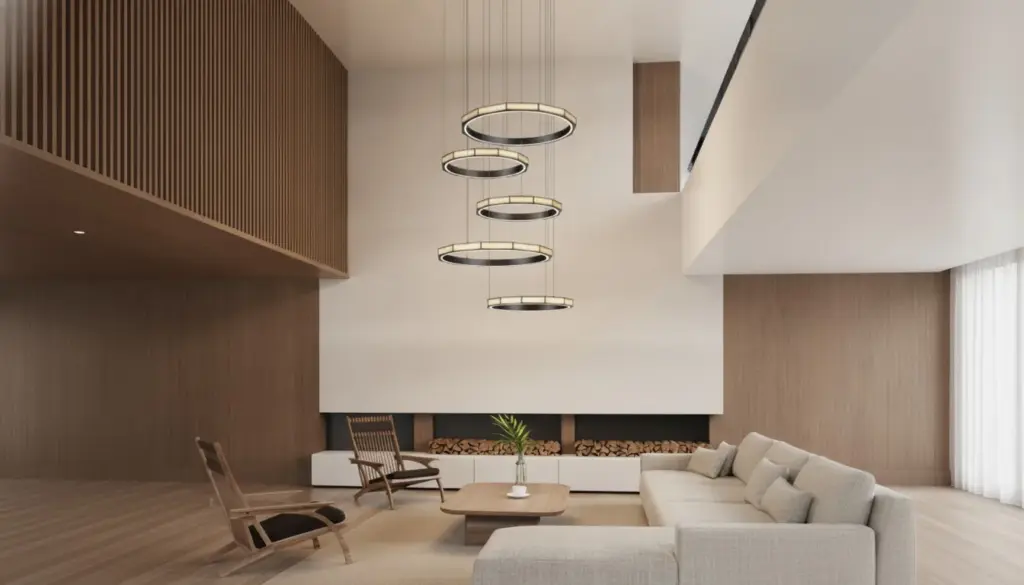
A villa owner can love a lighting proposal without having authorized its purchase. Keep two decisions visible: whether the defined design is acceptable, and whether the defined spending scope is authorized. Tie both to the same fixture schedule and proposal revision. Then give a separate instruction for any purchase commitment, after the outstanding technical questions and purchasing authority have been settled.
Two Approvals, Two Different Questions
Design approval accepts a defined lighting proposal; budget approval authorizes a defined spending scope. Record each decision separately against the same revision, and do not treat either alone as permission to order.
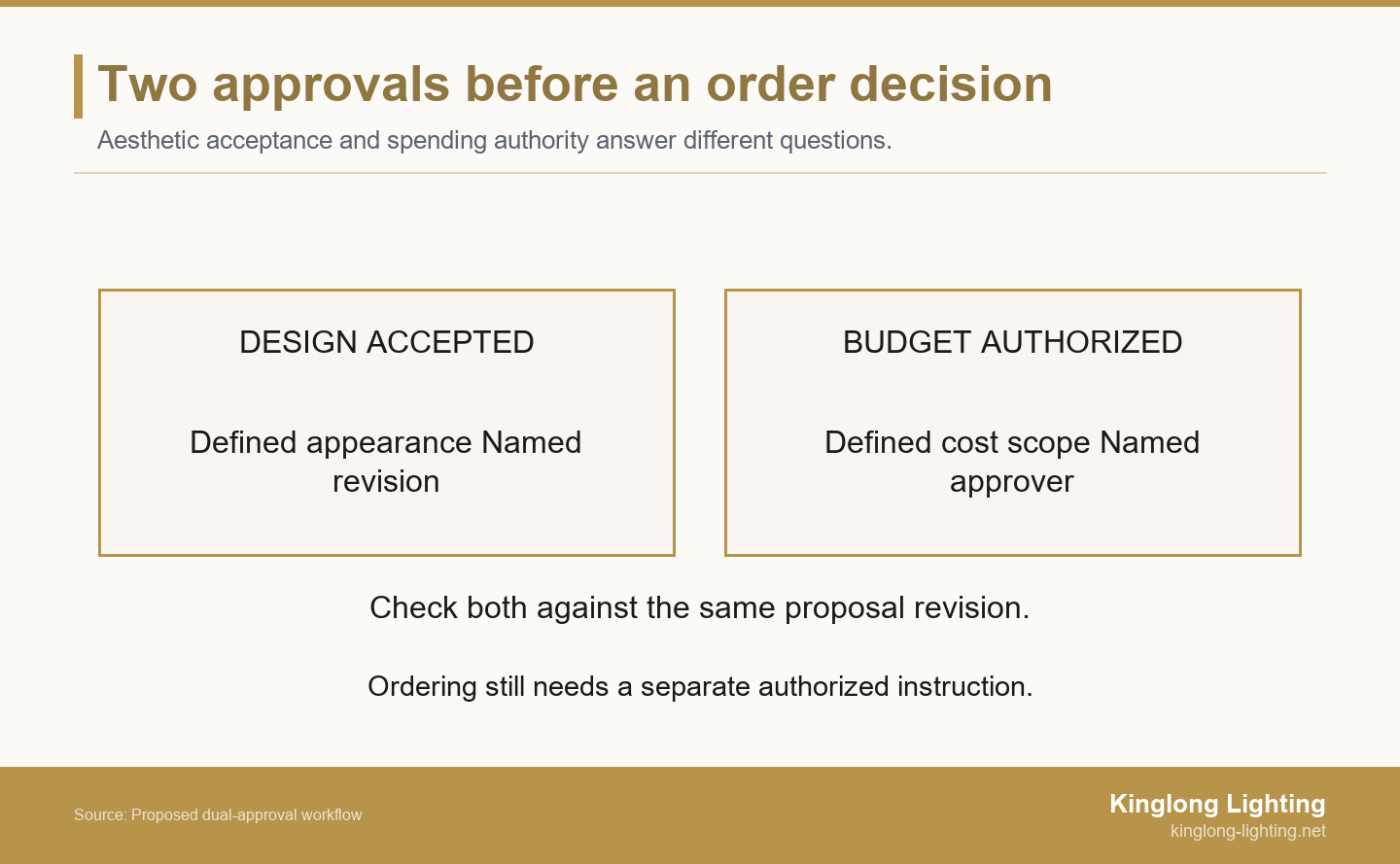
- Design accepted, budget open: retain the preferred design and obtain the missing cost information.
- Budget authorized, design conditional: resolve the named appearance condition before treating that selection as settled.
- Both settled: reconcile the references, technical review and purchasing authority before an order instruction.
“Approved” becomes ambiguous when a designer means that the finish suits the interior, a procurement manager means that the supplier has answered an enquiry, and the owner means only that the price is worth considering. Replace that single word with an object: design accepted for the listed rooms, budget authorized for the listed quotation, or order instruction issued by the appointed buyer. Ask the team to use those distinctions in meeting notes and supplier correspondence.
A useful distinction in Atlassian’s DACI decision method is between the driver who organizes a decision and the approver who makes it. For a villa lighting package, the person gathering drawings and prices need not be the person authorized to accept either. Name the actual design and spending approvers rather than inferring authority from who forwards an email. The two-record method here is a practical proposal, not a prescribed contractual procedure.
Start with a room-by-room fixture schedule so that every decision has an identifiable subject. Kinglong’s lighting specification and procurement resources can help prepare that discussion. Assign a revision reference to the schedule and keep the associated drawings and quotation together. If a meeting accepts only the entrance and dining selections, record those rooms explicitly; leave the remaining rooms open rather than describing the whole home as approved.
Approve a Defined Lighting Design, Not an Inspiration Image
Record the room and fixture reference, revision, scale, materials, finish and agreed appearance evidence so the designer and owner know what was aesthetically accepted.
An inspiration photograph may establish a mood while leaving the proposed fixture almost entirely unspecified. A rendered pendant can look convincing without showing its canopy, cable arrangement, shade translucency or relationship to the dining table. Ask the design team which evidence is sufficient for the present decision: an annotated drawing, a finish reference, a material sample, or a viewed sample under agreed conditions. Record what that evidence covers. Acceptance of a finish sample does not establish the proportions of a complete chandelier.
In APM’s explanation of scope management, project outputs, outcomes and benefits are identified, defined and controlled. For a villa owner, the useful lesson is to define what the lighting decision covers before accepting an image. Is the dining pendant intended to be the visual centerpiece, or should it sit quietly beside artwork? That answer changes which material, size or form the designer can vary. These lighting approval fields are a proposed application of scope definition, rather than an APM lighting specification.
Write conditions as observable requests. “Accepted subject to a darker brass sample” identifies unfinished evidence; “looks good” does not. Keep that decision conditional until the named person has reviewed the replacement sample. For a whole-home package, also state whether acceptance applies to one fixture or to a coordinated family across several rooms. A different bedroom shade may preserve the room’s own design yet break an intended relationship with the corridor fittings.
When choosing references from Kinglong’s decorative lighting collections, identify the actual model, proposed variant and relevant drawing rather than linking only to a collection page. A collection supplies a starting point for discussion; the team still needs to confirm which dimensions, finish and details the supplier is proposing for this villa. Give the supplier one current reference set, with superseded options clearly identified, so an earlier attractive option cannot be mistaken for the accepted selection.
Approve the Complete Cost Boundary
A budget ceiling sets a limit; an approved quotation accepts a particular scope within a stated cost boundary. Record quantity, currency, inclusions, exclusions, unresolved allowances and the named spending approver.
A room allowance is useful while choosing options, but it cannot answer whether the final package includes every intended cost. The owner may have allowed for decorative fixtures while a buyer assumes that the same amount also covers delivery, installation and controls. Before asking for budget approval, set out the boundary in ordinary language: which rooms and quantities are included, which quotation revision applies, and which costs another party will pay. Label an estimate as an estimate and show who will replace it with confirmed information.
For the comparison, list the fixture supply price, any separately charged development or samples, packing, delivery, installation, access equipment, electrical work, controls and agreed spares where relevant. This is a scope check, not a claim that every supplier provides each item. Identify who supplies and prices each excluded item. If a contractor carries installation elsewhere in the project budget, cross-reference that provision instead of counting it again. Keep unknown amounts visible rather than treating an empty quotation cell as zero.
Delivery terms deserve their own check. ICC’s Incoterms rules clarify delivery-related tasks, costs and risks between trading parties. Ask the buyer and supplier to identify the agreed rule, version and named place where applicable. That does not establish the villa’s complete installed cost or select a suitable rule for the owner. Read the actual quotation inclusions and ask the responsible party to resolve anything the delivery term does not answer.
A useful authorization names the limit and its basis: the quoted supply scope in the stated currency, plus explicitly identified project-side provisions. If a material cost remains open, choose a bounded action. The owner might authorize a separately priced sample while deferring the package, or authorize only a clearly separated set of rooms. State that limited scope in the instruction. Do not extend it to the unresolved balance because the preferred design has already consumed time and attention.
Copy This Dual-Approval Tracker
The dual-approval tracker keeps design and budget status, approver, date, revision and conditions visible, with a separate order instruction field and technical questions.
Copy the record for each fixture or clearly defined package group. Replace the bracketed fields with project information. Use open, conditional, accepted/authorized or declined for each relevant decision. Conditional means a named requirement remains unresolved; it should not be counted as fully approved. When only part of a group is settled, split the record so the accepted rooms are distinguishable from those still under review.
| Record field | Fill in for this decision |
|---|---|
| Decision scope | [Room(s), fixture ID(s), quantity, schedule revision] |
| Design being reviewed | [Drawing revision, dimensions, material, finish, sample/reference] |
| Design decision | [Status; named approver; date; exactly what is accepted] |
| Design conditions | [Outstanding appearance question; evidence needed; reviewer] |
| Commercial basis | [Supplier quotation/version, currency, validity, included scope] |
| Project-side costs | [Delivery/installation/controls or other provisions; payer; confirmation status] |
| Budget decision | [Status; named spending approver; date; authorized limit and basis] |
| Budget conditions | [Unpriced item or allowance; person obtaining the answer] |
| Technical questions | [Electrical, mounting, structural or other review; responsible specialist; status] |
| Change since review | [What changed; affected design/cost inputs; decisions to revisit] |
| Permitted next action | [Request information / revise proposal / separately authorize sample / prepare order] |
| Separate order instruction | [Authorized purchaser; exact scope and terms; instruction reference/date, or not issued] |
Read the two statuses together. Design accepted with budget open means the preferred appearance is known, but spending still needs a decision. Budget authorized with design conditional means the spending basis is acceptable, but the outstanding design condition remains. Both accepted against matching references can support preparation of an order; they do not settle unanswered technical questions or replace the authorized purchaser’s instruction. If either decision is declined, record the requested revision instead of sending the supplier a general approval.
For visual conversations, installed contexts help a team discuss its own room references. A portfolio photograph does not reveal a project’s approved budget, product evidence or decision history, so it cannot fill those fields in your villa’s record. For a discussion of appearance and spatial context, use Kinglong’s published decorative lighting projects.
When a Cheaper Alternative Reopens Design Approval
Consider an illustrative six-room villa package. The dining pendant was aesthetically accepted with ribbed glass shades. A supplier now proposes acrylic shades to reduce the supply price, while installation cost remains unconfirmed. The existing design approval does not carry over to the acrylic alternative, and the package budget decision remains open. This is a constructed example, not a reported Kinglong project.
Enter “acrylic alternative” and its drawing revision in a new tracker record linked to the original. The designer compares translucency, visible texture, proportions and the intended relationship with the adjoining room. The owner then accepts or declines that defined appearance. Record the result against the alternative, preserving the glass option’s history. If the alternative is declined, the buyer can seek a different proposal or return to pricing the accepted glass design; a lower supply price does not resolve the aesthetic objection.
Next, enter the revised supply quotation and mark installation as unconfirmed, with the project buyer responsible for obtaining the installer’s scope and price. Until that answer arrives, the owner can see the supply difference but cannot conclude that the complete package fits the installed-cost boundary. Once the missing cost is confirmed, the spending approver reviews the combined basis and records the decision. If no reliable installation figure is available yet, keep the package decision conditional or open and state the limited information-gathering action permitted.
This follows the distinction in APM’s explanation of change control: requests affecting a baseline are captured and evaluated before being approved, rejected or deferred. The two-status record is a practical lighting application of that principle. A price-only revision with an unchanged product can reopen the spending decision alone; a material or size change calls for design review as well.
Use the decorative-lighting value engineering guide when discussing alternatives. Compare the specific feature being changed and the cost boundary before describing an option as better value. Preserve the accepted design reference until a replacement has an explicit decision.
Turn Agreed Decisions Into a Clear Supplier Instruction
Before an order instruction, reconcile the approved design revision and priced scope, resolve the required technical questions and identify the person separately authorized to commit the purchase.
A visual decision cannot establish electrical or mounting suitability. UL Solutions’ marking and application guidance explains how marking and certification information helps assess UL-certified equipment for a particular installation. That guidance is not evidence that any proposed Kinglong fixture is certified. Ask the appointed specialists which product-specific documents and installation details they need for the actual location and configuration.
Have the buyer read back the intended order scope: fixture IDs and quantities, accepted drawing and finish references, quotation version, exclusions, delivery basis and any agreed staged approval points. Compare that read-back with the tracker. Resolve mismatches before sending an instruction. Where a condition still applies, state whether only information gathering or a separately authorized sample is permitted. Avoid combining a sample request and an ambiguous “proceed” in the same message.
Keep decision authority separate from document administration. The supplier may need one contact to consolidate comments, while the owner retains the spending decision and a designer retains the agreed aesthetic review. The project’s actual appointments and terms determine commitments; this tracker helps the team express its instructions clearly.
Bring the Open Decisions to a Villa Lighting Discussion
Kinglong’s villa page asks for a floor plan, ceiling height, preferred mood and budget. Add the current room schedule, preferred fixture references and open questions from the tracker. Identify which appearance decisions are settled and whether the spending boundary is a preliminary allowance or an authorized quotation scope, then contact Kinglong about your villa lighting brief.
Those inputs give the enquiry a clear subject: the proposed fixtures, relevant product details and materials needed for the next review. Ask which references or sample details can be provided for your particular request. Keep internal design acceptance and spending authorization with your appointed team; the discussion does not itself approve the package or commit an order.
Frequently Asked Questions
Can the owner give both approvals?
Yes, an owner can hold both decision roles, but should record the aesthetic decision and spending authorization separately. The same person may accept the appearance today while waiting for installation costs before authorizing the package. Two entries preserve that distinction without requiring extra people. If a representative acts for the owner, record the scope of that person’s authority rather than assuming it includes every purchase.
Does approving a paid sample authorize the whole lighting package?
Approval of a paid sample should be limited to the sample scope and its agreed charge unless a separate package commitment is expressly recorded. State the sample reference, requested review and permitted expense. Ask the buyer to check the supplier’s actual sample and development terms before giving an instruction. A successful sample review supplies evidence for a later decision; it does not automatically settle quantities, full-package costs or purchase terms.
What happens when the approved quotation expires?
Confirm the current quotation with the supplier before relying on the previous commercial approval. If price, availability, delivery basis or another commercial term changes, return the revised basis to the spending approver. Revisit design acceptance only where the fixture proposal also changes. Keep the earlier quotation and decision as history, and record the current quote reference so the buyer does not order against an outdated basis.
Is a contractor’s lighting allowance a budget approval?
A lighting allowance is a budget provision whose scope needs checking; it does not by itself identify an approved fixture package. Ask whether it covers decorative fittings, installation, controls and delivery, and where excluded items sit in the project budget. Reconcile the selected package with that provision before requesting spending authorization. The contractor’s agreement governs the allowance; the tracker records how the owner’s chosen scope relates to it.