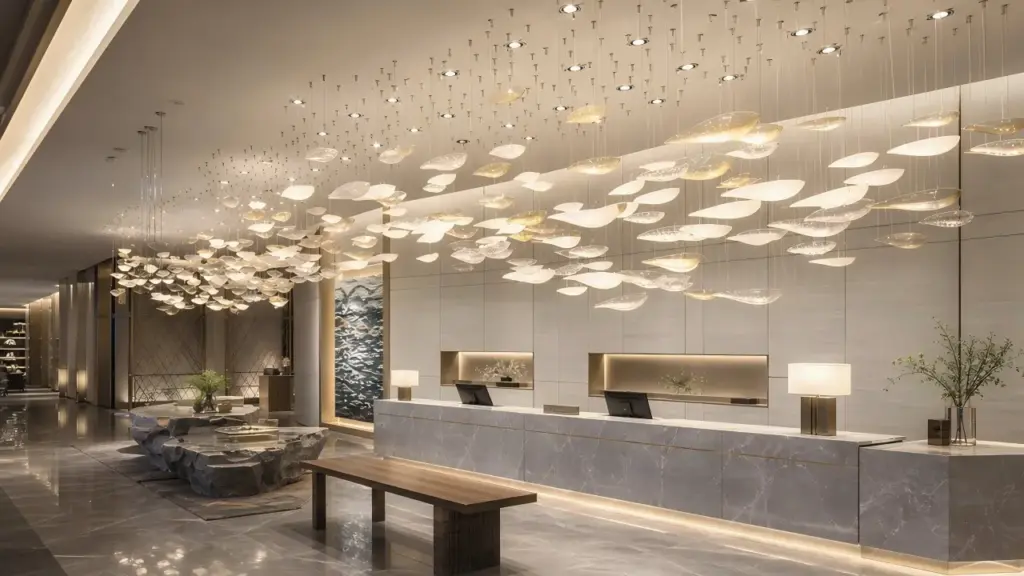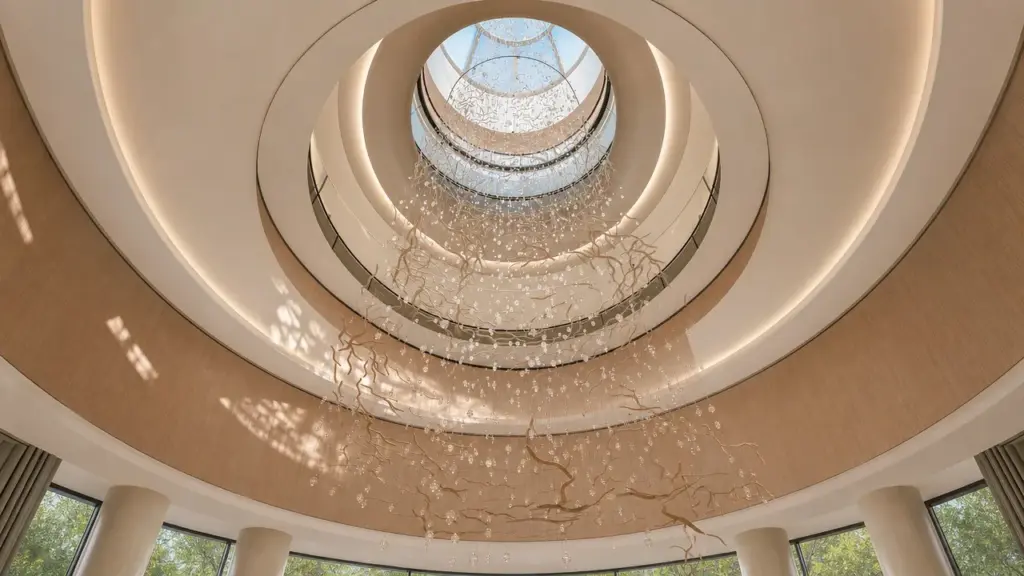
A decorative lighting approved-equal request needs a comparison the consultant can verify: the specified requirement, the exact alternative, evidence of its performance and appearance, and every meaningful difference. Matching catalogue photographs or headline specifications is not enough. A proposal becomes credible when it shows where the alternative meets the project brief, where a departure needs a decision, and what remains unproven. Approval still belongs to the authority identified by the project, not to the supplier making the claim.
Three Checks Before Accepting a Lighting Alternative
- Confirm that alternatives are permitted and identify the requirements that cannot be traded away.
- Compare the actual proposed configuration using samples, technical records and declared deviations.
- Record the accepted scope and unresolved conditions so purchasing does not turn a limited review into unrestricted approval.
Establish What the Proposed Equal Must Match
Before asking whether a fixture is equivalent, establish whether the project permits an alternative, who can accept it, and which requirements that person will assess. Here, an approved equal means an alternative accepted against the applicable project requirements. It is not a permanent status that a manufacturer can assign to an entire collection.
Start with the issued specification, fixture schedule, drawings, design references and applicable substitution procedure. Record the baseline revisions and submission deadline. A lighting consultant may assess optical performance while an interior designer reviews appearance; the owner or contract administrator may control the final change. Identify those roles rather than assuming that a favorable technical comment also changes the purchasing obligation.
For a concrete US federal example, FAR 52.211-6, Brand Name or Equal, requires an offered equal to satisfy the solicitation’s stated physical, functional or performance characteristics. It also requires identification of the offered product and disclosure of proposed modifications. That provision is not a universal rule for hotel contracts; it illustrates why a supplier should present a defined comparison rather than ask the reviewer to discover equivalence.
Separate mandatory attributes from preferences before discussing savings. A required mounting arrangement or light-control behavior cannot be offset by a better finish or lower price unless the authorized project team agrees to change that requirement. Where the brief uses subjective language such as “refined appearance,” ask what sample, viewing conditions or documented design priorities will make that judgment reviewable.
Compare the Lighting Outcome, Not Just the Catalogue
Decorative lighting has to work as an object and as part of the room’s lighting system. Evaluate those separately. A visually convincing pendant may distribute light differently; a technically capable fitting may change the proportions or material character that the designer selected. Neither side of the comparison makes the other unnecessary.
Show Appearance and Materials in the Intended Setting
Use comparable physical samples to test the design intent, and declare material differences instead of hiding them behind similar photographs. Review the silhouette, overall dimensions, suspension details, canopy, visible joints and finish alongside the specified reference. Where crystal or glass is central to the appearance, compare the actual component and its relationship to the light source, not just its material label.
Agree the viewing conditions before the review: mounting height, distance, surrounding finishes and relevant lighting scenes. Look at the fitting unlit as well as illuminated. A sample that appears convincing on a white table may reveal conspicuous joints, visible lamps or different reflections when suspended in the intended setting. Record the sample identity and the specific observations; “looks good” gives the next reviewer little to reproduce.
Dimming can also change the decorative result. The US Department of Energy’s guide to color-tunable LED products distinguishes dim-to-warm products, which become warmer in appearance as output falls, from other tuning categories. A common full-output color temperature therefore does not establish equivalent behavior in a dinner scene. Ask for the specified behavior to be demonstrated with the proposed light source and controls.
Material substitutions deserve the same clarity. Identify the substrate, surface treatment, glass or crystal construction, and any cleaning restrictions that differ. An alternative material may be acceptable, but that is a design decision to record, not evidence that the materials are identical.
For a collection-based starting point, inspect the Crystal Tube collection as a design reference. Kinglong Lighting’s product imagery can help frame the desired visual direction; the submission still needs the selected dimensions, finish and physical approval sample for the proposed project configuration.
Check Light Distribution, Dimming and Product Identity
Tie photometric, controls and certification records to the build actually being offered. The fixture model alone may not distinguish different optics, light engines, drivers or finishes. List the configuration identifiers and explain which report or sample covers each combination. If the supplier changes the build to achieve equivalence, revisit the evidence affected by that change.
The public IES description of LM-79-24 includes measurements of light output, electrical power, intensity distribution and color under standard conditions. Those are distinct measurements, not interchangeable claims. A report showing similar total output does not by itself show the same distribution in the room, and the method’s name does not supply the project’s acceptance limits.
Ask the lighting designer to compare the proposed photometric data using the relevant mounting positions and calculation assumptions. Note differences at the surfaces and viewing positions that matter to the design. For a decorative fixture with replaceable lamps, identify the proposed lamp and whether the available data represents the complete assembly. Do not quietly treat a lamp-only figure as the fitting’s delivered performance.
For a DALI proposal, the DALI Alliance product database states that certification relates to the tested product, with conditions involving brand, GTIN, firmware, hardware and product ID. It also states that luminaires are not listed in that database. Verify the relevant component identity, then separately assess its operation in the proposed installation; a component entry is not approval of the complete lighting arrangement.
Document the controller, driver and light-source combination used for any demonstration. Check the required scene transitions, low-level stability, switch-on behavior and any audible noise that matters in the space. These observations should answer the project brief, not an invented universal dimming threshold.
For certification claims, UL describes Product iQ as a tool for verifying UL certification of products and components. Use the appropriate evidence route for the destination and product, checking scope as well as identity. A component certification, factory certificate or logo on a brochure should not be presented as proof that the proposed complete luminaire meets every project requirement.
Build an Approved-Equal Evidence Matrix
Build the comparison around requirements, not the supplier’s list of selling points. For every requirement, show the proposed configuration, evidence reference, declared deviation and requested reviewer action. Keep “not demonstrated” separate from “demonstrated not to meet.” The former needs defined evidence; the latter needs a corrected proposal or an expressly authorized departure, not another statement that the products are similar.
A project portfolio can support the supplier-background part of the file. You can review Kinglong Lighting project applications to identify comparable settings and formulate follow-up questions. Published application images do not prove that this proposed configuration has passed the current consultant’s equivalency review.
| Requirement area | Evidence to pair with the baseline | Difference the reviewer must resolve |
|---|---|---|
| Appearance and scale | Dimensioned views and identified samples under agreed viewing conditions | Changes in proportions, visible details or installed appearance |
| Materials and finish | Material declaration, finish sample and care instructions | Different substrate, surface treatment, transparency or cleaning restrictions |
| Lighting performance | Configuration-matched photometric report and relevant room comparison | Changed distribution, output or visual comfort |
| Controls and scenes | Driver identity, control arrangement and recorded demonstration | Different dimming, color behavior or commissioning needs |
| Compliance | Applicable declarations, reports or certification records for the offered product | Unclear scope, identity mismatch or missing destination evidence |
| Installation and maintenance | Mounting detail, access drawing, replacement procedure and parts information | Changed supports, access needs, service work or spare-part dependency |
| Delivery and commercial scope | Qualified programme and quotation tied to the proposed build | Approval dependencies, extra coordination, exclusions or unresolved timing |
Add the exact clause or drawing reference, evidence revision, responsible reviewer and closure condition to each row. Use the project’s own form where one exists. This matrix is an organizing aid, not a replacement contractual form or a weighted scorecard: strong results elsewhere do not cancel a failed mandatory requirement.

Include Maintenance, Installation and Delivery Consequences
CIBSE’s public overview of Lighting and Facilities Management identifies maintenance and upgrades as part of facilities management; its contents also include suggested material for operations and maintenance manuals. For an alternative decorative fitting, make that handover practical: request configuration-specific access instructions, cleaning guidance and replacement-part identification. The guide’s scope is useful context, not proof that the offered fixture satisfies the project.
An alternative can meet the visible design intent while moving work elsewhere. Compare installation access, maintenance obligations and approval-dependent delivery timing before accepting a commercial advantage. A driver moved above a closed ceiling, for example, creates an access question that a photograph of the pendant cannot answer. Ask who will reach it, through which opening, and what finishes must be disturbed.
Check mounting loads, fixing responsibility, ceiling coordination and cable routes with the responsible project specialists. Obtain the replacement procedure for serviceable parts, including whether a light-source replacement changes the appearance or requires new control settings. Request the actual warranty terms and spare-parts proposal; do not substitute a generic claim of “easy maintenance” for an identified method.
For hotel applications, review the hospitality material-selection process. Kinglong Lighting describes physical sample-board review and confirmation of materials and lamp specifications. Use that as a starting point for agreeing what the project will inspect, then establish the actual sample, service-access and approval responsibilities in the proposed scope.
Compare delivery on the same basis as the specified option. Distinguish time awaiting design decisions, sample development, evidence preparation, manufacturing and transport. A quoted production period does not necessarily include every preceding approval activity. Ask which assumptions support the required-on-site date and what happens if a sample must be revised. Record dependencies rather than inventing a standard lead time.
Finally, reconcile the claimed saving with changed accessories, installation work, testing, samples and replacement provisions. Present any unresolved cost or programme effect separately for the authorized commercial decision-maker. Technical acceptance should not silently make another party responsible for work that the offer excludes.
Resolve Conflicting Sample and Supplier Evidence
When a physical demonstration contradicts the comparison sheet, the issue is no longer simply whether the folder is complete. Identify which build was demonstrated and whether the claimed performance describes it. The reviewer needs the contradiction resolved before relying on either record.
Illustrative Example: A 36-Pendant Restaurant Proposal
Consider a lighting consultant reviewing 36 pendants for a restaurant fit-out. The contractor presents 1 approval sample for the proposed order, with a comparison sheet claiming equivalent warm dimming. At full output, its appearance seems close to the design reference. In the dinner scene, however, the proposed sample remains fixed white while the brief calls for a warmer appearance as output falls.
The consultant returns the proposal for a configuration-matched demonstration rather than accepting a revised sales statement. The discrepancy concerns required behavior, not a preference that can be waived by the supplier. Full-output similarity does not justify approving the proposed 36 pendants. Before further development, the reviewer confirms the intended scene with the designer and identifies the controller used in the test.
The supplier proposes a revised light-engine and driver combination, updates the comparison sheet and offers a corresponding sample. To understand the supplier-side preparation, review Kinglong Lighting’s customization workflow, which describes blueprint review and sample approval stages. For this request, agree which revised drawings, product identifiers and demonstration records are required. Changing a driver alone is not evidence that the complete fitting will deliver the intended result.
The consultant then repeats the relevant scene with the project controller, checks the demonstrated configuration against the revised offer, and reviews any new maintenance or compliance implications. Only the verified outcome can support reconsideration. This is an illustrative example, not a Kinglong installation or a reported approval result. It does not guarantee that the proposed redesign will pass; if the necessary behavior remains unproven or fails, the alternative still lacks a defensible basis for acceptance.
Record a Decision That Procurement Can Actually Use
Name the accepted configuration and the conditions that must close before purchasing relies on the decision. Record the fixture tags, drawing and evidence revisions, sample identity, reviewed deviations, decision-maker and date. Avoid a blanket “approved” note if the review covered appearance only or excluded controls, installation or commercial effects.
Use the project’s actual status terminology, but make its consequence explicit. An accepted submission identifies the scope supported by the evidence. A request for information names the missing record and responsible party. A rejection identifies the unmet requirement. Where conditional acceptance is permitted, state who verifies the condition, what evidence closes it and which action remains restricted in the meantime. Give purchasing the actual closure record to retain with the order: for example, a signed sample review or a resolved technical response. A date in a meeting programme does not show that the condition was satisfied.
Procurement should carry that decision into the order description rather than attach it to a different build. Preserve the approved comparison and its referenced documents together so a later substitution can be checked against a stable record. If the review exposes another technical question, browse related decorative-lighting resources before preparing the next evidence request. Further reading can help define the question; it cannot replace the missing project-specific answer.
Frequently Asked Questions
Can an alternative be accepted before a physical sample is ready?
Only if the project permits that limited decision and records the outstanding sample review as a condition. Clarify whether the decision allows further design work, purchasing or neither. Do not let an administrative status imply that the physical appearance has already been assessed.
Does approved equal mean copying the specified designer’s fixture?
No. Assess a legitimate alternative against the project requirements without assuming permission to reproduce protected designs. If a request depends on copying distinctive design features, resolve the design-rights question before asking a manufacturer to develop it. Functional equivalency and permission to reproduce a design are different questions.
Can a previous hotel approval be reused for a new project?
Use it as background, not as the new approval. The earlier record may reveal useful tests or application experience, but the new project can have different controls, locations, schedules and acceptance criteria. Identify what evidence remains applicable and what must be reviewed again.
What if a driver changes after the alternative is approved?
Refer the configuration change through the project’s review procedure before treating the new driver as covered. Identify affected control behavior, installation details and supporting records. A supplier’s statement that the replacement is equivalent does not establish the scope of the earlier consultant decision.