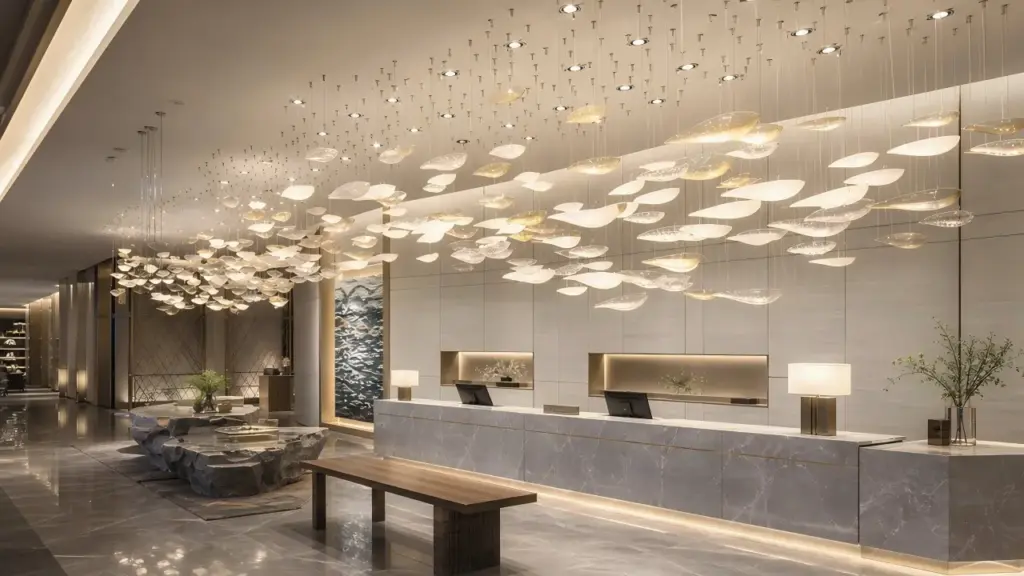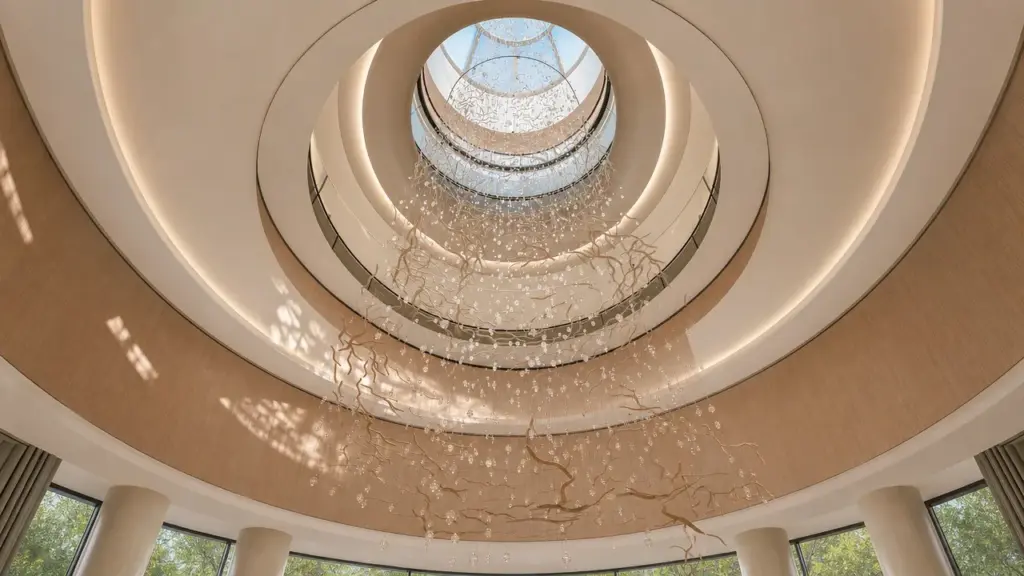
Стандарт освещения номеров и коридоров роскошного отеля должен вести себя как система непрерывности, а не как список светильников для каждой комнаты. Гость перемещается из вестибюля лифта к порогу коридора в зону сна, и каждый прыжок освещения меняет восприятие безопасности, спокойствия и качества бренда. Наглядный отель на 200 номеров с 12 световыми точками на номер и 4 коридорными зонами на этаже может создать более 2400 повторяемых световых решений, прежде чем будут подсчитаны общественные зоны. Практический стандарт заключается в том, чтобы заморозить правила комфорта в отношении бликов, цвета, контроля, обслуживания и единообразия замены до того, как проект закупит декоративные светильники.
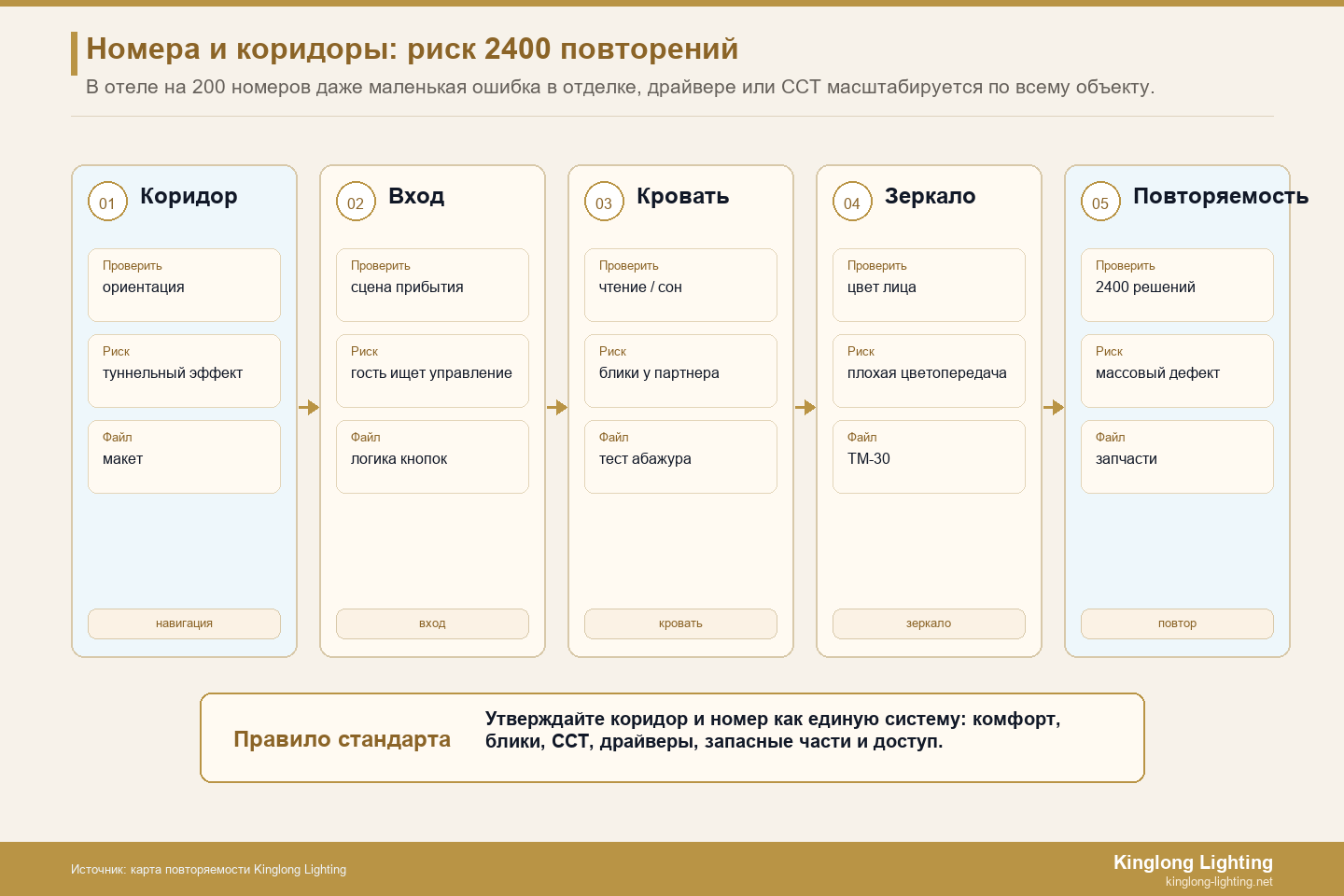
В номерах и коридорах тише, чем в вестибюлях, но за низкие стандарты они чаще наказывают. Одна и та же серия ламп, отделка, драйвер, абажур, режим регулирования яркости и запасные части могут повторяться сотни или тысячи раз. Небольшое несоответствие становится всеобщим раздражением: суровый коридор за пределами номера, слишком слабый для чтения прикроватный светильник, светящийся выключатель, будящий гостя, или декоративная подвеска, которую невозможно почистить, не сняв части потолка.
Ключевые выводы
- Преемственность прежде всего: Рассматривайте вестибюль лифта, коридор, входную дверь, вестибюль, кровать, письменный стол, ванную и гостиную как один гостевой путь.
- Комфорт превосходит яркость: Стандарты роскошного освещения должны контролировать блики, контрастность, цвет и поведение сцены, а не только люкс.
- Повторяемость имеет значение: Сотни комнат требуют отделки, драйвера, цветовой температуры и дисциплины в отношении запасных частей.
- Коридоры – это брендовые пространства: Они должны направлять движение, показывать номера комнат, уменьшать туннельный эффект и избегать холодного коммерческого света.
- Доказательства выпуска: Перед утверждением закупки запросите образцы, фотографии макетов, данные о драйверах, доступ для обслуживания и карты замены.
Рассматривайте освещение в номере и коридоре как единую систему обеспечения непрерывности работы гостей.
Стандарт должен описывать, что чувствует гость во время движения, отдыха, чтения, ухода за собой и поиска комнаты ночью.
Во многих схемах освещения отелей номера и коридоры разделены, поскольку категории закупок различаются. Гость не воспринимает их такими. Коридор создает ощущение безопасности и спокойствия еще до того, как откроется дверь. Вход в комнату либо подтверждает, либо опровергает это ожидание. Прикроватная тумбочка, письменный стол, гостиная, ванна, зеркало и ночная дорожка решают, будет ли освещение выглядеть роскошным или просто декоративным.
Напишите стандарты как правила впечатления, а затем переведите их в светильники.
Первым слоем должен быть язык впечатления: теплое прибытие, четкий номер комнаты, пешеходная дорожка с низким уровнем бликов, интуитивно понятная сцена входа, читаемая прикроватная подсветка, приятный свет в зеркале, безопасное ночное передвижение и простота уборки. Только после того, как эти правила будут ясны, команда должна выбирать подвески, бра, потолочные светильники, настольные лампы, линейные светильники и декоративные детали. Библиотека освещения IES помогает закрепить этот образ мышления, поскольку он рассматривает освещение по критериям применения и качества, в то время как Концепция WELL v2 Light сохраняет визуальный комфорт и человеческий опыт при принятии решения.
Объем работ Kinglong Lighting в сфере гостиничного освещения естественно затрагивает эту проблему непрерывности: компания поддерживает гостиничные помещения от центральных элементов вестибюля до подвесок в коридорах и семейств освещения в номерах. Для роскошного отеля спецификация не должна допускать, чтобы освещение коридоров, декоративное освещение номеров и обновление номеров превращались в изолированное продуктное решение.
Установите стандарты коридора для спокойной ориентации
В роскошном коридоре должно быть легко ориентироваться, не ощущая себя как торговый проход, офисный коридор или путь только для экстренных случаев.
Коридоры нуждаются в достаточной видимости для обеспечения безопасности, уборки помещений, перемещения багажа и распознавания номеров комнат. Им также нужны теплота и ритм, чтобы гость не чувствовал себя загнанным в туннель. Декоративные бра, небольшие подвески, настенные светильники, потолочные ниши или скрытый линейный светильник — все это может работать, но стандарт должен определять, что разрешено делать каждому слою. Если потолочные светильники создают базовую дорожку, декоративные светильники могут создать ритм и характер бренда. Если бра обеспечивают ориентацию, стандарт должен контролировать высоту установки, угол ослепления, долговечность отделки и доступ для чистки.
Контролируйте переход от общественной яркости к личному спокойствию.
Гость часто попадает в коридор из более светлого вестибюля, лифта или фойе. Внезапное падение может показаться небезопасным; слишком яркий коридор ночью может показаться клиническим. Многие роскошные проекты основаны на теплом белом декоративном свете, но правильная цель зависит от палитры материалов и местных дизайнерских замыслов. Вместо того, чтобы предписывать один универсальный номер, стандарт должен требовать проверки макета с учетом реальной отделки коридора, дверной фурнитуры, коврового покрытия, произведений искусства, вывесок и условий видеонаблюдения.
Установите стандарты номера в зависимости от задачи и положения тела.
Освещение комнаты выходит из строя, если оно предусмотрено только планами потолков; это удается, когда его проверяют с кровати, стола, зеркала, багажной полки и ночной дорожки.
Комната может выглядеть элегантно на визуализации, но при этом непригодна для повседневного использования. Гостю нужна гостеприимная сцена при входе, способ распаковать вещи без теней, возможность чтения у кровати, которая не беспокоит спящего партнера, настольная лампа, которая помогает работать, ванна или туалетный столик, который честно передает оттенок кожи, и ночная дорожка, которая предотвращает спотыкание, не затопляя комнату. Декоративное освещение может поддерживать все это, но оно должно быть скоординировано с функциональными уровнями.
Качество цвета особенно важно в номерах, поскольку отделка, текстиль, тон кожи, еда и макияж оцениваются крупным планом. Если в проекте используется язык с высоким CRI, попросите исходные данные, а не расплывчатое утверждение. Метод ANSI/IES TM-30 дает командам дизайнеров более обширный словарный запас для обсуждения цветопередачи, чем один общий маркетинговый ярлык.
| Область | Стандарт для определения | Доказательства для запроса | Распространенная ошибка |
|---|---|---|---|
| Коридор | Теплая ориентация, видимость номера комнаты, низкий уровень бликов, ритм | Фотографии макетов, план размещения, обзор бликов, образец отделки светильника. | Туннельный эффект или холодное коммерческое настроение |
| Входной вестибюль | Приветственная сцена, видимость багажа, четкость переключения | Примечание к сцене, схема переключения, обзор служебных помещений | Гость не может быстро найти элементы управления |
| Прикроватная тумбочка | Чтение без беспокойства партнера | Образец оттенка, тест на прицеливание, данные о затемнении | Декоративная лампа слишком слабая или слишком яркая. |
| Рабочий стол или гостиная | Рабочий свет и непринужденная атмосфера | Последовательность проверки и контроля прототипа помещения | Плоское помещение без удобного рабочего места |
| Ванна и зеркало | Приятный свет лица и чистая цветопередача | Исходные данные, макет зеркала, обзор локальной влажной зоны. | Тени на лице или несоответствующий цвет |
Сделайте стандарты готовыми к закупкам, а не только удобными для проектирования
Повторяемость роскоши зависит от того, насколько последовательно можно изготавливать, тестировать, упаковывать, заменять и обслуживать семейство светильников.
Для 200 помещений разница, которая в одном макете выглядит незначительной, может стать большой эксплуатационной проблемой. Подсчет помещения с 12 точками освещения дает 2400 решений по светильникам, драйверам, абажурам, лампам, средствам управления и запасным частям, прежде чем будут учтены коридоры. Эта простая оценка объясняет, почему стандарт должен определять приемлемые допуски отделки, заменяемые компоненты, положение драйвера, метод очистки абажуров, количество запасных частей и упаковочные этикетки. Страница Kinglong Lighting о индивидуализации и производстве OEM/ODM актуальна, потому что стандарты отелей требуют повторяемости производства, а не только хорошего прототипа.
Электрические доказательства по-прежнему должны быть в деле. Спросите инженера проекта, какие местные пути безопасности и энергопотребления применяются. Для трансграничных проектов, UL-тестирование светильников, МЭК 60598, и Стандарт ANSI/ASHRAE/IES 90.1 может формировать словарь, используемый для сертификации, данных драйвера и координации мощности освещения. Документация по энергетическим нормам США может также включать DOE COMcheck.
Основываясь на нашем анализе сценария с 200 комнатами, риск повторяемости выше, чем обычно чувствует команда дизайнеров во время одного макета: 200 комнат x 12 световых точек создают 2400 повторяющихся решений, а коридор в 10 этажей с 4 зонами освещения на этаже добавляет еще 40 повторяющихся условий. Простой расчет количества комнат (200 комнат x 12 световых точек = 2400 повторяющихся решений) показывает, почему даже небольшое несоответствие отделки, драйвера, оттенка или цветовой температуры может стать проблемой обслуживания всего объекта, а не дефектом отдельной комнаты. Правило принятия решения состоит в том, чтобы утвердить стандарт для комнаты для гостей и коридора только после согласования 5 групп доказательств: фотографий макета, исходных данных, поведения затемнения, запасных частей и доступа для уборки. На практике роскошь достигается не только за счет тихой последовательности, но и за счет одного впечатляющего светильника. Вот почему стандарт должен принадлежать проектированию, закупкам, проектированию, техническому обслуживанию и эксплуатации вместе, а не оставляться в качестве записки о покупке после того, как помещение для прототипа выглядит приемлемым.
Похожие руководства
- Руководство по характеристикам люстр для 5-звездочных отелей
- Дизайнерские решения люстры в вестибюле отеля
Стандартная карта действий для номера и коридора
- Прежде чем выбирать светильники, составьте карту гостевого пути.
- Смоделируйте сцены коридора, прихожей, прикроватной тумбочки, стола и зеркала.
- Зафиксируйте отделку, CCT, затемнение, правила драйвера и запасных частей.
- Попросите Kinglong Lighting просмотреть расписание помещений и семейство коридоров перед объявлением о закупках.
- Отправляйте чертежи, количество помещений, расписание светильников, пункт назначения и требования к образцам через запрос на индивидуальное освещение отеля.
Стандарты номеров и коридоров должны обеспечивать постоянный комфорт.
Стандарты освещения в номерах и коридорах сопряжены с высоким риском, поскольку мелкие решения повторяются много раз. Немного резкое бра для коридора становится эффектом для всего пола. Слабый прикроватный свет становится проблемой в сотнях комнат. Замена драйвера или шторы на долгие годы становится проблемой технического обслуживания. Поэтому стандарт должен определять правила комфорта, бликов, CCT, затемнения, отделки, замены и обслуживания до покупки декоративных светильников.
Свяжите спокойствие коридора с прибытием в номер
Гость не воспринимает коридор как отдельную категорию покупок. Коридор создает настроение еще до того, как открывается дверь, а вход в комнату либо продолжает это спокойствие, либо нарушает его. Стандарт должен согласовывать ритм коридора, видимость номера комнаты, освещение порога, сцену входа и поведение прикроватного контроля. Именно здесь семейство светильников может защитить целостность бренда, не делая все помещения одинаковыми.
Используйте количество комнат для дисциплинирования замен
Оценка в 2400 решений должна сделать замены более серьезными. Небольшое изменение CCT, непрозрачности оттенка, драйвера, отделки или высоты монтажа может повториться по всему объекту. В стандарте должно быть указано, кто может утверждать замены и какие доказательства требуются. Kinglong Lighting может поддержать это, подключив утвержденный образец, спецификацию, план запасных частей и логику замены к окончательному производственному файлу.
Сделайте техническое обслуживание частью стандарта комфорта
Комфорт терпит неудачу, когда техническое обслуживание не может сохранить утвержденное состояние. В стандарте должно быть указано, какие детали являются заменяемыми, как подбираются будущие источники, какие запасные количества ожидаются и как обслуживающий или инженерный персонал должен получать доступ к светильникам. Светильник для коридора или номера, который сложно обслуживать, быстрее отойдет от утвержденного макета, чем объект общественного пространства, которому уделяется более пристальное внимание.
Определите поведение гостя перед закупкой
Комфорт в номере зависит не только от качества управления, но и от красоты светильника. Прикроватная подвеска, лампа для чтения, входная лампа, бухта и ночная дорожка могут быть правильными по отдельности, но при этом вызывать путаницу, если логика переключения плохая. В стандарте должно быть указано, что происходит по прибытии, сон, чтение, пользование туалетом и ночное передвижение. Освещение коридора должно поддерживать такой же спокойный переход, не допуская резких скачков яркости у порога.
Перед окончательным утверждением отправьте компании Kinglong Lighting количество комнат, план зон коридора, примерные примечания к помещению, расписание светильников, целевое значение CCT, поведение затемнения, образец отделки, ожидания драйвера и стратегию запасных частей. Ответ поставщика должен подтвердить повторяемость, контроль замены и любой риск, который становится больше из-за повторения решения очень много раз.
В стандарте также следует отличать последовательность бренда от сходства. Люксы, номера для людей с ограниченными возможностями, лифтовые вестибюли и угловые коридоры могут нуждаться в особом обращении, но для этих исключений по-прежнему должны использоваться те же правила комфорта и структура доказательств. Именование исключений сохраняет гибкость стандарта, не позволяя каждому этажу стать отдельной интерпретацией закупок.
Проверка макета должна включать в себя мнения специалистов по хозяйству и инженеров, а не только утверждение проекта. Эти команды знают, трудно ли чистить шторы, не сбивает ли гостей прикроватный пульт управления, доступен ли доступ к коридорным светильникам и можно ли разумно хранить запасные части. Их комментарии должны быть записаны до того, как стандарт будет скопирован по комнатам и этажам.
В окончательном стандарте должно быть указано, что может меняться в зависимости от типа номера, а что должно оставаться неизменным на территории отеля. Например, декоративный масштаб помещения может варьироваться, но семейство CCT, поведение драйвера, логика замены и спокойствие в коридоре должны оставаться под контролем. Этот баланс позволяет отелю чувствовать себя индивидуально, не создавая систему обслуживания, состоящую из исключений.
Часто задаваемые вопросы
Какая цветовая температура лучше всего подходит для номеров роскошного отеля?
Теплый белый цвет часто предпочитают для роскошных номеров, обычно в диапазоне от 2700K до 3000K, но окончательное значение следует сверять с отделкой, зеркалами, тканями и настроением бренда. Просмотр макета безопаснее, чем выбор только по номеру.
Почему коридоры отелей сложно хорошо осветить?
Коридоры должны обеспечивать ориентацию, восприятие безопасности, видимость номеров комнат, уборку помещений, перемещение багажа и комфорт в ночное время, избегая при этом туннельного эффекта. Лучший стандарт сочетает в себе функциональное базовое освещение с контролируемым декоративным ритмом.
Должны ли светильники для гостиной и коридора принадлежать к одному дизайнерскому семейству?
Не всегда, но они должны иметь связный материальный язык, финишную дисциплину, цветовое поведение и логику обслуживания. Намеренный контраст может сработать; случайное несоответствие обычно воспринимается как дрейф закупок.
Какие доказательства должен запросить отель, прежде чем одобрить повторное освещение номера?
Запросите комнату для макетов, исходные данные, образцы отделки, информацию о затемнении и драйверах, заметки по очистке штор, список запасных частей, упаковочные этикетки и карту замены. Повторение делает небольшие ошибки освещения дорогостоящими.