Рейтинг IP может быть полезным подтверждением наличия люстры, но сам по себе он не является подтверждением местоположения. Код описывает заявленный результат теста защиты от проникновения для указанного объекта и конфигурации. Проект влажной зоны задает более широкий вопрос: описывает ли этот результат все приспособление в целом после учета его навеса, ввода кабеля, соединений, ориентации монтажа и реального воздействия воды? Считайте запись IP началом проверки, а не последней строкой спецификации.
Для проектной группы практический тест прост. Поместите отчет об испытаниях, полный сборочный чертеж и описание условий установки рядом. Если все трое называют одно и то же состояние прибора, запись может служить основанием для следующего пересмотра. Если один документ ссылается на другой объект или оставляет интерфейс безымянным, отложите решение о местоположении до тех пор, пока пробел не будет устранен. Эта дисциплина не позволяет короткой метке IP содержать утверждение, которое никогда не требовалось доказать.
Читайте код IP как результат испытания с четко определенными границами
IEC 60529 — это стандартное семейство степеней защиты, обеспечиваемое корпусами с использованием кода IP. Ключевое слово для покупателя люстр — корпус: запись имеет ценность только тогда, когда она определяет, что было протестировано и как этот элемент был настроен. Отчет может служить убедительным доказательством наличия поименованного корпуса или защищенной части, но при этом не содержать информации о соседнем кабельном вводе, декоративном корпусе, потолочной чашке или условиях монтажа. Таким образом, область действия отчета является границей, а не пустой проверкой для каждой связанной с ним части.
публичное описание степеней защиты IP от IEC помогает объяснить, почему обозначение следует читать в его тестовом контексте. МЭК предоставляет общедоступный пояснительный контекст для классов IP наряду с МЭК 60529. Проще говоря, пылевлагозащита означает защиту от проникновения предметов или воды в условиях указанного испытания. Код IP — это обозначение, присвоенное этому тесту; это не универсальное описание люстры в каждом установленном положении. Попросите поставщика указать тестируемый объект, версию отчета и любые условия, определяющие конфигурацию, прежде чем рассматривать код как свидетельство проекта.
Это различие имеет наибольшее значение, когда люстра с рейтингом IP является декоративной, а не герметичным служебным фитингом. Декоративный светильник часто имеет несколько видимых интерфейсов: соединение навеса с потолком, кабельный ввод, стержень или соединение цепи, шов корпуса и нижний плафон или диффузор. Вопрос не в том, являются ли эти функции по своей сути непригодными. Вопрос в том, идентифицирует ли пакет доказательств те же интерфейсы, которые будут предоставлены в проекте.
Не позволяйте одному коду IP обосновывать три решения
Решение по влажной зоне требует соответствия объема испытаний, полной сборки продукта и установленного водного пути. Это помощь при принятии решения по проекту, а не схема сертификации: она спрашивает, указывают ли три описания на одно и то же состояние светильника. Граница области тестирования определяет, что охватывает запись. Граница сборки называет всю люстру и ее открытые интерфейсы. Граница пути воды описывает, как вода может достичь этих границ после установки. Когда три описания совпадают, у команды появляется последовательная основа для анализа; в противном случае IP-код не может безопасно заполнить пробел.
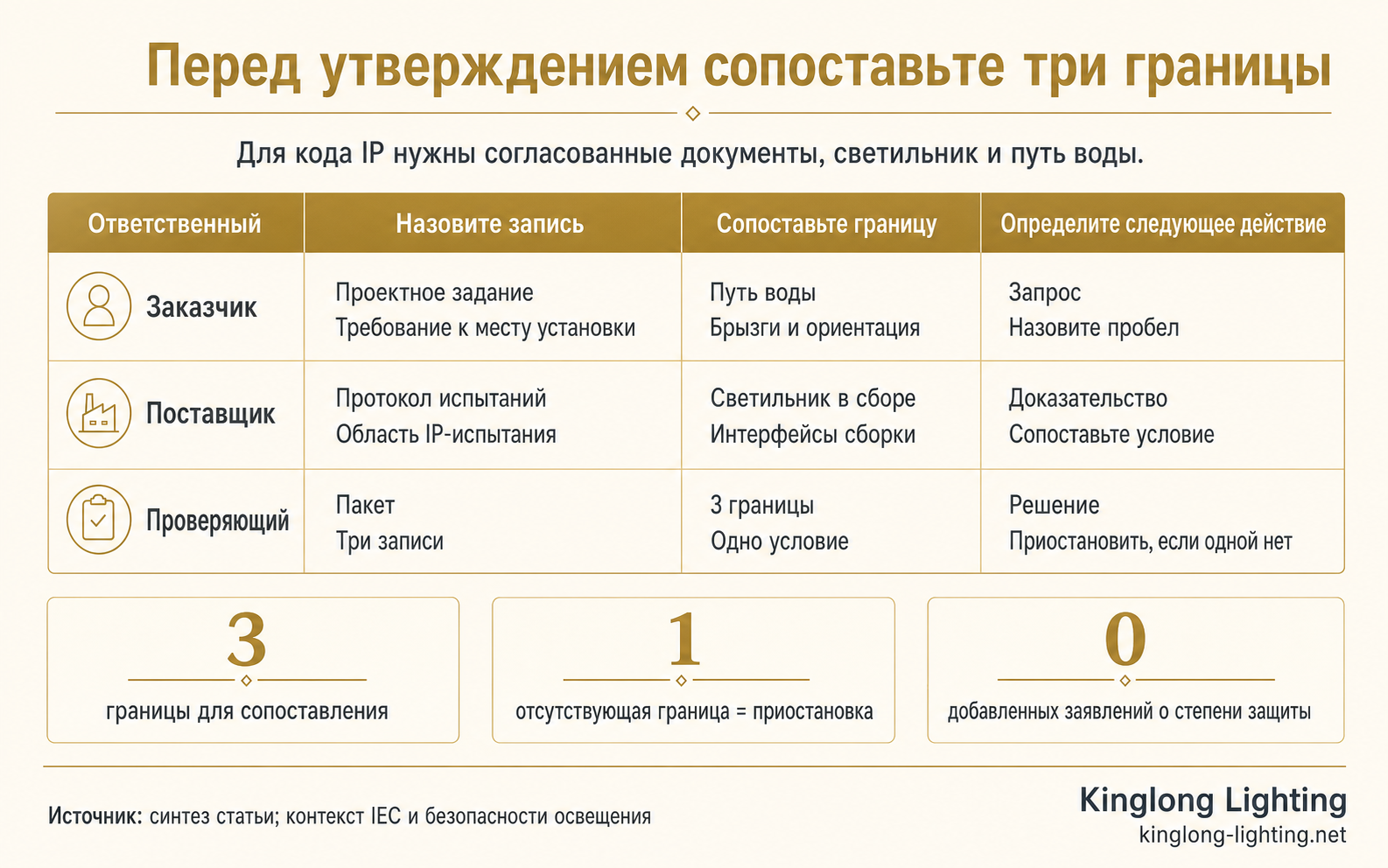
- Соответствует: в отчете, чертеже и кратком описании установки указаны одни и те же соответствующие условия сборки и воздействия.
- Частичное: одна запись полезна, но в ней не указаны интерфейс, ориентация или условия воздействия, которые имеют значение для проекта.
- Запретить: отсутствующая или конфликтующая граница может изменить решение о влажных зонах, поэтому команда запрашивает целевые доказательства, прежде чем Release.
Путаница обычно начинается, когда каждая сторона владеет только одним документом. У поставщика может быть протокол испытаний, у проектировщика может быть высота над уровнем моря, а координатор по электротехнике может знать фактическое воздействие воды. Ни один из этих документов не является дефектным просто потому, что он неполный. Неудача возникает из-за того, что частичная запись рассматривается так, как будто она охватывает все три границы. Сохранение документов отдельно до тех пор, пока они не будут сопоставлены, делает отсутствующее условие видимым на раннем этапе, когда запрос на изменение чертежа или подтверждение еще можно выполнить.
Результат IP можно использовать для принятия решения о люстре для влажных зон только в том случае, если протестированный объем, поставляемая сборка и запланированный путь подачи воды описывают одно и то же состояние.
Проследите каждый путь воды у установленной люстры
Требования к установке проекта могут быть отделены от объема испытаний корпуса. В США правило OSHA по методам электромонтажа — это контекст установки, а не таблица преобразования IP-кода. Такое разделение полезно для каждого проекта: входная запись не заменяет проверку того, как устанавливаются проводники, фитинги, монтажное оборудование и готовое приспособление. Подтвердите применимую юрисдикцию, спецификацию проекта и ответственного рецензента вместо того, чтобы спрашивать IP-маркировку для ответа на местный вопрос по установке.
Путь воды — это просто путь, по которому вода может идти к установленному интерфейсу светильника в фактических условиях воздействия. Начните с возможных путей попадания воды: прямой дождь, брызги с ветром, промывочная вода, сток с крыши, конденсат или случайные брызги. Затем проследите маршрут через светильник, а не останавливайтесь на видимой тени. Крытый вход все еще может подвергаться воздействию дождя под углом; навес может уменьшить прямое падение, но не разбрызгивание с твердой поверхности внизу; а чашка, обращенная вверх, может удерживать воду иначе, чем чашка, обращенная вниз. Опишите воздействие словами и рисунками, чтобы рецензент отчета мог сравнить его с протестированной конфигурацией.
Такая детализация особенно полезна, когда декоративный светильник входит в состав входной зоны, террасы, внутреннего двора или крытой открытой обеденной зоны. Команда проекта может использовать страницу Kinglong Lighting для гостиничных объектов, чтобы рассмотреть контекст проекта освещения для гостиничного объекта и одновременно превратить визуальное задание в описание воздействия. Вопросы дизайна и доказательств можно решать вместе, не подразумевая, что объект гостеприимства автоматически одобрен для влажной зоны.
Используйте пакет из трех документов до утверждения светильника для влажной зоны
Запись о входе, запись о продукте или местоположении, а также запись об установке отвечают на разные части решения об утверждении. В первом говорится, что было охвачено входным тестом. Второй определяет осветительную продукцию или рыночный контекст, который, возможно, придется учитывать в проекте. Третий описывает фактически предлагаемые условия установки. Объединение всех трех в один пакет обзора не создает рейтинг и не заменяет обязательный листинг; это делает объем каждой записи достаточно ясным, чтобы ответственный рецензент мог видеть, что присутствует, а что отсутствует.
| Документ | Что он должен идентифицировать | Какое решение он может обосновать | Что он не может решить сам по себе |
|---|---|---|---|
| Документ по защите от проникновения | Испытуемый объект, конфигурация, указанный код IP и соответствующие условия | Соответствует ли названная область испытаний заявленной границе защиты | Все требования к монтажу или месту установки |
| Документ по изделию или месту установки | Применимый стандарт на изделие, листинг, требование проекта или путь местного рассмотрения | Какие дополнительные доказательства могут потребоваться проекту | Охватывается ли другая сборка или воздействие |
| Монтажный документ | Полная сборка, ориентация, кабельный ввод, деталь монтажа и путь воды | Является ли проектируемое состояние проверяемым | Отсутствующий результат испытаний или документ по изделию |
Стандартный контекст светильника отличается от простого чтение метки IP-кода. UL 1598 опубликован как стандарт светильников, который иллюстрирует различие между контекстом стандарта осветительного изделия и обозначением входа. В статье не сказано, какой стандарт применяется к конкретной стране, проекту или люстре. Это действительно показывает, почему покупатель должен запрашивать запись, которая отвечает на фактический вопрос о продукте и местоположении проекта, вместо того, чтобы расширять код за пределы его документированной области действия.
NEMA публикует руководство по типам корпусов. NEMA публикует рекомендации по типам корпусов. Это еще одна причина не объединять разные словари вложений в одно обещание. Не преобразуйте метку IP в тип NEMA или наоборот, если проект не имеет соответствующей документированной основы. Полезное действие меньше и безопаснее: запишите, какую терминологию использует требование проекта, а затем запросите доказательства, которые непосредственно соответствуют этому требованию.
Иллюстративный сценарий: несоответствие под навесом во внутреннем дворе
Когда недостающие элементы названы явно, команда может включить доказательства в индивидуальную спецификацию люстры, а не полагаться только на маркировку.
Что команда проекта сделала дальше
Команда проекта сохраняет решение о влажной зоне до тех пор, пока в пакете доказательств не будет указано точное полное приспособление и запланированное воздействие воды. Удержание не является приговором о том, что конструкция не удалась. Это граница того, что может поддерживать текущая документация, и это увязывает обсуждение одобрения с идентифицируемым состоянием светильника.
Эта иллюстративная команда отеля рассматривает декоративные подвески для навеса во внутреннем дворе, где брызги ветра могут достичь нижних узлов. Проектирование, закупки и электрическая координация — все это связано с тем, что светильник должен оставаться визуально целостным, в то время как воздействие воды описывается точно.
В кратком описании рассматриваются 16 подвесок под одним навесом. Он запрашивает доказательства, подходящие для предполагаемой проверки влажной зоны, поэтому команде нужны записи, идентифицирующие всю подвесную конструкцию, а не общую категорию или отдельный защищенный компонент.
Поставщик предоставил документ с маркировкой IP44. Проект готов рассмотреть отделку, размеры и подвеску, но еще не подтверждено, что отчет охватывает всю подвесную сборку в запланированной монтажной ориентации.
Во-первых, в документе IP44 упоминается корпус, а не вся подвеска. В нем не указано, являются ли соответствующий кабельный ввод, потолочная чашка, декоративное соединение корпуса и нижний узел частью испытуемого объекта.
Во-вторых, на чертеже не указано, могут ли брызги достичь кабельного ввода или собраться возле потолочной чашки. Навес снижает прямое воздействие, но сам по себе он не описывает маршрут, по которому вода может двигаться с учетом ветра, очистки или условий стока.
Доказательства охватывают одну из трех границ: существует ограниченная запись испытаний. Вся арматура и установленный водопровод остаются безымянными. Присвоение степени охвата доказательств 1 из 3 не является показателем эффективности продукта; это простой способ показать, что два критически важных для принятия решения описания все еще отсутствуют.
Команда имеет разрешение на влажную зону. Он не отвергает 16 подвесок и не утверждает, что IP44 не подходит для любых условий. Заявление о местоположении приостанавливается до тех пор, пока отчет, чертеж и описание воздействия не будут сопоставлены как одно условие.
В запросе на пересмотр указывается вся сборка, открытые интерфейсы, ориентация монтажа и ожидаемый путь прохождения воды. Затем поставщик может предоставить соответствующие доказательства продукта или установки, уточнить протестированную конфигурацию, или проект может пересмотреть требования к местоположению, если предполагаемое состояние выходит за рамки доступных доказательств.
Освободите заявление о местонахождении только тогда, когда в окончательном пакете будут указаны те же условия сборки и воздействия, которые описаны в кратком описании проекта. Рецензент должен иметь возможность проследить каждый интерфейс материала на чертеже до записи доказательств или ясно увидеть, что отдельная проверка по-прежнему необходима.
Все имена, количества и решения в этом сценарии носят иллюстративный характер. Они не утверждают результаты поставщика, интерпретацию местных норм или результат любого проекта Kinglong Lighting.
Передайте пакет доказательств для влажной зоны, а не только IP44
При передаче доказательств во влажной зоне следует указать объем испытаний, полную сборку, ориентацию монтажа, детали кабельного ввода, описание воздействия воды и требования к расположению. Краткий пакет более полезен, чем длинная цепочка электронных писем, поскольку он дает поставщику, проектировщику и рецензенту один общий объект для сравнения. Это также делает ограничение видимым, не превращая его в обвинение: отсутствующий документ — это просто запрос доказательств или повод для пересмотра предложенного условия.
К этой передаче относится и документация по установке. образовательные ресурсы NFPA по электробезопасности сохраняет контекст электробезопасности и кода отдельно от входной нотации. Ответственный местный рецензент определяет, как этот контекст применяется к указанному местоположению; пакет делает проверку более конкретной, поскольку в ней указываются плоскость монтажа, ориентация, трасса кабеля, открытые соединения, ожидаемая структура воды и требования проекта.
- Укажите состояние проекта. Назовите место монтажа, ожидаемое воздействие воды и требование, которое команда пытается удовлетворить.
- Прикрепите полную запись прибора. Включите чертеж или спецификация материалов, определяющая подвеску, навес, кабельный ввод, соединения и ориентацию на рассмотрении.
- Прикрепите входную запись. Сохраните версию отчета, тестируемый объект, конфигурацию и указанный код, а не цитируйте только код.
- Отметьте каждое несоответствие. Отметьте измененный безымянный интерфейс. компонент, другая ориентация или состояние воздействия, которые пока невозможно сравнить.
- Назначьте следующего владельца доказательства. Попросите подробного разъяснения, дополнительной записи или изменения спецификации; не просите другую команду сделать вывод о недостающем объёме.
- Установите предложение об освобождении. Укажите, что проект может приступить к заявлению о местоположении только в том случае, если три границы совпадают или ответственный рецензент примет документированную альтернативу.
После определения соответствующего состояния светильника и открытых вопросов команда может запросить проверку доказательств для влажной зоны.
Распространенные вопросы покупателей о люстрах со степенью защиты IP
Часто задаваемые вопросы сохраняют разницу между результатом защиты от проникновения и решением об установке в зависимости от местоположения. Используйте одно и то же сравнение трех границ для каждого вопроса: что было протестировано, какая сборка будет поставлена и какой водный путь создаст проект? Если один ответ изменится, предыдущая запись все еще может быть полезной, но ее область необходимо проверить еще раз.
Часто задаваемые вопросы
Означает ли IP44, что люстра одобрена для любой влажной зоны?
Нет. IP44 — это определенный результат защиты от проникновения, а не универсальный сертификат для каждой сборки и установки во влажных помещениях. Прежде чем использовать его при принятии решения по проекту, убедитесь, что отчет охватывает всю люстру, ее соответствующие открытые интерфейсы и смонтированный водный путь. Местные требования к продукту или установке могут потребовать отдельных доказательств.
Что должен идентифицировать отчет об IP-испытании люстры?
В нем должен быть указан тестируемый объект, заявленный код, конфигурация и условия, определяющие объем тестирования. Для декоративной подвески сравните эти детали с навесом, кабельным вводом, соединениями, корпусом, шторкой, ориентацией монтажа и всеми открытыми интерфейсами на прилагаемом чертеже. Если в отчете упоминается только часть этой конструкции, рассматривайте ее как частичное доказательство.
Может ли крытый внутренний двор использовать те же доказательства, что и открытый фасад?
Не автоматически. Навес может изменить воздействие прямого дождя, но при этом позволит брызгам ветра, стокам или промывочной воде достигать различных интерфейсов крепления. Сравните фактическую ориентацию, путь прохождения воды и полную сборку с конфигурацией, указанной в отчете. Для двух мест могут потребоваться разные доказательства, даже если конструкция люстры похожа.
Когда проекту следует приостановить утверждение люстры для влажной зоны?
Отложить утверждение, если в отчете не описана полная сборка, открытый интерфейс не назван, ориентация установки отличается от свидетельства или ожидаемый путь воды не задокументирован. Следующий шаг сфокусирован: запросите отсутствующую запись, уточните область действия или пересмотрите указанное условие, прежде чем отпускать заявку на местоположение.