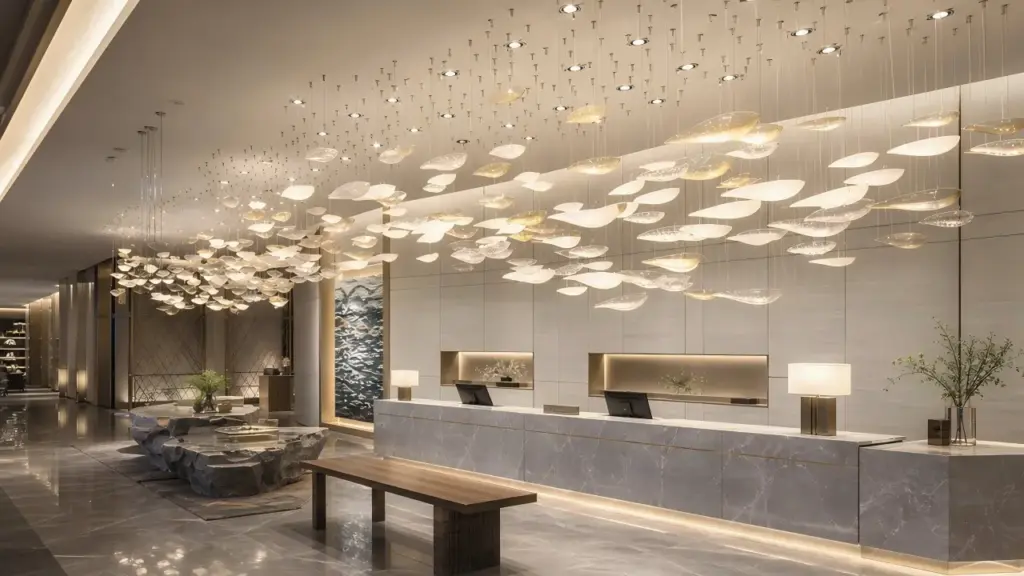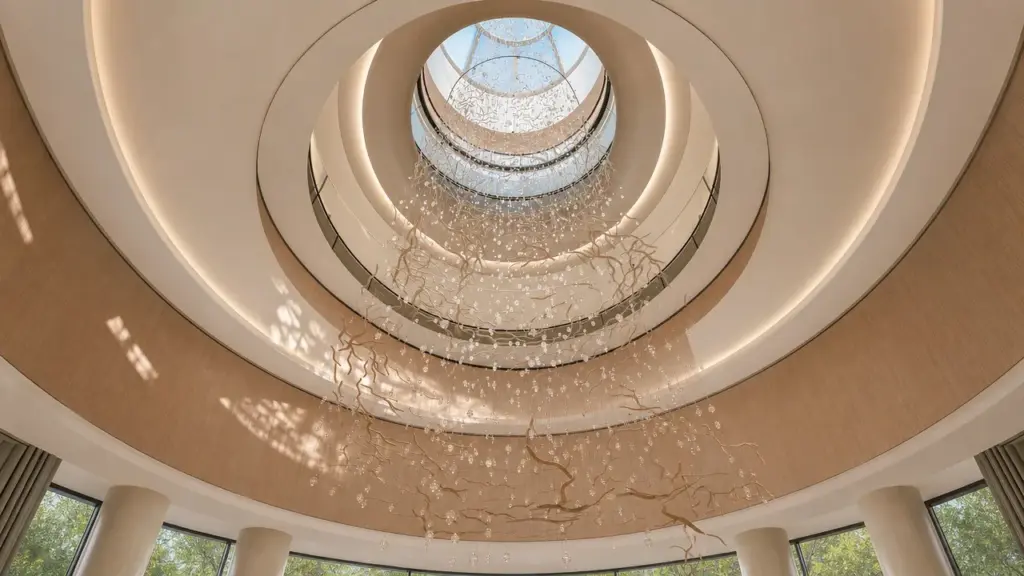
La taille d’un lustre de salon dans une villa ouverte peut commencer par la formule classique largeur plus longueur, mais elle ne doit jamais s’arrêter là. Les espaces ouverts ajoutent des lignes de vue, des zones de sièges, des reflets d’écran, des relations avec l’escalier ou la salle à manger, et des besoins de lumière en couches qu’un simple diamètre ne peut pas voir.
La formule est utile parce qu’elle crée une première enveloppe. La correction est là où le vrai design commence : hauteur sous plafond, groupe de mobilier, axe visuel, densité de matière, risque d’éblouissement et relation avec les pièces voisines.
Kinglong Lighting peut transformer une estimation de taille en plage spécifique au projet, avec visualisation, preuve matière, hypothèses de suspension et plan prêt à libérer.
Points clés à retenir
- La formule ouvre la plage : additionner largeur et longueur donne un premier diamètre.
- Le salon ouvert demande une correction : les sièges et les pièces adjacentes changent la taille perçue.
- La hauteur modifie la présence : un plafond haut peut demander du rythme vertical plus que de la largeur.
- Les reflets limitent la taille : écrans, miroirs, pierre polie et œuvres peuvent amplifier l’éclat.
- Il faut libérer une plage : le résultat doit inclure diamètre préféré, présence visuelle et limite de descente.
Utiliser largeur plus longueur comme première estimation
La formule donne une enveloppe de départ ; le salon ouvert donne la correction.
La Lighting Library de l’IES soutient des décisions liées à l’application réelle. Un salon ouvert n’est pas une pièce carrée isolée : c’est souvent un champ visuel partagé avec salle à manger, escalier, foyer, terrasse, art et zone média.
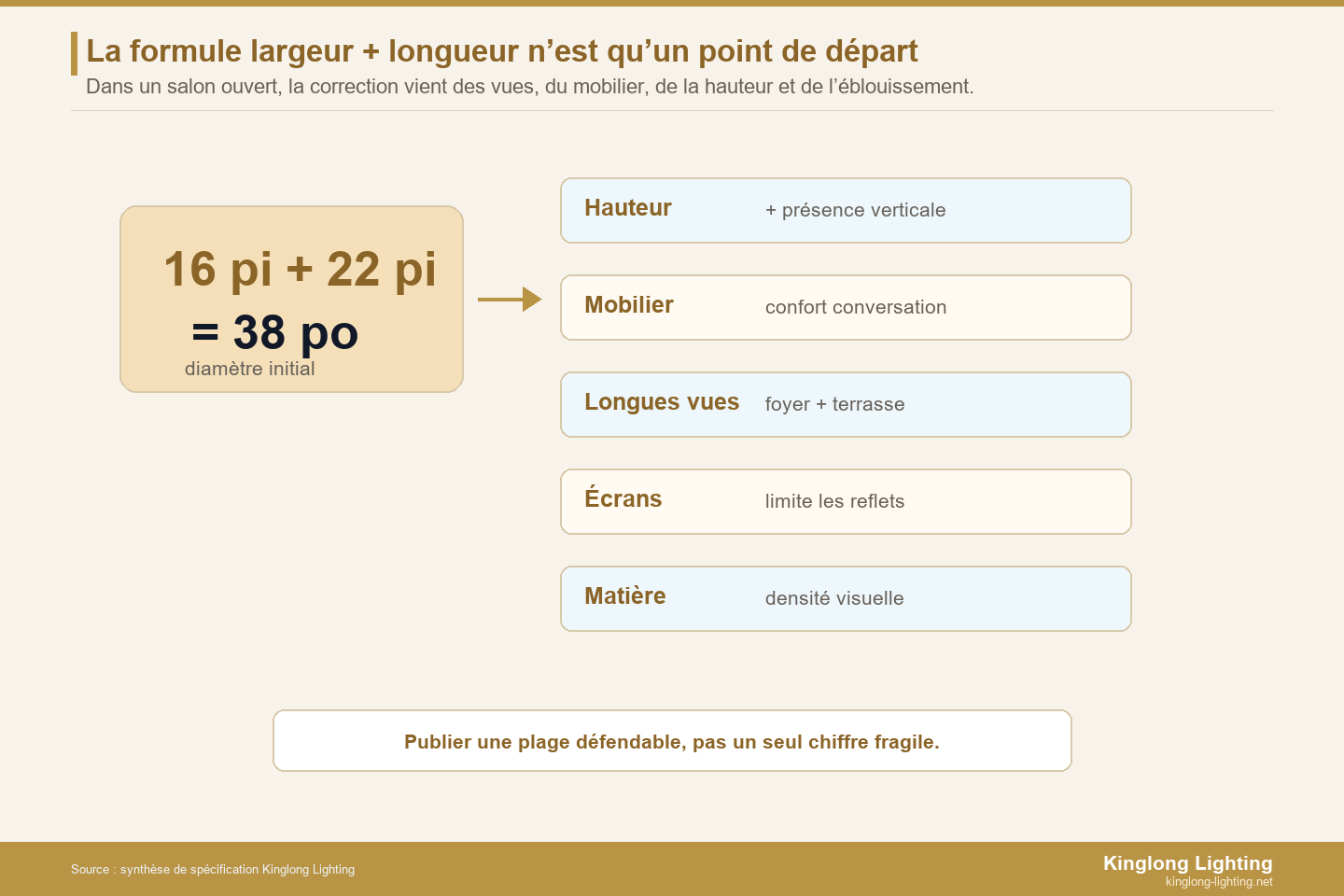
Un point de départ courant consiste à additionner largeur et longueur en pieds, puis à lire le résultat comme un diamètre approximatif en pouces. Par exemple, une zone de salon de 16 par 22 pieds commence autour de 38 pouces avant correction par hauteur, mobilier et lignes de vue.
La règle est de traiter cette valeur comme un début, pas comme un verdict. La taille du lustre doit être approuvée seulement après contrôle du groupe de sièges et des vues depuis les espaces adjacents.
La zone de mobilier peut être plus petite que la pièce
Dans une villa ouverte, le volume architectural peut être beaucoup plus grand que le vrai groupe de conversation. Si le lustre est dimensionné pour toute l’aire ouverte, il peut dominer les canapés ou concurrencer les luminaires de la salle à manger. S’il est dimensionné seulement au-dessus de la table basse, il peut disparaître depuis le foyer. La bonne plage se situe souvent entre l’échelle architecturale et l’échelle du mobilier.
L’axe visuel peut être plus grand que le point plafond
Un lustre de salon est souvent vu depuis l’entrée, la salle à manger, l’escalier, la terrasse ou une passerelle supérieure. Ces longues vues peuvent rendre un luminaire standard trop petit même si le coin salon paraît équilibré. La réponse n’est pas toujours un diamètre plus large : des couches verticales, une densité plus légère ou un éclairage de gorge peuvent créer de la présence sans serrer la zone de conversation.
Corriger la formule par hauteur, assises et reflets
La FAQ IES Illuminance Selector est utile parce que les critères d’éclairage dépendent du contexte d’usage. Dans un salon, l’usage inclut conversation, média, circulation, art et atmosphère, pas une seule surface de travail.
À partir d’une zone de 16 par 22 pieds, 16 plus 22 donne 38 pouces de diamètre initial. Une correction de hauteur de 10 % pour un plafond élevé déplace la plage visuelle vers 42 pouces avant application des limites de reflets, d’assise et de densité matière.
| Correction | Question | Ajustement typique | Preuve |
|---|---|---|---|
| Hauteur plafond | La pièce a-t-elle besoin de présence ? | ajouter du rythme vertical avant la largeur | élévation |
| Zone de sièges | La conversation sera-t-elle serrée ? | limiter le diamètre près du canapé | plan mobilier |
| Longue vue | Le lustre lit-il depuis les pièces voisines ? | augmenter prudemment la densité | rendu longue vue |
| Reflet média | L’éclat se reflète-t-il dans l’écran ? | réduire les points exposés | test de scène nocturne |
| Lumière en couches | Les autres couches soutiennent-elles l’échelle ? | utiliser gorge ou wall-wash | plan de scènes |
Le guide résidentiel du DOE rappelle que la qualité dépend de la planification en couches et du contrôle de l’éblouissement. Le lustre de salon ne doit donc pas porter toutes les fonctions lumineuses.
La densité de matière change la taille perçue
Un lustre métal ouvert de 42 pouces, un lustre cristal dense de 42 pouces et un cluster de verre soufflé de 42 pouces ne donnent pas la même présence. La densité visuelle, la réflexion et la brillance modifient la taille perçue. C’est pourquoi la plage finale doit nommer la densité matière, pas seulement le diamètre.
Les ressources UL sur les luminaires résidentiels rappellent qu’un produit décoratif a besoin de preuves complètes. Pour un lustre de salon, suspension, accès aux alimentations LED, gradation et logique de remplacement doivent faire partie du dossier d’approbation de taille.
Le meilleur dossier contient plan, élévation, vue depuis les sièges, vue depuis les pièces adjacentes, scène nocturne et note de service. Si l’une de ces vues échoue, changer seulement la largeur peut résoudre le mauvais problème.
Transformer la formule en modèle de salon
La formule largeur plus longueur donne à l’équipe un premier nombre partagé. Le problème est qu’une villa ouverte n’est pas un seul champ visuel. Elle contient un volume architectural, une zone de mobilier, des vues longues et des surfaces brillantes qui changent chacune la taille perçue.
Le modèle architectural mesure tout le volume
Commencez par mesurer volume, hauteur, détail plafond, ligne de poteaux, relation avec foyer ou escalier, ouverture terrasse et grands plans muraux. Ce modèle évite que le lustre soit trop petit pour l’enveloppe ouverte. La réponse peut être hauteur, étagement, espacement ou rythme matière plutôt qu’un diamètre plus large.
Le modèle mobilier mesure le confort de conversation
Ce modèle est plus humain. Il regarde canapés, fauteuils, table basse, tables d’appoint, circulation et hauteur d’œil assis. Le résultat final doit expliquer pourquoi il privilégie plus de présence de pièce ou plus de confort autour des sièges.
Le modèle longue vue vérifie les pièces voisines
Le salon peut être jugé depuis la salle à manger, le foyer, l’escalier, la cuisine, la terrasse ou l’étage. Si le lustre disparaît depuis ces vues, ajoutez structure, densité ou rythme vertical avant d’augmenter mécaniquement le diamètre. S’il concurrence le lustre de salle à manger, réduisez la densité ou séparez les scènes.
Le modèle reflets limite l’éclat autour des écrans
Le plus grand lustre techniquement possible n’est pas toujours le meilleur. Télévisions, pierre polie, garde-corps en verre, miroirs, laque et œuvres peuvent multiplier l’éclat. Le test doit se faire en scène du soir. Dans un salon média, le choix de matière, le masquage des sources, la gradation et les lumières murales peuvent compter plus que le diamètre.
Utiliser la formule pour créer une plage, puis défendre la correction
La sortie utile d’un dimensionnement de salon n’est pas « 38 pouces » ou « 42 pouces ». C’est une plage argumentée qui explique le point de départ, les corrections appliquées et les raisons de ne pas aller plus loin. Cette approche est plus facile à valider avec un propriétaire, un architecte d’intérieur et une équipe de fabrication, parce qu’elle transforme une préférence visuelle en décision traçable.
Documenter le point de départ mathématique
Le calcul largeur plus longueur doit rester visible dans le dossier. Il donne à toutes les parties une base neutre : largeur mesurée, longueur mesurée, zone réellement considérée et diamètre de départ. Sans cette base, chaque discussion revient au goût personnel. Avec cette base, la discussion devient plus précise : la correction vient-elle de la hauteur, de la distance de vue, de la densité du cristal, de la relation avec la salle à manger ou d’un risque de reflet ?
Écrire la raison de chaque correction
Une correction de taille doit avoir une cause, sinon elle devient un agrandissement arbitraire. Si le plafond est haut, la correction peut porter sur la longueur verticale plutôt que sur le diamètre. Si le canapé est proche, la correction peut réduire la largeur pour préserver le confort. Si la pièce est vue depuis un foyer double hauteur, la correction peut augmenter la présence par une silhouette plus ouverte. Si un écran domine le mur, la correction peut limiter les sources visibles et déplacer la brillance vers des couches indirectes.
| Étape de plage | Décision à noter | Risque si elle manque |
|---|---|---|
| Base formule | dimensions exactes et diamètre initial | débat esthétique sans repère commun |
| Correction hauteur | présence verticale ou limitation de chute | lustre trop plat ou trop bas |
| Correction mobilier | confort autour des assises et table basse | conversation serrée ou objet décentré |
| Correction longue vue | lecture depuis foyer, escalier ou terrasse | pièce invisible dans l’architecture ouverte |
| Correction reflets | niveau d’éclat compatible avec scène du soir | éblouissement ou reflet média difficile à corriger |
Faire approuver une enveloppe plutôt qu’un diamètre isolé
La plage finale devrait nommer un diamètre cible, un diamètre maximum, une limite de descente, une densité matière et une logique de scène. Par exemple, un salon ouvert peut accepter une présence de 40 à 44 pouces si la pièce reste légère et verticale, mais devenir trop lourde au même diamètre avec un cristal très dense. Cette enveloppe protège la fabrication : si un détail de structure ou de matière change, l’équipe sait quelle partie de la décision doit être rouverte.
Comment Kinglong Lighting transforme la formule en plage réelle
La Plateforme de design Mofun de Kinglong Lighting peut aider à tester la taille avant production en montrant échelle, densité de matière et relation avec la pièce. L’étape pratique consiste à envoyer dimensions, plan mobilier, hauteur plafond, emplacement de l’écran et des œuvres, style souhaité et photos des pièces adjacentes via la page contact.
La recommandation doit expliquer pourquoi la plage finale diffère du calcul initial. Un départ à 38 pouces peut devenir une cible visuelle de 42 pouces à cause d’un plafond haut, ou rester vers 36 pouces si la zone d’assise est intime et que les reflets sont forts. Cette transparence aide le propriétaire à accepter une plage défendable au lieu de débattre d’un chiffre isolé.
Carte d’action pour dimensionner le salon
- Calculer largeur plus longueur comme premier diamètre.
- Séparer taille de pièce et taille de zone de sièges.
- Vérifier les vues longues depuis les espaces adjacents.
- Limiter l’éclat autour des écrans, miroirs et œuvres.
- Libérer une plage de taille, pas un chiffre fixe.
Guides associés
- Éclairage connecté et lustres de luxe
- Lustres de chambre parentale : intimité et atmosphère
- Verre soufflé ou cristal pour villas
Questions fréquentes
Quelle taille de lustre convient à un salon ouvert ?
Commencez par additionner largeur et longueur de la zone en pieds, puis lisez le résultat en pouces. Corrigez ensuite par hauteur, mobilier, vues adjacentes, reflets et densité matière.
Le lustre doit-il être centré sur la table basse ?
Il peut l’être si le groupe de sièges est l’ancrage clair de la pièce. Dans une villa ouverte, le meilleur centre peut être l’axe visuel entre salon, foyer, salle à manger et terrasse.
Un lustre de salon peut-il être trop grand ?
Oui. Il devient trop grand s’il serre la conversation, se reflète dans les écrans, concurrence les luminaires voisins ou paraît plus lourd que la zone de mobilier.
Que doit examiner Kinglong Lighting avant de dimensionner ?
Dimensions, hauteur plafond, plan mobilier, écrans, œuvres, vues adjacentes, préférence matière, scènes de gradation et contraintes d’installation.