When you cannot visit a lighting supplier, ask for evidence that answers a named question about your villa. Overall photographs help with the design; detail views expose visible workmanship; relevant video shows operation or access; physical samples allow direct comparison. Drawings, reports and supplier records address questions those images cannot settle. The aim is to make the next justified selection decision, with the fixture identity and remaining uncertainties clear, rather than accumulate an impressive folder that nobody can use.
Tie Every Image to a Fixture and a Decision
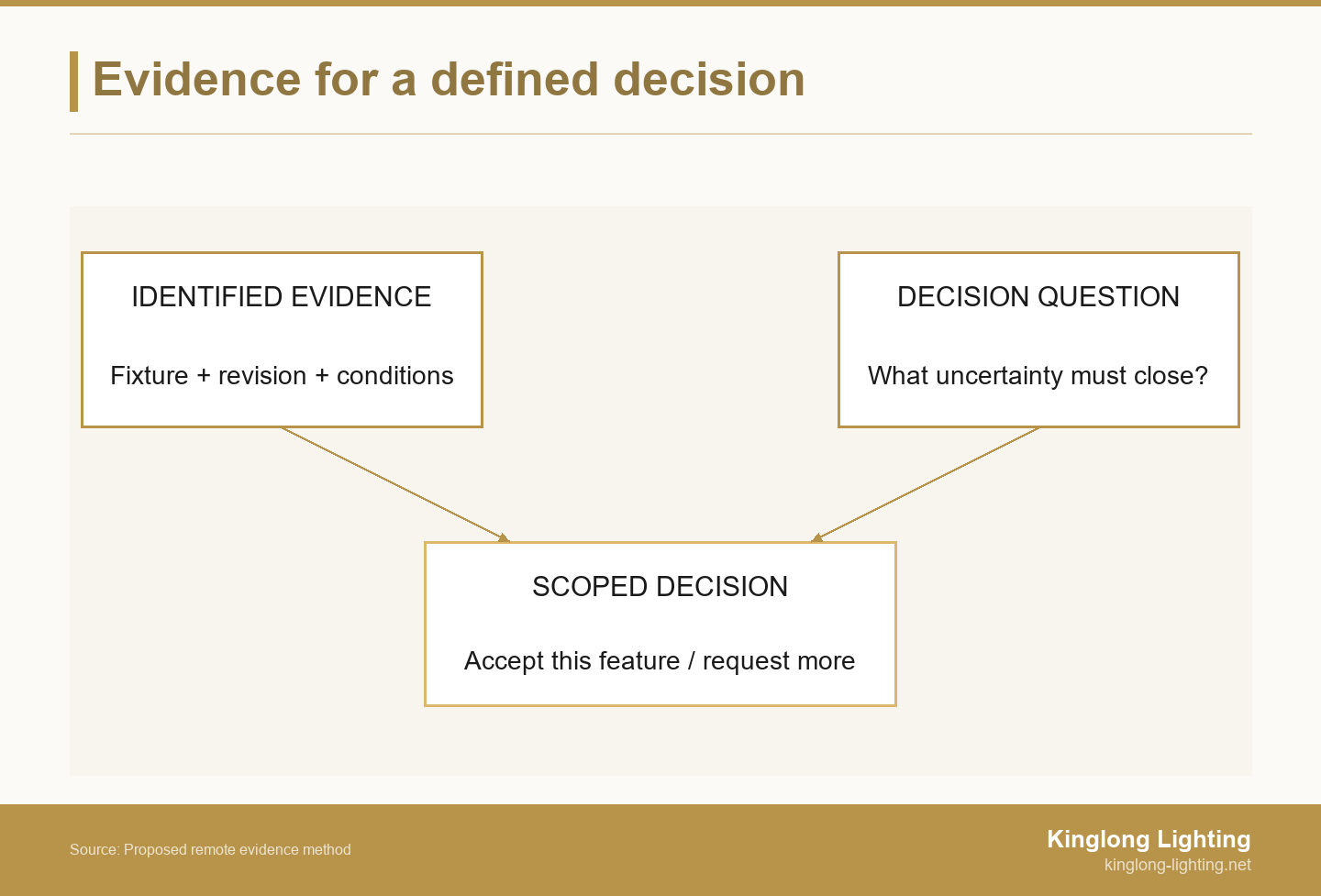
Every photo, video, sample and document should identify the room, fixture reference, drawing revision and relevant finish or sample reference. Add the question it is intended to answer. Establish whether the file shows a rendering, a reference model, a development sample or the proposed physical item. A supplier can provide useful material at each stage, provided the owner knows what it represents.
Start with the whole-home room schedule and your most important uncertainties. Kinglong’s lighting design and procurement resources can help organize the initial brief. For each selected fixture, write the decision you need to make now: retain the silhouette, compare a finish, assess a joint, confirm access or investigate a supplier claim. This keeps the request specific enough to answer.
- Ask what the evidence represents: the exact proposed item and revision, a related model, a material sample or a visualization.
- Ask which uncertainty it addresses: appearance, dimensions, operating behavior, construction, packaging or supplier capability.
- Name who will judge it and what remains open: owner or designer for the intended appearance, with the relevant technical reviewer for installation and performance questions.
Request the original files where possible and retain the file names or references used in the discussion. A contact sheet can make a large package easier to navigate, but keep the individual images available for detail review. When the proposed specification changes, the evidence index should show which files still apply. This is a practical way to prevent an attractive early reference from silently becoming the acceptance basis for a different product.
Request Photos That Expose the Relevant Detail
Useful remote-selection photos show the identified fixture overall and the details that could change your decision. Ask for a straightforward front view, relevant side and underside views, and close-ups of visible joints, edges, glass retention and finish transitions. Where size matters, accompany them with a dimensioned drawing or clearly identified measurement endpoints. A polished interior photograph cannot establish all dimensions or concealed construction.
For finish comparison, ask the supplier to place the proposed part beside the named reference in the same frame, under stated lighting. Request views that show the surface rather than only a bright reflection. Keep filters, retouching and any camera color treatment disclosed. This improves the usefulness of the comparison, but a phone screen still does not become the physical acceptance reference.
White balance is a camera adjustment affecting recorded color. Sony’s camera help describes adjusting color tones according to ambient lighting conditions. Ask what lighting and white-balance treatment were used when images are intended to compare finishes. This is a reason to document capture conditions, not a requirement to buy that camera or proof that a photographed light has a particular color temperature.
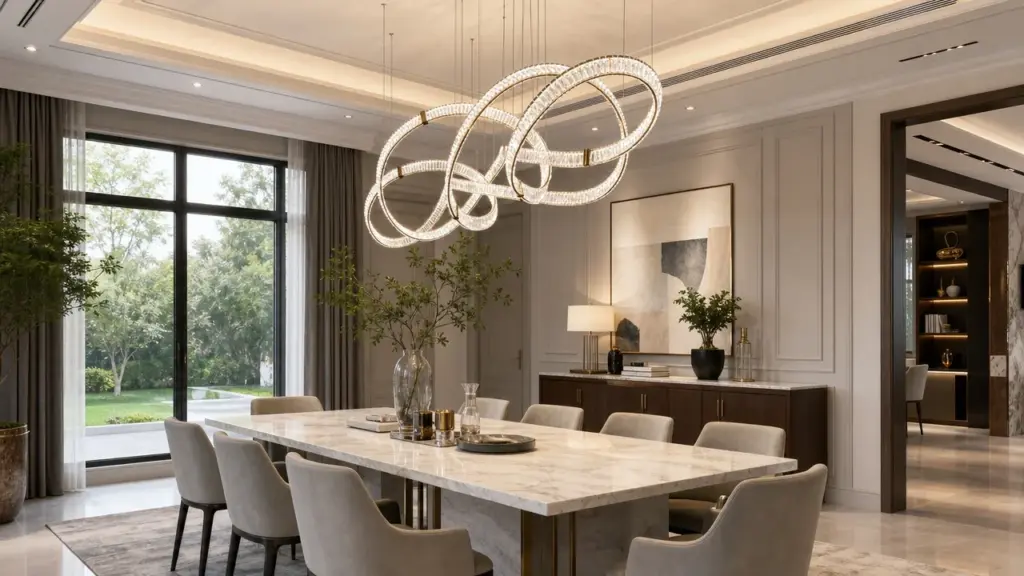
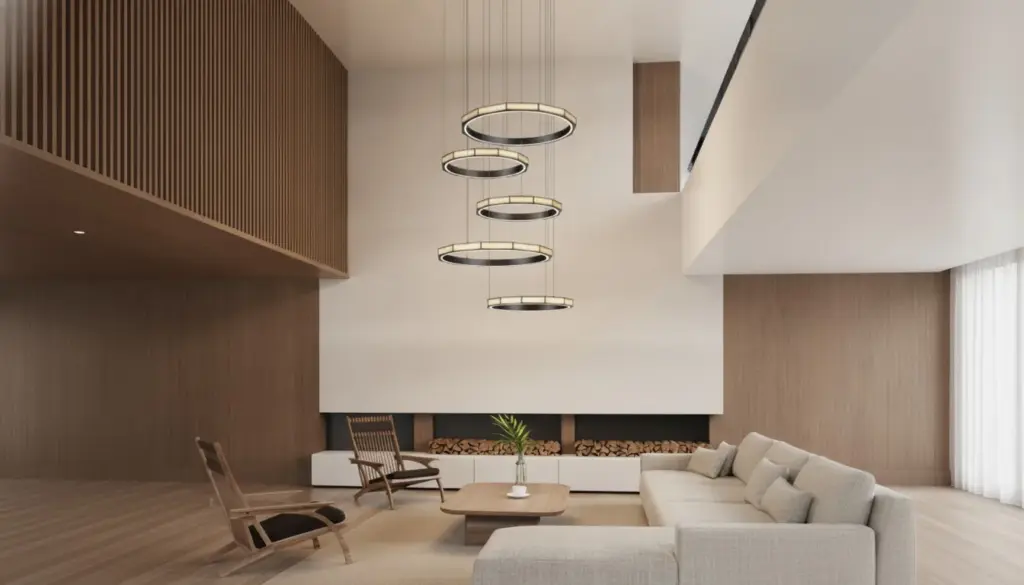
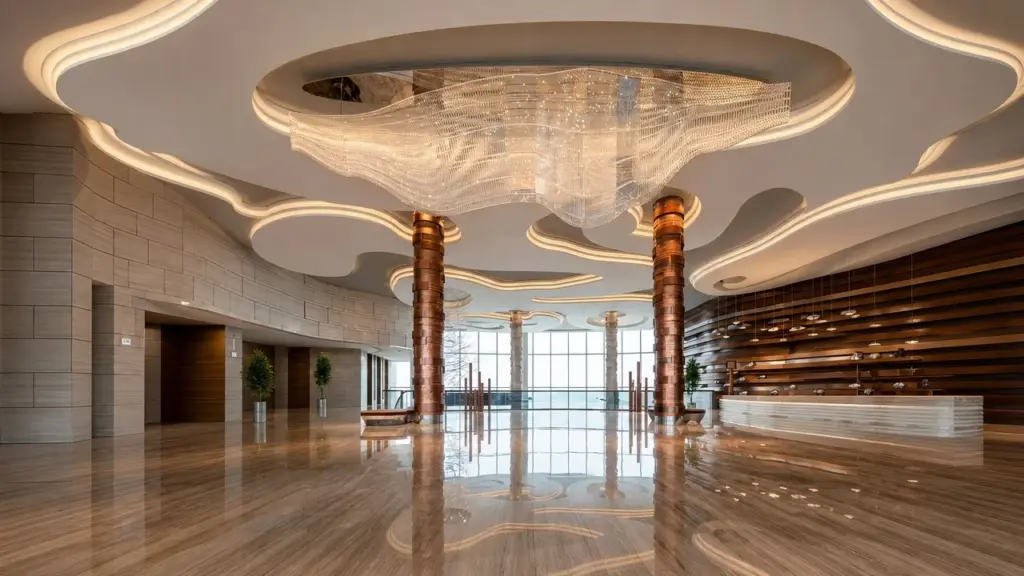
Use room imagery for the design conversation. Kinglong’s published lighting project portfolio can help discuss how a decorative fixture relates to furniture and architecture. Those images do not identify the current proposed sample or measure your room. Check width, body height and overall drop against the actual project drawing, with the drawing’s units and endpoints made explicit.
For craftsmanship, identify the features you want to inspect instead of asking only for “high-quality photos.” A joint close-up may show an exposed gap or uneven finish; it cannot establish the strength of a concealed attachment. Ask for the appropriate drawing, representative detail or technical explanation when the issue lies beyond the visible surface. Keep aesthetic review and technical verification linked to their own evidence.
Use Video to Answer Movement and Operating Questions
A useful video follows a specific question through a relevant, continuous demonstration of the identified item. For a lit fixture, request the unlit and lit appearance, the proposed light source and driver, and the intended control arrangement where relevant. For access or assembly, ask the manufacturer to show the part and operation in question, with supporting instructions. A promotional montage offers less context for those decisions.
Ask the supplier to state the recording conditions and any editing. When a dimming demonstration is relevant, identify the dimmer or control and what the operator changes. Retaining the same framing helps you compare the visible response. Brightness on the screen is affected by recording and display conditions, so it does not replace the measurements or technical evidence needed for the actual room.
Panasonic’s camera troubleshooting guidance explains that shutter settings can affect striping or flicker recorded under lighting such as LED fixtures. A clip without visible bands therefore does not establish a lighting performance pass, and visible bands need investigation rather than an instant product verdict. Where temporal light behavior matters, ask the appointed technical reviewer what applicable test evidence is needed. No single phone setting resolves that question for every fixture.
For assembly and servicing, request a demonstration of how the relevant components are identified and accessed. Obtain the corresponding drawing or instructions so the project installer can judge the proposed arrangement. A video can make a sequence easier to understand while leaving load support, wiring suitability and site conditions to the appropriate technical review. Do not infer those conditions from the fact that the demonstration looked straightforward.
Use a Remote Evidence Matrix for the Whole Villa
A remote evidence matrix connects each owner question to the material that can answer it and the follow-up it still requires. Copy the table into your enquiry and attach the room and fixture references. It is a proposed request template, not a statement that a supplier has delivered or passed any of these checks. Prioritize the uncertainties that could change supplier selection or the chosen design.
| Owner decision | Photo or video request | Physical or documentary follow-up | What remains open |
|---|---|---|---|
| Finish accuracy | Identified part beside the named finish reference, with lighting and camera treatment stated | Representative physical finish on the relevant material, with agreed comparison conditions | Screen similarity alone does not settle final finish acceptance |
| Scale and proportions | Overall views and relevant measurements with visible endpoints | Current dimensioned drawing matched to the room and mounting references | An interior image does not confirm site dimensions or installation clearances |
| Light effect | Unlit, lit and relevant control demonstration of the proposed source/driver combination | Applicable product data and technical assessment for the intended room and controls | Exposure and camera behavior prevent footage from proving every performance claim |
| Visible craftsmanship | Close-ups of agreed joints, edges, surfaces and retention details | Physical detail or sample where necessary; drawings for concealed construction | A visible finish check does not establish hidden attachment strength |
| Assembly and access | Continuous demonstration of the relevant assembly or replacement operation | Matching component identification, instructions and installer review | The demonstration does not verify the villa’s actual support or electrical conditions |
| Packing | Identified fixture and its inserts, carton or crate before and during closure | Packaging specification and applicable transport-test report when testing is claimed or required | Neat packing footage does not establish transport performance |
| Supplier capability | Relevant live or recorded walkthrough tied to the stated operation and site | Entity/site details, relevant records and verification of claimed certificate scope and status | Selected images or a general certificate do not prove every capability or the quality of this order |
Packing evidence needs a defined product and configuration. ISTA’s testing guidance says a certified lab can help select a test and issue a report for each product tested. If a supplier claims transport testing, request the relevant report and establish what item and packaging it represents. This does not prescribe one test for every villa light or assert that the proposed package has passed.
For a management-system certification claim, IAF CertSearch explains certificate verification and the available standard, scope/status, certification-body and accreditation-body details. Match the claim to the actual entity and relevant site. A management-system record is not a substitute for product or installation evidence, nor proof of capacity or the quality of your particular order. No Kinglong certificate is being verified here.
Use starting models from Kinglong’s decorative-lighting collections to make the request concrete. Mark which features remain as shown and which are proposed changes. Ask the supplier to identify the evidence available for the exact version, rather than assume a collection image represents every custom variation.
Choose Samples for the Uncertainty They Can Close
Sample scope means the features and revision represented by a physical sample. A finish coupon, glass element, joint mock-up and complete fixture answer different questions. Agree what the sample is intended to demonstrate, how it is identified and which parts of the proposed design it does not represent. Accepting a finish detail does not approve the whole fixture package or its installation.
A physical comparison also needs appropriate viewing conditions. X-Rite describes metamerism as colors matching under one lighting condition but not when the light changes. Compare the proposed finish and reference under agreed lighting relevant to the project. This does not imply that a mismatch will occur or establish a universal numerical tolerance; it explains why a successful comparison under one condition may not answer every room question.
Choose a sample that represents the decision-critical feature. If a curved visible component matters, ask whether the proposed sample actually represents that surface and material. If a joint or glass-retention detail matters, identify the relevant construction. A small finish sample can still be useful, but record its limit rather than let the word “sample” imply that everything has been demonstrated.
Agree how the accepted reference will be retained and linked to subsequent drawings or production evidence. Record the sample identity and the decision it supports. Sample availability, cost, delivery and whether a full fixture or detail is appropriate remain project-specific matters to agree with the supplier. The objective is to close the important uncertainty, not to order the largest possible collection of samples.
Record a Scoped Decision and Return Missing Evidence
A remote review should end with a specific decision and the questions still open. If further evidence prompts a design or commercial alternative, Kinglong’s decorative-lighting value engineering guide can help frame the consequences against agreed functions. Keep the reason for the change visible; a cheaper or easier option still needs to be compared on the intended design and scope.
Consider an illustrative bedroom review. B-01 and F-A are invented fixture and finish-sample labels, not a real client case. An unlabelled photograph shows a warm-looking metal finish. The owner can retain the silhouette on the design shortlist, but the photograph is insufficient for final finish acceptance. Request identified, comparable evidence linked to the current drawing and a representative physical sample where needed to judge the finish.
The response should identify the actual proposed item and finish reference and show what was compared under which conditions. If the sample cannot be connected to that revision, request the missing link or repeat the affected comparison. Once suitable evidence is available, record the feature accepted under the agreed criteria. The outcome might close the finish choice while leaving the fixture’s installation and technical questions open; it is not a blanket approval.
Record the scoped decision, the evidence file and sample references, the reviewer and unresolved questions. Missing evidence is neither a successful check nor proof that the product failed. Return a precise request such as the current finish identification, a matching drawing or the relevant technical report, instead of asking for “more reassurance.” The next useful result is evidence that can actually be linked to the question being decided.
Send Kinglong a Room Schedule and an Evidence Request
Kinglong’s villa-lighting page outlines design and visualization, review of a physical sample or detail mock-up, progress photography and installation documentation. Ask which of those steps and deliverables apply to the proposed designs. The public service description is a starting point for agreeing the project scope, availability and commercial terms. Bring the room and fixture schedule, starting models, current drawings and revisions, relevant site dimensions, finish references and your priority uncertainties. Add the photo, video and sample requests, the features each sample should represent, the destination and the appointed technical reviewers. These inputs support a focused discussion when you review the whole-home villa lighting brief with Kinglong. Ask for a clear response on available evidence and open questions rather than infer technical acceptance or a guaranteed sample service from the page.
Frequently Asked Questions
Do I need a full-size sample of every fixture?
Not automatically. Select the sample scope around the uncertainty to be resolved. A material or detail sample may support a specific finish or construction decision, while a full-fixture question needs evidence that represents the complete item. Identify which variants remain uncovered. Agree the sampling approach with the supplier and relevant reviewers rather than assume a detail sample or a full-size sample automatically answers every question.
Can a third-party inspector replace my remote review?
An inspector can address an agreed scope, but does not replace the owner’s design choice or every technical approval. Specify the item and revision, access, checks and acceptance criteria before appointing the service. Ask how findings and unresolved limitations will be recorded. A report is useful when its observations relate to your actual questions; the appointment alone does not establish that the entire package is acceptable.
What happens if a finish or component changes after sampling?
Identify the changed item and revision, then determine which earlier decisions and evidence remain applicable. Ask the supplier to describe the affected appearance, construction, operation or sample coverage. Request a fresh comparison or technical review where the change matters, while retaining genuinely unchanged evidence. Update the accepted references so an earlier sample is not treated as approval for a different finish, component or assembly.
What if the supplier cannot provide the requested evidence?
Keep the affected decision open and ask for a specific alternative method or a clear explanation of the limitation. Depending on the question, that might mean a representative detail, different footage, a technical document or defined independent inspection. Check whether the alternative resolves the same uncertainty. If it does not, retain the unresolved risk in the supplier comparison rather than label the missing evidence a pass or a product failure.