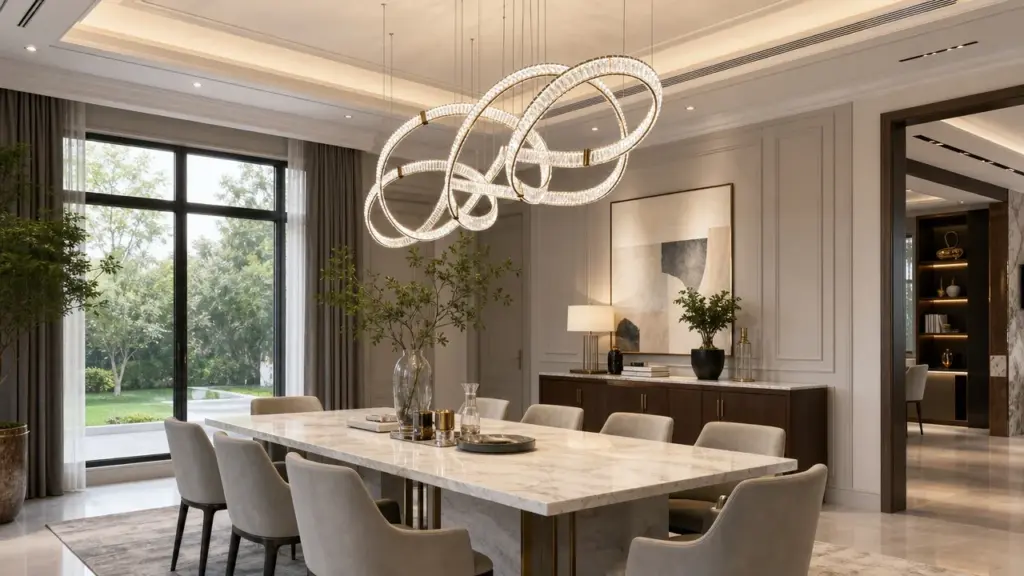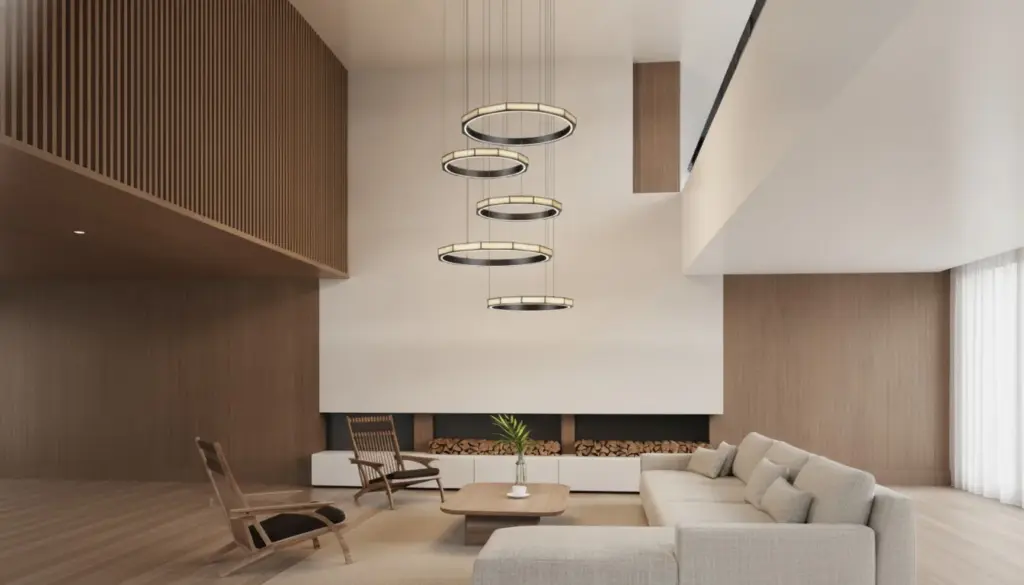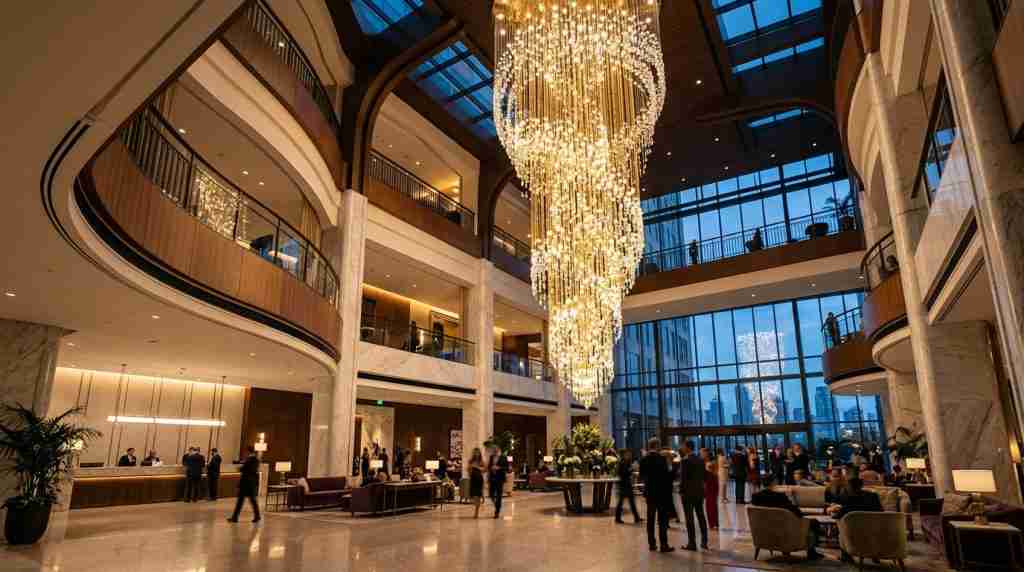
This Middle East royal-style villa lighting article is a composite case, not a named palace, private residence, or client project. It brings together recurring specification questions from luxury villa briefs where crystal, metal, stone, warm light, geometric pattern, and hospitality-scale ceremony need to feel culturally grounded without becoming heavy or imitative.
The most important decision is material hierarchy. A royal-style villa chandelier can look expensive and still feel wrong if every surface competes for attention. Crystal heritage, warm metal, marble, glass, pattern, shadow, and scale should form a disciplined order. Otherwise the room becomes bright, reflective, and visually loud rather than composed.
Kinglong Lighting can help designers turn this type of villa brief into drawings, material samples, finish masters, mock-up views, installation notes, and service planning before the chandelier is released for production.
Key Takeaways
- Composite case only: this article explains recurring decisions without claiming a specific royal residence or cultural authority.
- Material hierarchy matters: crystal, metal, glass, stone, and pattern should not all speak at the same volume.
- Culture is not decoration: geometric rhythm and restraint often protect the room better than literal motif copying.
- Warm light needs testing: gold finishes, marble, fabric, and crystal can shift under the same CCT.
- Project proof is luxury: samples, mock-ups, spares, and access planning protect the result after handover.
Composite project brief
Royal-style lighting works when ceremony, material, and service are released as one system.
Imagine a large Middle East villa with a double-height majlis or reception hall, marble floors, carved or patterned wall details, warm metal accents, hospitality-level seating, and a desire for a chandelier that feels ceremonial without overwhelming guests. The owner wants crystal heritage, but the designer wants restraint. The contractor needs installation access. The property team needs future cleaning that does not require a full room shutdown.
The Museum of Islamic Art geometric motifs page is useful because it shows how geometry can be part of a broader visual language. The specification lesson is not to copy a historical pattern onto a chandelier. It is to understand rhythm, proportion, repetition, and negative space as design tools.
A royal-style chandelier should therefore begin with cultural tone, not with maximum ornament. The project team should decide whether the fixture should feel like a crystalline crown, a soft lantern field, a patterned ceiling extension, or a quiet monumental volume. Each direction leads to different materials and proof.
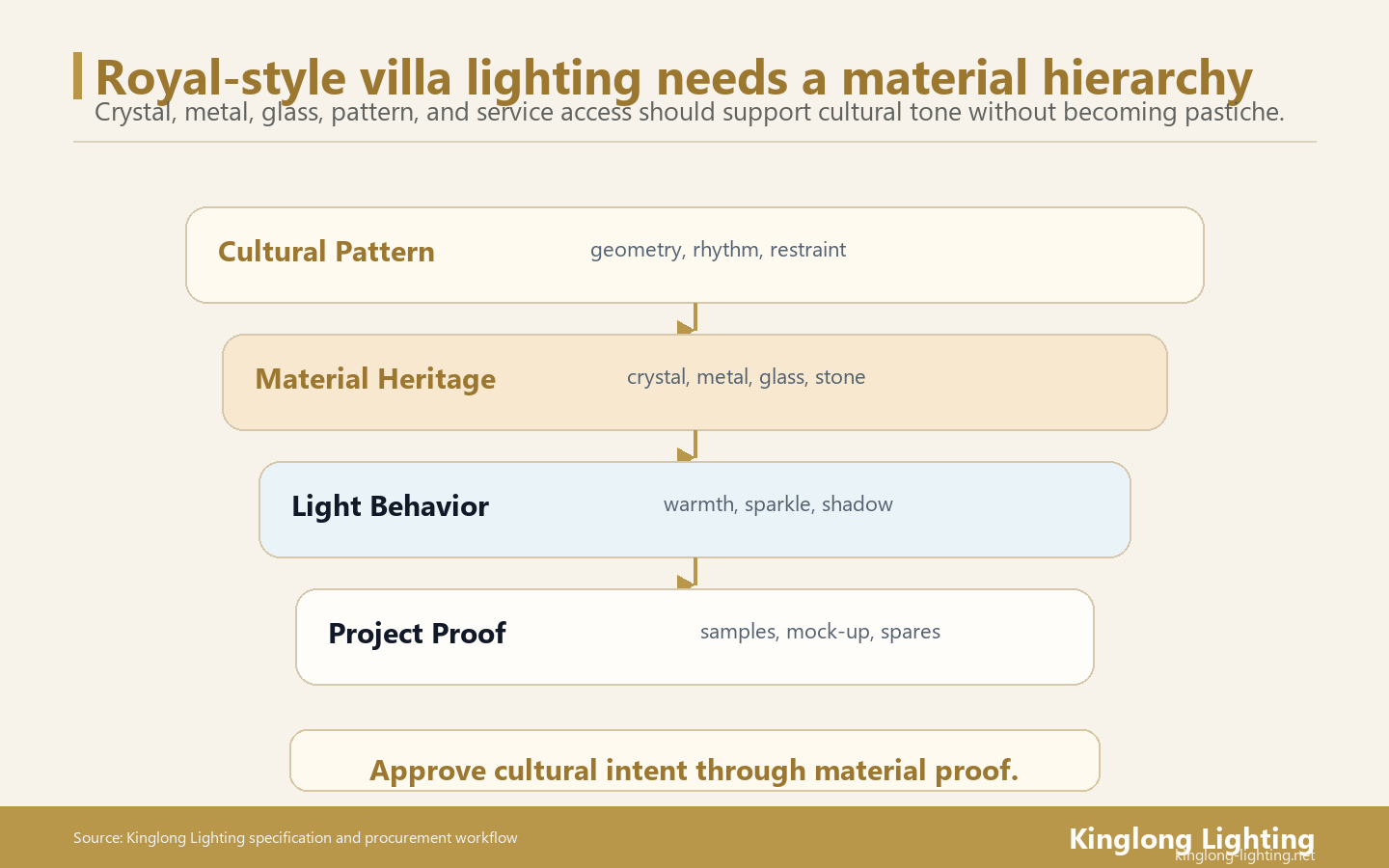
Build a material hierarchy before selecting shape
The chandelier should have one dominant material story and two or three supporting material roles. If crystal is the dominant story, metal should frame it rather than fight it. If warm metal is dominant, crystal may become a controlled highlight. If pattern is dominant, light and material should reveal it gently rather than bury it in glare.
Crystal heritage needs restraint
Crystal can carry ceremony, memory, and perceived luxury, but a room with polished stone and large volume can multiply sparkle quickly. The team should specify crystal density, drop length, cut type, cleaning access, and replacement logic. A dense chandelier may look impressive in a rendering and exhausting in person if the room already has reflective surfaces.
Warm metal should be judged beside stone and fabric
Gold, brass, bronze, and champagne finishes do not behave the same beside marble, travertine, plaster, wood, silk, or leather. A finish master should be reviewed near the real palette. The finish should also be tested under the intended warm light scene because a metal that looks elegant in daylight can become orange or flat at night.
Pattern belongs in rhythm, not only in ornament
Geometric influence can appear through repetition, radial logic, tier spacing, shadow, canopy shape, or module rhythm. This is usually safer than adding literal pattern everywhere. A chandelier that respects cultural geometry through structure can feel more refined than one that pastes decorative motifs onto every visible surface.
Light behavior must support hospitality
The DOE lighting design page is helpful because it frames lighting as part of the whole space. In a royal-style villa, the chandelier is not the only light source. It should coordinate with coves, wall washers, table lamps, concealed accent light, and daylight.
A large reception room needs faces to look natural, metal to feel warm, crystal to sparkle without glare, and seating areas to stay comfortable. If the chandelier carries all brightness, it can make the room feel theatrical rather than hospitable.
Use warm light carefully
Warm light is common in luxury residential interiors, but it should not be chosen by habit. The DOE TM-30 FAQ helps explain why color quality involves more than one CCT label. A source may be warm and still render fabric, skin tone, gold finish, or colored glass poorly.
Separate ceremonial scene from daily scene
The villa may need one scene for formal reception, another for family use, and another for low-light evening atmosphere. The chandelier should be dimmable and layered. A full-bright ceremonial scene can be appropriate for arrival, but a softer scene may be better for long hospitality. Control planning should be part of the fixture brief, not an afterthought.
Mock-up from the guest’s eye level
Do not approve the chandelier only from a ceiling render. Review it from entry, seated, stair, upper gallery, and service positions. In a large villa, guests experience the chandelier from many angles. A mock-up or digital scale test should show whether crystal density, drop, and pattern still feel balanced from those views.
Project proof table
| Decision | Risk if vague | Proof to request | Release rule |
|---|---|---|---|
| Crystal density | glare and cleaning burden | sample drop and reflection view | approve from guest positions |
| Metal finish | too yellow or too flat | finish master beside room palette | approve under day and night scenes |
| Pattern reference | pastiche or motif overload | geometry logic and negative-space review | translate, do not copy |
| Controls | ceremonial brightness becomes daily glare | scene list and dimming test | separate formal and daily use |
| Service access | future cleaning disrupts the room | piece map, lift route, spare kit | hold if maintenance is unclear |
Manufacturing boundaries for cultural work
A culturally informed chandelier should not imitate sacred or historic forms casually. The safest manufacturing brief describes mood, geometry, hierarchy, and material intent while avoiding unauthorized copying of specific buildings, protected designs, or symbolic forms the team does not understand. This is a design ethics issue as much as a manufacturing issue.
Kinglong Lighting’s custom chandelier manufacturing workflow can translate that boundary into a distinct fixture. The factory can work from proportions, material targets, crystal behavior, metal finish, and assembly constraints rather than from a request to reproduce a famous object.
The canopy is part of the cultural expression
In many large rooms, the canopy is not merely a technical cover. It can echo geometry, define the chandelier’s center, hide suspension, and coordinate with ceiling pattern. A weak canopy can make an expensive chandelier feel added late. A disciplined canopy can make the fixture feel native to the room.
Service planning should be invisible but real
Luxury should not require heroic maintenance. Crystal strings, glass modules, decorative clips, drivers, and suspension points should be mapped. The UL 1598 standard page is a reminder that decorative fixtures are still luminaires, so product evidence and electrical coordination remain part of the release file.
Delivery terms should be part of the brief
For cross-border villa projects, delivery responsibility can affect schedule and risk. The ICC Incoterms 2020 page is relevant because buyer and seller responsibilities should be clear before shipment. A fragile chandelier should not arrive with uncertain customs, insurance, unloading, or site delivery assumptions.
Approval sequence for cultural material hierarchy
A royal-style villa chandelier should move through approvals in an order that protects meaning and buildability. If the team approves ornament first, every later decision becomes a compromise around an image. If the team approves hierarchy first, the chandelier can stay culturally sensitive while still meeting installation, service, and budget requirements.
First approve the room role
The room role should define whether the chandelier is ceremonial, social, intimate, or transitional. A majlis-style reception room may need a different chandelier presence from a family dining room or private stair hall. Kinglong Lighting’s villa lighting solution gives the right starting point because the room type should drive scale, light behavior, and service expectations before product selection begins.
Then approve the material board
The material board should include crystal or glass, metal finish, nearby stone, ceiling finish, fabric, and any pattern reference. The board should not be a mood collage only. It should show what material is dominant, what is secondary, and what should remain quiet. This step prevents crystal, gold, marble, and pattern from all becoming equally loud.
Then test scale and shadow
The Mofun Design Platform can help the team test chandelier volume, drop, and rhythm before a physical mock-up is built. For cultural interiors, this matters because too much density can flatten the room’s architectural pattern, while too little presence can make a ceremonial space feel under-furnished.
Finally approve the service handover
The service handover should name cleaning access, spare crystals or glass, driver location, piece map, and the method for replacing small components. A chandelier that depends on delicate cultural expression should not lose that expression after the first cleaning cycle. Service proof is therefore part of the cultural brief, not a maintenance footnote.
What to avoid in royal-style lighting briefs
The first mistake is using cultural language as decoration rather than design direction. Words such as royal, heritage, palace, and Middle Eastern should lead to proportion, rhythm, material hierarchy, and service planning. If they only produce more gold, more crystal, and more pattern, the brief is not mature enough for production.
Avoid copying named interiors or sacred references
A responsible brief should not ask the factory to reproduce a famous palace interior, hotel chandelier, mosque detail, or protected decorative object. Even when the owner wants a familiar atmosphere, the project should create a distinct fixture based on room needs. This protects cultural sensitivity and avoids design ownership problems.
Avoid treating crystal as the only luxury signal
Crystal is powerful, but it is not the whole language of luxury. Controlled shadow, warm metal, quiet glass, polished stone, and generous spacing can carry just as much sophistication. In some rooms, reducing crystal density makes the chandelier feel more confident because the architecture has room to breathe.
Soft next step for a royal-style villa brief
If your villa brief uses words such as royal, Middle Eastern, heritage, crystal, palace, or ceremonial, the next step is to translate those words into a material hierarchy. Send Kinglong Lighting the room drawings, cultural inspiration boundaries, finish palette, crystal preference, ceiling condition, control scenes, destination, and service expectations. The team can help you send a royal-style villa lighting brief that protects cultural tone, project proof, and long-term ownership.
FAQ
Is this based on a real Middle East villa?
No, this is a composite case built from recurring specification decisions. It does not claim a named villa, palace, royal family, or completed project. The goal is to show how cultural material hierarchy and chandelier proof should be organized.
Should Middle East villa chandeliers always use crystal?
No, crystal is common in ceremonial luxury lighting, but it is not mandatory. Some rooms need glass, metal, alabaster-like softness, or patterned shadow more than dense sparkle. The right choice depends on room scale, cultural tone, glare tolerance, and maintenance.
How can a chandelier feel culturally respectful?
A chandelier feels more respectful when it translates proportion, rhythm, material, and restraint rather than copying symbols superficially. The team should avoid protected designs and sacred references it does not understand, and should use samples and mock-ups to test the result.
What proof should owners request before production?
Owners should request drawings, finish masters, crystal or glass samples, light source notes, control scenes, canopy details, packing plan, service access, and spare part logic. For large villa chandeliers, approval should come from both visual review and project proof.