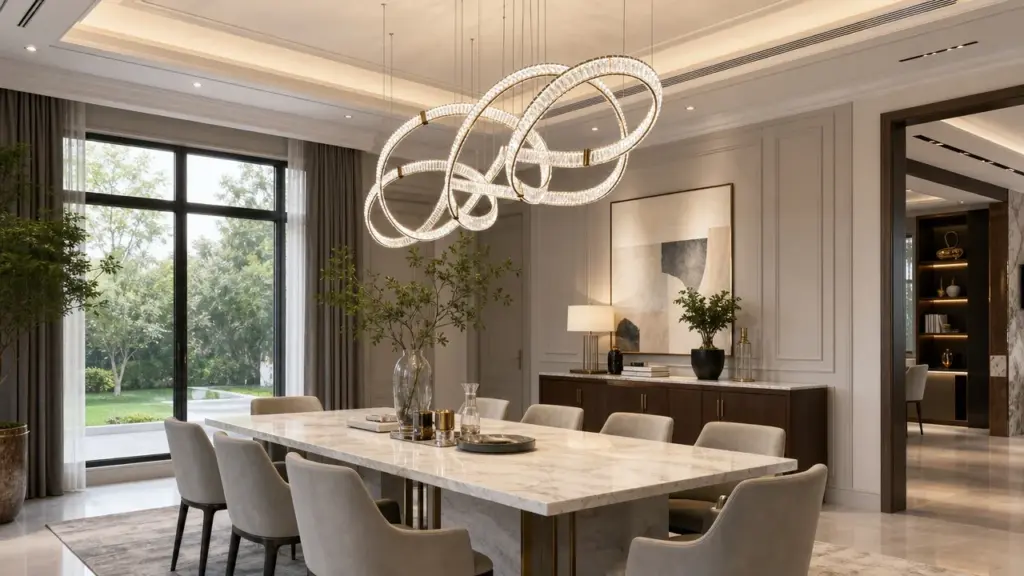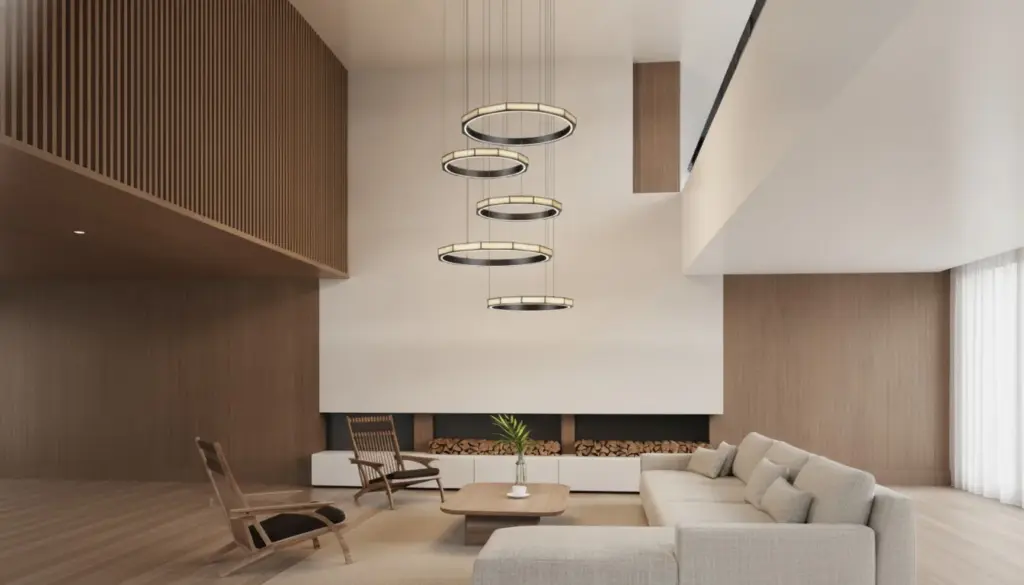
This Mediterranean coastal villa lighting article is a composite case, not a named client project. It combines recurring specification patterns that appear when a villa sits near sea air, pale stone, terrace glass, warm plaster, outdoor living, and premium decorative chandeliers.
The lesson is simple: coastal material decisions should be made by exposure zone. A chandelier finish that works in a sealed interior foyer may not be the right answer beside terrace doors. A glass cluster that looks calm at night may create too much reflection against stone and glazing. A hidden fastener can fail before the visible body looks old.
Kinglong Lighting can help coastal villa teams build a Mediterranean villa lighting brief that translates climate logic into samples, finish masters, mock-up views, service access, spares, and a release file before production.
Key Takeaways
- Composite case only: the article illustrates recurring project decisions without claiming a specific customer site.
- Exposure zones matter: sea-facing, transition, interior, and service areas should not share one unchecked material rule.
- Salt air hides in details: clips, screws, cable exits, and canopy seams may age before the main decorative face.
- Warmth needs proof: plaster, stone, brass, glass, and CCT should be reviewed together.
- Service belongs in design: coastal luxury depends on cleaning access, spare parts, and replacement logic.
Composite project brief
A coastal villa chandelier is approved by zone, not by showroom mood alone.
Imagine a Mediterranean villa with a sea-facing terrace, pale stone floors, textured plaster walls, bronze accents, large glass openings, and a double-height interior volume. The owner wants a chandelier family that feels warm, relaxed, and luxurious without becoming yellow, glittery, or fragile.
The NOAA note on sea spray aerosols is a useful environmental reminder because sea spray is rich in salt and can influence coastal air. The decorative lighting takeaway is not that every indoor chandelier becomes an exterior fixture. It is that open terraces, humidity, air movement, and cleaning frequency should enter the material brief.
The USDA Forest Products Laboratory report on fastener corrosion and salt damage is not a villa lighting manual, but it reinforces a practical point for coastal specifications: small metal components can be affected by salt exposure and should not be ignored. For chandeliers, that points attention to screws, clips, suspension hardware, cable exits, canopy joints, and concealed service areas.
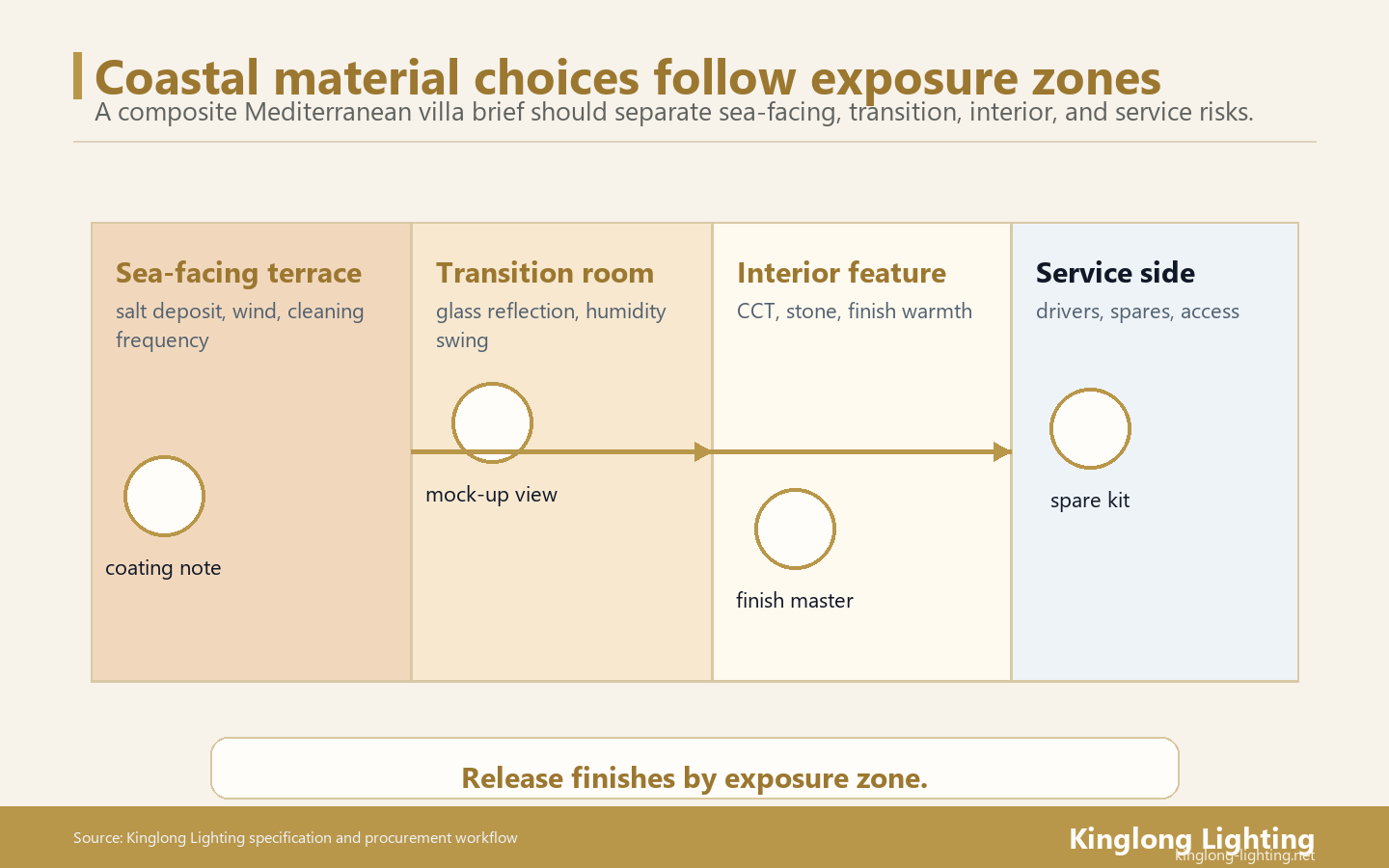
Zone 1: sea-facing terrace edge
The sea-facing edge is where the project team should be most conservative. Even if the chandelier sits inside the threshold, terrace doors, open evenings, and humid air can change the cleaning and aging profile. A finish chosen only for warm color may become difficult to maintain if salt deposits, fingerprints, or repeated wiping affect the surface.
Finish selection needs a cleaning sentence
A coastal finish should be approved with a cleaning sentence: what cloth, what solution, how often, and what should not be used. That sentence is not housekeeping detail. It tells the manufacturer and owner whether the finish can survive the expected service rhythm. A delicate patina may be beautiful, but if it cannot tolerate the planned cleaning routine, it belongs in a lower-exposure zone.
Small metal details deserve the same exposure review
Decorative lighting teams often focus on the visible metal body. In coastal homes, hidden or secondary metal parts can carry the first failure signal. Clips, screws, washers, retaining rings, and cable ends should be specified with the same seriousness as the visible arms or frame. If the small details fail, the luxury impression eventually fails with them.
Zone 2: transition rooms near glass and terrace doors
Transition rooms are visually delicate. During the day, bright exterior light can make a chandelier look darker or heavier. At night, terrace glass can reflect points of light back into the room. Stone floors can multiply sparkle. Warm plaster can turn a mild color temperature into an amber cast.
The DOE lighting design page is useful here because it frames lighting as part of whole-home quality and efficiency. A transition room is not only a living room. It is a brightness-adaptation zone where the eye moves between exterior and interior. The chandelier should be reviewed from arrival, seated, terrace, and upper-level views.
Mock-up views should include reflection
A physical sample or digital mock-up should test reflection, not only shape. If a glass or crystal chandelier reflects strongly in terrace glazing, the owner may see double sparkle at night. That can be dramatic in a bar but distracting in a villa living room. The project team should mark which viewing positions are acceptable before density is frozen.
CCT should be paired with material warmth
The DOE TM-30 FAQ helps explain why color quality involves more than a CCT label. In this composite villa, the team should review light source, plaster, stone, timber, bronze, glass, and fabric together. A 2700K source may feel elegant in one corner and too yellow beside another material palette.
Zone 3: interior feature rooms
Interior feature rooms give the chandelier more protection from direct coastal exposure, but they still need material discipline. A double-height stair, foyer, or dining room may be away from terrace doors while still sharing the villa’s warm surfaces and service expectations.
This is where Kinglong Lighting’s custom material and finish workflow can turn a visual direction into a release package. The factory should not receive only a mood image. It should receive finish sample approval, glass or crystal choice, drop, density, driver access, and cleaning assumptions.
Do not let interior protection justify over-complexity
An interior chandelier can become too complex because the team assumes the climate risk is lower. That can create maintenance risk. Dense crystal, many small glass pieces, delicate arms, and concealed drivers may be acceptable if the owner has access and service support. Without that, a protected room can still produce a fragile ownership experience.
Use the finish master as the release anchor
The finish master should travel with the project record. It should be referenced during sample approval, production inspection, and final installation review. For Mediterranean interiors, where brass, bronze, stone, plaster, and warm light interact, the finish master prevents subjective drift between designer intent and factory output.
Zone 4: service side and hidden systems
The service side is where many luxury lighting projects quietly succeed or fail. Drivers, connectors, access panels, spares, cleaning notes, and replacement parts do not appear in the hero photo, but they decide whether the chandelier remains premium after several seasons.
The UL 1598 standard page is a reminder that decorative lighting remains a luminaire category with product evidence. The owner does not need to read standards like an engineer, but the procurement team should ask what electrical and mechanical documentation supports the destination market.
Driver access should avoid coastal service drama
If drivers are hidden behind finished ceiling work, every future issue becomes intrusive. A coastal villa may require more frequent inspection because humidity and use patterns differ from a sealed city apartment. The service plan should identify where drivers, connectors, and replaceable parts live, and how they can be reached without damaging plaster, stone, or decorative finishes.
Spare parts should match the exposure map
Spare parts are not only for breakage. They are for aging consistency. A replacement glass piece, crystal drop, clip, or finish component should match the original release file. In a coastal villa, parts near terrace exposure may need different replacement expectations than parts deep inside the room. The piece map should reflect that.
Composite decision log
| Decision | Climate-driven question | Proof | Release rule |
|---|---|---|---|
| Metal finish | Will cleaning and humidity change appearance? | finish master plus cleaning note | approve by zone |
| Crystal or glass density | Will terrace glass multiply sparkle? | night view mock-up | cap density if reflection dominates |
| Suspension hardware | Are hidden parts exposed to salt and moisture? | hardware material note | match exposure risk |
| Light source | Does warm CCT distort plaster or stone? | sample under room scene | approve with finishes |
| Service access | Can drivers and pieces be maintained? | access and spare map | hold if access is unclear |
Material decision walkthrough
In the composite coastal villa, the team should not approve a chandelier family with one global phrase such as “brushed brass and warm glass.” That phrase is too broad. The release process should walk through each material decision and ask where the material sits, how it is touched, how it is cleaned, and what the owner will notice after two or three seasons.
Metal: approve visible tone and hidden durability separately
The visible metal tone should be reviewed with stone, plaster, timber, and night lighting. Hidden metal details should be reviewed for exposure and service. A finish that looks correct on the arm may still need different treatment for screws, clips, suspension parts, or canopy seams. The decision should therefore include both aesthetic tone and concealed hardware notes.
Glass or crystal: balance sparkle with cleaning load
Coastal villas often benefit from glass or crystal that catches evening light, but high density increases cleaning work and reflection risk. The team should decide whether the chandelier is meant to be a sparkling object, a soft luminous volume, or a quiet sculptural presence. That decision affects piece count, spacing, replacement strategy, and how often service is realistic.
Electrical components: keep service outside the fragile zone
Drivers, connectors, and controls should not be trapped where future service requires damaging decorative finishes. If a service part can be remote, accessible, and documented, the owner has a cleaner maintenance path. If it must sit in the canopy, the canopy should be designed as a service object, not only a visual cover.
Owner handover file
The finished villa should receive more than an installed chandelier. It should receive a handover file that explains what was approved and how to protect it. At minimum, the file should include the final drawing, finish master reference, light source or driver notes, piece map, spare part list, cleaning method, and service access instructions.
This handover file is especially important in coastal homes because maintenance staff, property managers, and future owners may not know the original specification logic. A clear file helps them preserve the material decisions rather than replacing parts casually or cleaning the chandelier with the wrong method.
How this differs from a general Mediterranean lighting guide
A general guide explains principles: warm surfaces, daylight, glare, color temperature, material aging, and cleaning. This composite case shows how those principles become a project decision log. The key difference is sequence. The team first maps exposure zones, then assigns proof to each zone, then releases material and finish choices.
The Mofun Design Platform can help test volume and visual density, but physical samples still matter for finish, glass, crystal, and cleaning. Digital scale proof and material proof should support each other, not replace each other.
Soft next step for a coastal villa brief
If your Mediterranean villa has terrace openings, sea air, pale stone, plaster, or warm metal finishes, prepare an exposure-zone brief before approving chandelier materials. Send Kinglong Lighting the room plans, terrace orientation, finish palette, ceiling details, maintenance expectations, and reference mood. The team can help you send the coastal villa material brief and decide which samples, finish masters, and service notes should exist before production release.
FAQ
Is this a real Kinglong project case study?
No, this is a composite case based on recurring Mediterranean coastal villa specification issues. It does not claim a named client, location, or completed project. The purpose is to show how climate-driven material decisions should be structured before custom chandelier production.
Which chandelier materials work best near sea air?
There is no single best material for every coastal villa. The right choice depends on exposure zone, cleaning rhythm, finish expectation, humidity, terrace use, and service access. Metal finish, hardware, glass or crystal, coating, and spare parts should be approved together.
Should coastal villa chandeliers use warmer CCT?
Warm CCT is common in Mediterranean villas, but it should be reviewed with actual finishes. Pale stone, plaster, timber, brass, and fabric can make the same CCT feel different. A sample review under the intended dimming scene is safer than a fixed warm-white rule.
Why do hidden fasteners matter in decorative lighting?
Hidden fasteners matter because small parts can age or corrode before the visible chandelier body shows problems. Clips, screws, retaining rings, cable exits, and canopy seams help hold the luxury object together. Their material and service assumptions should match the exposure zone.