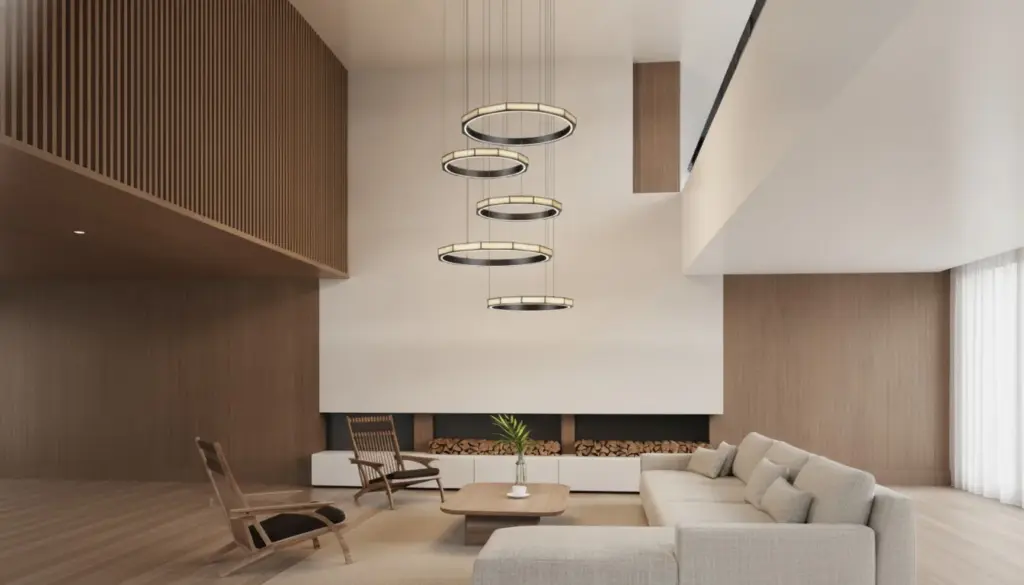
A hand-blown glass villa chandelier is not simply a softer version of a crystal chandelier. It changes how the fixture behaves: diffusion becomes more important than sparkle, craft variation becomes part of the character, and the approval file has to define what variation is acceptable before production.
Crystal is better when the villa needs controlled brilliance, faceted highlights, and a more formal luxury signal. Hand-blown glass is better when the room needs warmth, sculptural softness, and material depth without making every viewpoint shimmer.
Kinglong Lighting can help owners and designers compare both materials through samples, finish masters, weight checks, light tests, and a custom release file before the final chandelier body is manufactured.
Key Takeaways
- Glass softens: Hand-blown glass favors diffusion, depth, and craft variation.
- Crystal sharpens: Crystal favors sparkle, formal brilliance, and sharper reflected highlights.
- Weight matters: Material choice changes suspension, shipping, installation, and service assumptions.
- Color proof matters: Warm scenes and color rendition should be reviewed with real finishes.
- Tolerance must be written: Craft variation should be approved as a range, not left to interpretation.
Start with the room effect, not the material name
The material decision is really a light-behavior decision.
The IES Lighting Library frames lighting as an application-specific decision. In a villa, the application may be arrival drama, dining intimacy, stair movement, master-bedroom calm, or living-room identity. The material should follow that room effect.
A hand-blown glass villa chandelier works best when the design wants depth, softness, slight irregularity, and a more atmospheric glow. Crystal works best when the room needs sharper points of brilliance, formal symmetry, or a polished hospitality-style signal.
The decision rule is to describe the desired light behavior before comparing material samples. If the brief only says glass or crystal, the factory may satisfy the word while missing the room mood.
Hand-blown glass makes variation visible
Hand-blown glass can contain small differences in thickness, bubble pattern, edge shape, tint, and optical distortion. Those differences are not automatically defects. They can make a villa chandelier feel warmer and more handcrafted. But the acceptable variation must be written down because one owner may read variation as craft while another reads it as inconsistency. A release file should include a sample range, approved color, maximum visible distortion, and replacement-part tolerance.
Crystal makes sparkle easier to control and overdo
Crystal gives the design team a sharper optical tool. It can create high brilliance in a foyer, stairwell, or formal dining room, especially when faceted pieces sit near controlled light points. The risk is excess: too much crystal density can create glare at eye level, reflected noise in polished stone, or an overly hotel-like tone in a private villa. The specification should therefore name where sparkle is welcome and where it should be softened.
Compare proof requirements before approving samples
The material sample is not only a color check. It is a production promise. It should tell the owner what the finished chandelier can look like after dozens or hundreds of pieces are made, packed, installed, cleaned, and viewed under dimmed scenes.
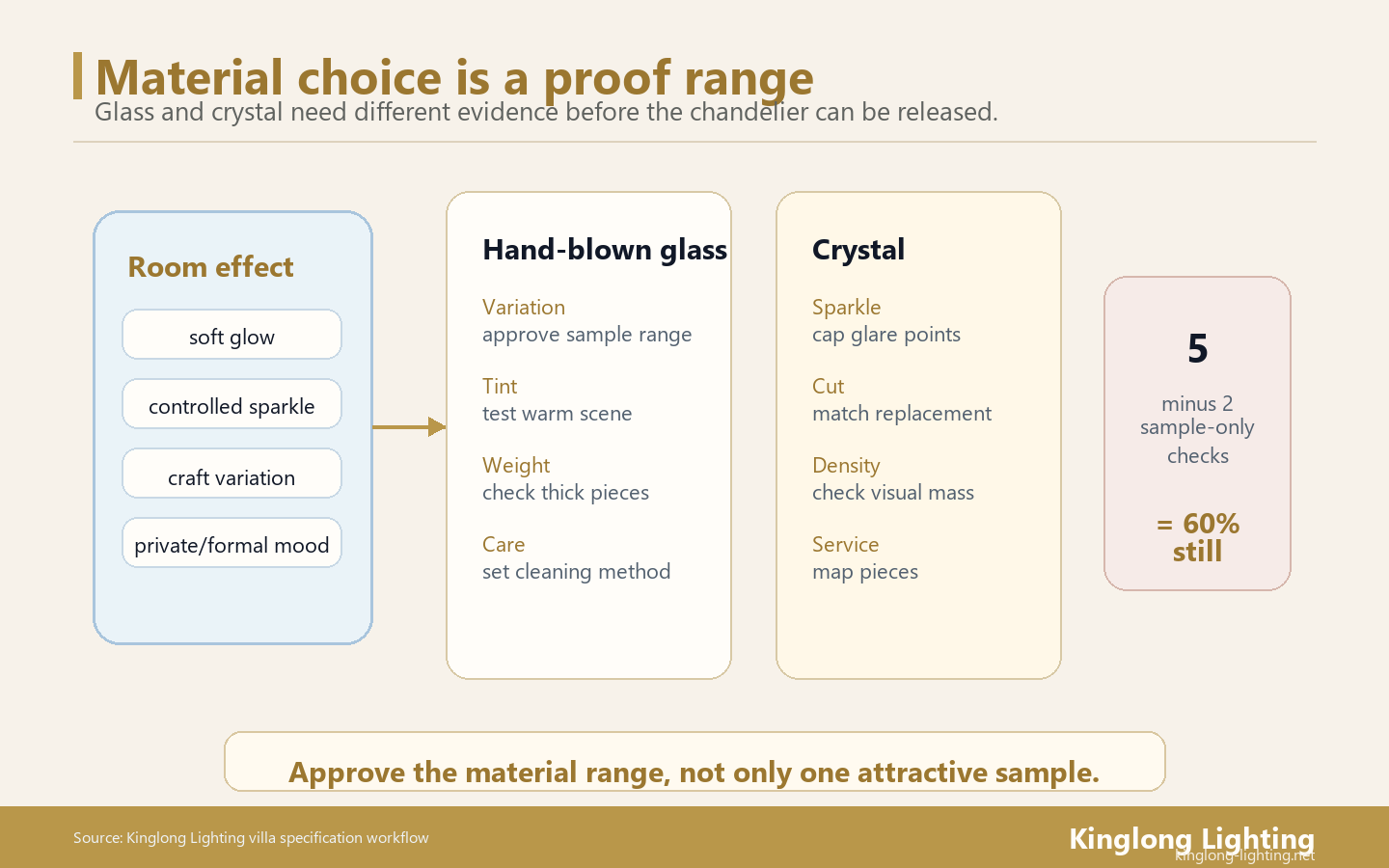
Calculated from a 5-item material release model, 5 checks minus 2 sample-only checks equals 3 unresolved production risks, which means 60 percent of the material decision remains open when the team only approves a pretty sample photo.
| Material question | Glass risk | Crystal risk | Release evidence |
|---|---|---|---|
| Light behavior | too cloudy or uneven | too glittering or harsh | scene photo and dimming check |
| Color range | batch tint variation | unexpected cool reflections | approved sample range |
| Weight | thick glass loads structure | dense crystal loads suspension | fixture weight and hanging detail |
| Maintenance | fingerprints and dust show softly | dust and missing parts show sharply | cleaning and spare plan |
| Replacement | unique pieces may vary | matching cut and finish matters | spare tolerance note |
The DOE TM-30 FAQ is useful here because color rendition should be evaluated beyond one generic label. Glass tint, crystal reflection, lamp spectrum, and dimming level can all change how wood, stone, fabric, and skin tone appear.
The PNNL TM-30 guidance is useful because color quality choices involve tradeoffs. In practice, the material sample should be reviewed under the CCT and dimming condition the villa will actually use.
Weight and service can override the visual preference
The UL residential lighting guidance is a useful reminder that decorative luminaires need product evidence, not only a design image. For material selection, that evidence includes load, suspension, electrical access, glass or crystal retention, and replacement logic.
A hand-blown glass concept can become heavy quickly if each shade or drop is thick. A crystal concept can become difficult to service if the piece count is high or the lower tier is hard to reach. The best material is the one the villa can support, install, clean, and repair without weakening the design intent.
In practice, Kinglong Lighting should receive the ceiling condition, fixture size range, desired material density, cleaning access, and installation route before the material is frozen. The same sample can be correct for a foyer and wrong for a stair void if the service route changes.
The material choice should also be linked to room hierarchy. A foyer can tolerate more sparkle than a bedroom, while a dining room may need color softness more than brilliance. Naming the room priority keeps glass and crystal from being treated as generic luxury labels.
How Kinglong Lighting can turn material choice into a release file
Kinglong Lighting’s customization workflow can help translate a material preference into drawings, sample approval, finish masters, piece tolerance, packing notes, and production proof. This is where a beautiful inspiration image becomes a manufacturable chandelier.
The practical next step is to send room photos, ceiling height, finish palette, desired mood, cleaning access, and any weight restriction through the project inquiry page. Ask Kinglong Lighting to compare hand-blown glass and crystal with a sample range and service note, not only a price quote.
The release file should separate visual preference from production tolerance. For glass, that means approving an acceptable range of tint, bubble pattern, thickness, and edge variation. For crystal, it means approving cut quality, clarity, sparkle density, and replacement matching. The goal is not to make both materials behave the same; it is to make each material predictable enough for the room.
For larger villas, the material range should be room-specific rather than house-wide. The foyer may allow sharper sparkle, the dining room may need softer skin tone, and a bedroom may need lower contrast. One material family can still unify the villa, but the release file should explain how each room uses that family differently.
Translate the material choice into four specification tests
The safest way to compare hand-blown glass and crystal is to stop treating the decision as a style preference. The material should pass four project tests before the chandelier is released: light behavior, weight, tolerance, and long-term care. Each test protects a different stakeholder.
For a villa owner, the tests prevent a beautiful sample from becoming an uncomfortable room experience. For the designer, they turn taste into evidence. For Kinglong Lighting, they turn the selected material into a production boundary that can be drawn, quoted, packed, installed, cleaned, and reordered.
Test light behavior under the real evening scene
Hand-blown glass and crystal should be reviewed at the dimmed level the villa will actually use, not only under showroom brightness. Glass can soften the source and create a warmer field around plaster, timber, and fabric. Crystal can create sharper highlights that feel premium in a foyer but too active beside mirrors or glossy stone. The test should compare the same CCT, driver, and scene level across both materials so the team is judging material behavior rather than lamp output.
Test weight, suspension, and shipping as one problem
Crystal density, metal frame design, glass thickness, canopy size, cable count, and module packaging all change the engineering answer. A material that looks lighter in a rendering can still require heavier support once every pendant, arm, connector, and driver is counted. The release file should therefore include expected fixture weight, suspension points, largest shipping module, ceiling access, and installation sequence. This is especially important for double-height foyers and stair voids where late support changes can affect finished architecture.
Test tolerance before calling variation craftsmanship
Hand-blown glass gains character from variation, but variation needs an approved boundary. The team should define acceptable differences in tint, bubble density, edge thickness, shape, and translucency before production. Crystal needs its own tolerance language: cut consistency, clarity, edge quality, replacement matching, and how sparkle should behave across a complete fixture. Without this written range, the owner may approve one sample and reject the production batch for exactly the handmade character that made the sample attractive.
Test cleaning and replacement before the room is finished
A villa chandelier is not finished on installation day. It has to survive dust, fingerprints, cleaning reach, replacement parts, and future service without changing the room’s luxury feeling. Glass shades may need a specific wiping method to avoid streaks or finish damage. Crystal drops may need a spare-parts map so replacement pieces match the original cut and color impression. The material decision is stronger when the cleaning method and spare strategy are approved before the ceiling and furniture make access difficult.
Approve the material range before approving the chandelier
A villa material review should include at least three approved conditions: a close sample, a dimmed-room sample, and a maintenance or replacement note. This is especially important for hand-blown glass because variation is part of the charm only when the owner knows where the acceptable range begins and ends.
Crystal needs a different range. The question is not whether one piece sparkles. The question is whether the total chandelier density, reflection, and cut consistency support the room mood without becoming harsh from stairs, mirrors, or stone surfaces.
A useful approval also names where the material will be judged from. Glass may be reviewed close up because craft variation is part of its value. Crystal should be reviewed from seated, stair, and mirror views because brilliance changes with distance and angle. If the project team agrees on those views first, later production review becomes less subjective.
Kinglong Lighting can use the approved range to protect both the designer and the factory. The designer gets a clear visual promise, the owner understands variation, and production has a measurable release boundary instead of a subjective phrase like warm glass or premium crystal.
The same range should travel into the spare-parts plan. If a glass shade breaks two years later, the replacement should match the accepted family of color and handmade variation rather than one impossible perfect piece. If a crystal drop is replaced, the cut, clarity, and attachment point should not create a visible odd note in the completed chandelier.
This is also where the buyer can ask for a final room-by-room material schedule. The schedule does not need to be complicated, but it should name which rooms use glass, which rooms use crystal, which rooms use a mixed language, and which rooms require lower sparkle for comfort. That small document makes future purchasing and maintenance much less dependent on memory.
| Range item | Why it matters | Release output |
|---|---|---|
| Color sample | protects finish palette | approved tint range |
| Light scene | protects room mood | CCT and dimming note |
| Piece tolerance | protects batch consistency | variation boundary |
| Service note | protects long-term appearance | cleaning and spare plan |
Material selection action card
- Name the desired light behavior before naming the material.
- Approve sample range, not one perfect piece.
- Check weight, suspension, service, and replacement together.
- Review material under target CCT and dimming scene.
- Freeze tolerance notes before production release.
Related Guides
- Complete Luxury Villa Chandelier Guide
- Dining Room Chandelier Specification
- Custom Villa Chandelier Decision Guide
Frequently Asked Questions
Is hand-blown glass better than crystal for villa chandeliers?
Hand-blown glass is better when the room needs softer diffusion, craft depth, and a warmer sculptural feel. Crystal is better when the room needs formal sparkle, sharper brilliance, and a more classic luxury signal.
Does hand-blown glass always look less formal than crystal?
Not always. Hand-blown glass can look highly refined when shape, tint, and spacing are controlled. The difference is that glass usually reads as softer and more artisanal, while crystal reads as sharper and more ceremonial.
Which material is easier to maintain in a villa?
Neither material is automatically easier. Open glass forms may collect visible fingerprints, while dense crystal can collect dust and require more replacement discipline. Maintenance depends on piece count, reach height, finish, and spare-part planning.
What should I approve before production starts?
Approve the material sample range, color tolerance, piece count, suspension load, dimming scene, cleaning route, and replacement-part rule. A single sample photo is not enough for a custom villa chandelier.