Villa lighting projects move smoothly when interior designers and lighting manufacturers share the same release file. They become slow when design intent lives in mood boards, technical risk lives in separate electrical notes, and the owner approves a beautiful image without seeing suspension, material proof, dimming, or installation assumptions.
The best collaboration is not a handoff from designer to factory. It is a loop: room story, fixture concept, feasibility check, sample proof, control scene, installation method, and final release.
Kinglong Lighting can support interior designers by translating villa lighting intent into custom chandelier drawings, material samples, visualization, manufacturing details, and a practical approval package.
Key Takeaways
- Shared file: Design intent, dimensions, samples, controls, and installation assumptions should travel together.
- Early feasibility: Manufacturers should review scale, weight, materials, and access before the client falls in love with an impossible concept.
- Sample discipline: Finish masters and material boards protect the designer’s palette.
- Scene planning: Dimming and control zones should be discussed before decorative forms are frozen.
- Change freeze: Custom villa chandeliers need clear release gates to avoid late rework.
Interior designers need a manufacturer before the fixture is final
The manufacturer should enter a villa lighting project when the design story is clear but the custom form is still flexible.
Kinglong Lighting’s villa lighting and customization pages position custom decorative lighting as a project process, not a product click. That matters because villa chandeliers affect ceiling structure, room composition, finishes, control scenes, maintenance, and installation sequence.
The wrong timing is to send a final rendering and ask whether it can be built. At that point, the client may already have approved dimensions, sparkle, finish, and placement that are difficult to manufacture or service. The better timing is after the designer defines the room role, mood, material palette, and preferred chandelier language.
The first brief should be visual and measurable
A strong villa lighting brief includes floor plan, reflected ceiling plan, ceiling height, furniture layout, view axes, material board, inspiration references, target mood, room role, and any known electrical or structural constraints. It should also state which decisions are fixed and which are open. For a collaboration decision, attach the design intent, owner approval point, manufacturer response, and installer constraint to the same line item so the project team can close the issue without reopening the whole fixture concept. In practice, the note should also identify the next person who must answer before the issue can close before any quotation is finalized.
Visualization should answer scale questions
The Mofun Design Platform is useful when it helps a team compare scale, configuration, and mood before production. Visualization should answer concrete questions about stair void fill, dining table alignment, foyer sightlines, and living room hierarchy. For a collaboration decision, attach the design intent, owner approval point, manufacturer response, and installer constraint to the same line item so the project team can close the issue without reopening the whole fixture concept. In practice, the note should also identify the next person who must answer before the issue can close before any quotation is finalized.
Build the collaboration around four approval gates
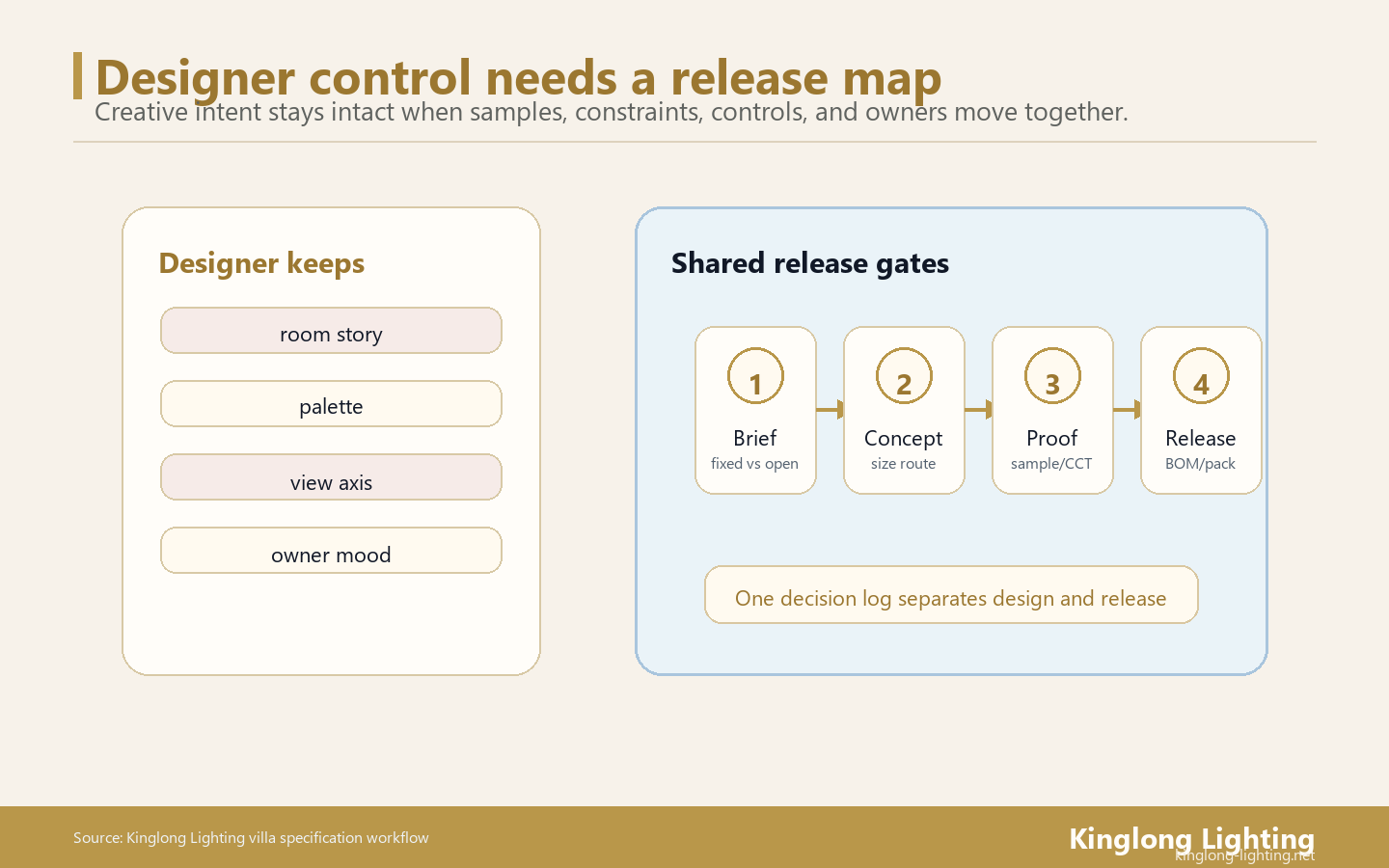
Each gate has a different output. A mood board cannot replace a release drawing. A sample cannot replace a dimming note. A beautiful render cannot replace suspension approval.
| Gate | Designer responsibility | Manufacturer responsibility | Owner decision |
|---|---|---|---|
| Brief gate | Room story, palette, view axis | Feasibility questions | Budget and priority |
| Concept gate | Preferred form and mood | Size, material, suspension options | Design route selection |
| Proof gate | Finish and sample review | Drawings, material proof, CCT note | Sample approval |
| Release gate | Change freeze and sign-off | BOM, packing, installation assumptions | Production approval |
The Lutron lighting controls guide explains how keypads and scenes can coordinate multiple zones at different intensities. For villa lighting, this means the chandelier is only one part of room behavior. A designer may want arrival, entertaining, dinner, art viewing, night path, and cleaning scenes.
Calculated from a four-gate workflow, one missing gate delays the custom process by at least 25 percent because every later decision has to reopen skipped information. If the proof gate is skipped, the release gate becomes a debate about finish, color, and feasibility.
Safety and evidence protect the designer's reputation
Interior designers often carry the client’s trust even when the issue is manufacturing or installation. UL Solutions describes indoor and decorative lighting testing in relation to UL 1598 and UL 8750, which reinforces why evidence for the complete luminaire matters.
Ask for fixture weight, suspension method, driver location, material and finish proof, lamp or LED information, dimming compatibility, cleaning access, spare parts, packing assumptions, and installation notes. These are not bureaucratic extras. They are the difference between an approved design and a buildable villa lighting package.
How to brief Kinglong Lighting without losing design control
Interior designers should brief Kinglong Lighting as a manufacturing collaborator, not as a catalog vendor. Send the project story, key rooms, design language, material palette, ceiling heights, priority fixtures, budget sensitivity, target timeline, and known restrictions.
The soft next step is to submit a room schedule through the villa lighting project inquiry. Ask Kinglong Lighting to return a concept feasibility note, visualization route, sample list, and release evidence checklist. That gives the designer a practical way to keep creative authority while giving the owner confidence.
The designer should also mark non-negotiable intent separately from negotiable construction details. Mood, hierarchy, and material language may be protected, while arm count, module split, driver location, or suspension detail can be adjusted to make the fixture buildable. That separation keeps feasibility comments from feeling like creative interference.
Control RFIs before they become design changes
In villa lighting projects, many delays start as small RFIs: a missing ceiling height, an unclear finish reference, a driver location that nobody owns, or a chandelier module that cannot fit through the final access route. None of these questions is dramatic on its own, but together they pull the designer, owner, manufacturer, and installer back into decisions that should have been closed before release.
The collaboration file should therefore separate design RFIs from release RFIs. Design RFIs ask about mood, visual hierarchy, material direction, and whether a fixture should feel restrained or expressive. Release RFIs ask about exact dimensions, weight, wiring, dimming protocol, packing, spare parts, and site constraints. Mixing these two categories creates confusion because a technical answer can accidentally change the design, while an aesthetic answer can leave the technical risk unresolved.
Kinglong Lighting can help by returning comments in the same structure. A feasibility note should say which items are design choices, which are manufacturing constraints, which need owner approval, and which require installer confirmation. This gives interior designers a cleaner way to protect their creative role while still moving the project toward a production-ready file.
A good collaboration rhythm also defines response format. The designer should not receive a loose list of factory comments that has to be interpreted again. A better format is a decision table with item number, room, fixture, issue, proposed answer, impact on design intent, impact on production, required owner approval, and deadline. This makes the next action obvious and keeps emotional design discussions separate from logistics.
The same rhythm protects the manufacturer from silent assumptions. If the designer specifies aged brass, warm dimming, or an irregular crystal cascade, the factory should not guess which variation is acceptable. It should return a finish sample request, a dimming compatibility note, or a module tolerance question. Clear questions are a sign of control, not hesitation, when the fixture will be custom made.
For high-end villas, the best moment to align is before mock-up or deposit, not after site panic. Designers can send a concept board, reflected ceiling plan, ceiling height, furniture layout, preferred finish, control schedule, and target budget range. Kinglong Lighting can then flag which risks need design approval, which need engineering review, and which can be solved inside normal production.
This approach also keeps the owner experience calmer. Instead of hearing scattered problems from different vendors, the owner sees a controlled decision log with clear choices, consequences, and deadlines. That matters in villas because the emotional cost of late changes is high: a chandelier is visible, expensive, and tied to the identity of the room.
| RFI type | Example question | Best owner of answer |
|---|---|---|
| Design intent | Should the stair fixture feel calm or dramatic? | interior designer |
| Material proof | Which brass tone is the finish master? | designer and owner |
| Technical release | Where are drivers and support points? | manufacturer and installer |
| Site logistics | Can the largest module enter after fit-out? | installer and contractor |
Designer collaboration action card
- Send room story and measurable drawings together.
- Separate fixed design intent from negotiable details.
- Request feasibility before client sign-off hardens.
- Approve finish samples under target lighting scenes.
- Freeze changes only after release evidence is complete.
Related Guides
- Luxury Villa Chandelier Guide
- Double-Height Foyer Chandelier Selection
- Dining Room Chandelier Specification
Build the interior-designer collaboration release map before final approval
For villa lighting designer collaboration, the useful starting point is application context rather than decorative preference. The practical question is whether interior designer, villa owner, custom lighting manufacturer, and installer can agree on what must be proven before the chandelier is released. The answer is a short packet that turns design intent, operating risk, evidence, and responsibility into one approval conversation.
The main risk is designer intent, owner preference, manufacturer constraint, and installer reality being negotiated too late. That risk is strongest when a beautiful fixture is separated from the evidence that makes it buildable, maintainable, and safe to release. Calculated from a 6-gate review, 2 unresolved gates out of 6 leave about 33 percent of the approval logic open, which is too much uncertainty for a custom decorative lighting order.
Define which decisions belong to the designer
The first approval question should define the collaboration decision. The decision is not whether a chandelier looks premium in isolation; it is whether the selected approach protects the room role, guest or owner experience, operating reality, and production handoff at the same time. The release note should name the decision owner, the proof expected, and the change that would force a redesign. That boundary lets the buyer reject a tempting option for a specific reason instead of relying on taste language.
Bring manufacturing constraints into the mood phase
The first failure point usually appears where the visual promise meets daily use. Calculated from the 6-gate interior-designer collaboration release map, 1 weak gate times 4 downstream teams equals 4 review paths that can be delayed by one missed proof item. The review should include the view or operating condition that would be most expensive to fix later. Scene behavior and context should be tested before the fixture is treated as release-ready.
Use samples to settle owner preference early
Supplier evidence is useful only when it matches the risk being controlled. The request should convert that risk into proof such as design brief, material board, drawing revision log, sample decision, constraint note, and release owner. If the risk is scale, request a marked elevation and sightline view. If the risk is color, request a material sample under the target scene. If the risk is maintenance, request the cleaning route and spare-part logic. Evidence should change the release decision, not decorate the file.
Keep installer constraints inside the release map
Kinglong Lighting’s project workflow moves custom hospitality and villa chandeliers through drawings, samples, manufacturing, packing, shipping, and site installation. The final handoff should state what is approved, what remains flexible, and who can reject a change. In practice, the release packet should include at least 6 named gates and one owner for each gate. That keeps a later suggestion from turning into a redesign after the fixture has already entered production.
Frequently Asked Questions
When should an interior designer contact a chandelier manufacturer?
Contact the manufacturer after the room story, palette, and rough fixture direction are clear, but before final dimensions and construction details are frozen. This timing keeps the concept flexible enough for feasibility input.
What files should designers send for villa lighting quotes?
Send floor plans, ceiling plans, elevations, ceiling heights, furniture layout, material boards, inspiration images, target mood, control expectations, and any structural or access constraints. The quote is stronger when intent and measurements are sent together.
How can designers protect custom chandelier finishes?
Use finish masters, material samples, and sample review under the intended CCT before production. The approval record should state which finish qualities are fixed and how batch consistency will be checked.
Who should approve the final villa lighting release file?
The designer, owner, manufacturer, and installer should each approve the parts that affect their responsibility. The designer approves intent and finish, the owner approves decisions and budget, the manufacturer approves buildability, and the installer approves site assumptions.