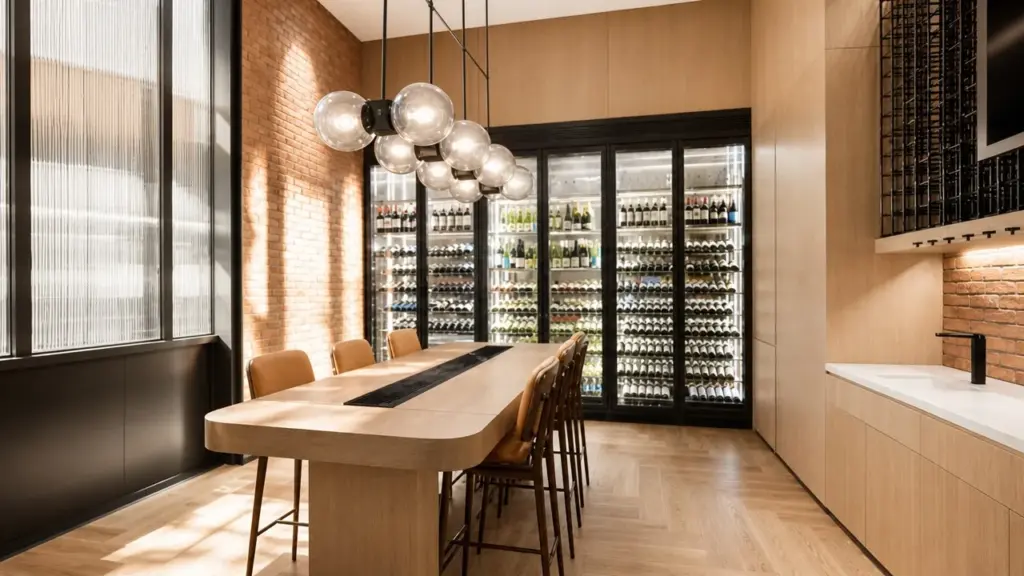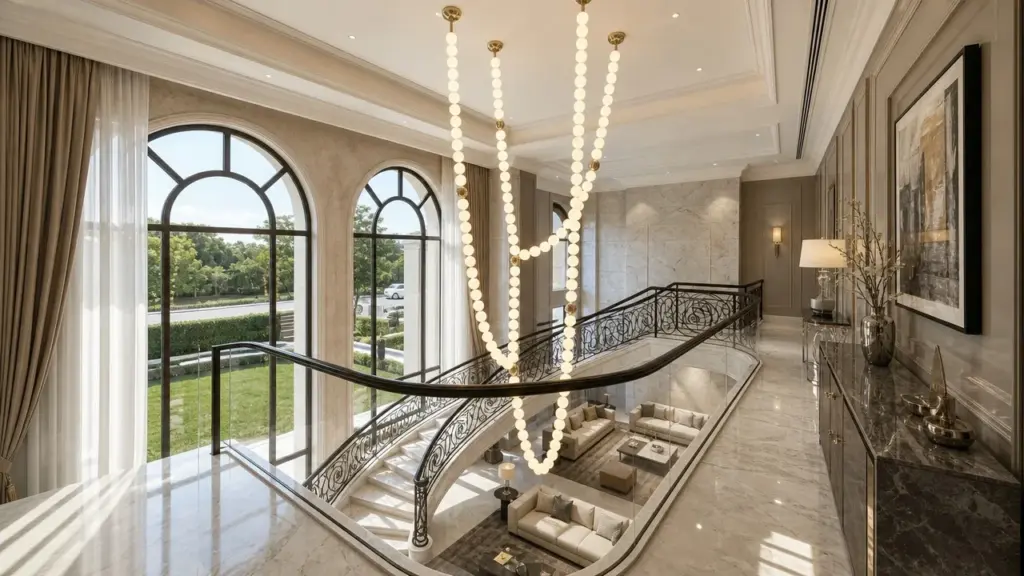
A sculptural chandelier and a cluster chandelier solve different brand problems, so the right choice depends on whether the hotel needs one iconic object or a flexible field of visual rhythm. Sculptural fixtures work best when the lobby needs a memorable centerpiece, strong silhouette, and controlled photography moment. Cluster chandeliers work best when the space is long, layered, modular, or needs distributed sparkle across multiple sightlines. Based on our analysis of a 5-view lobby review, the winning approach is the one that survives entrance, reception, lounge, upper-level, and maintenance checks without forcing the brand story into the wrong geometry.
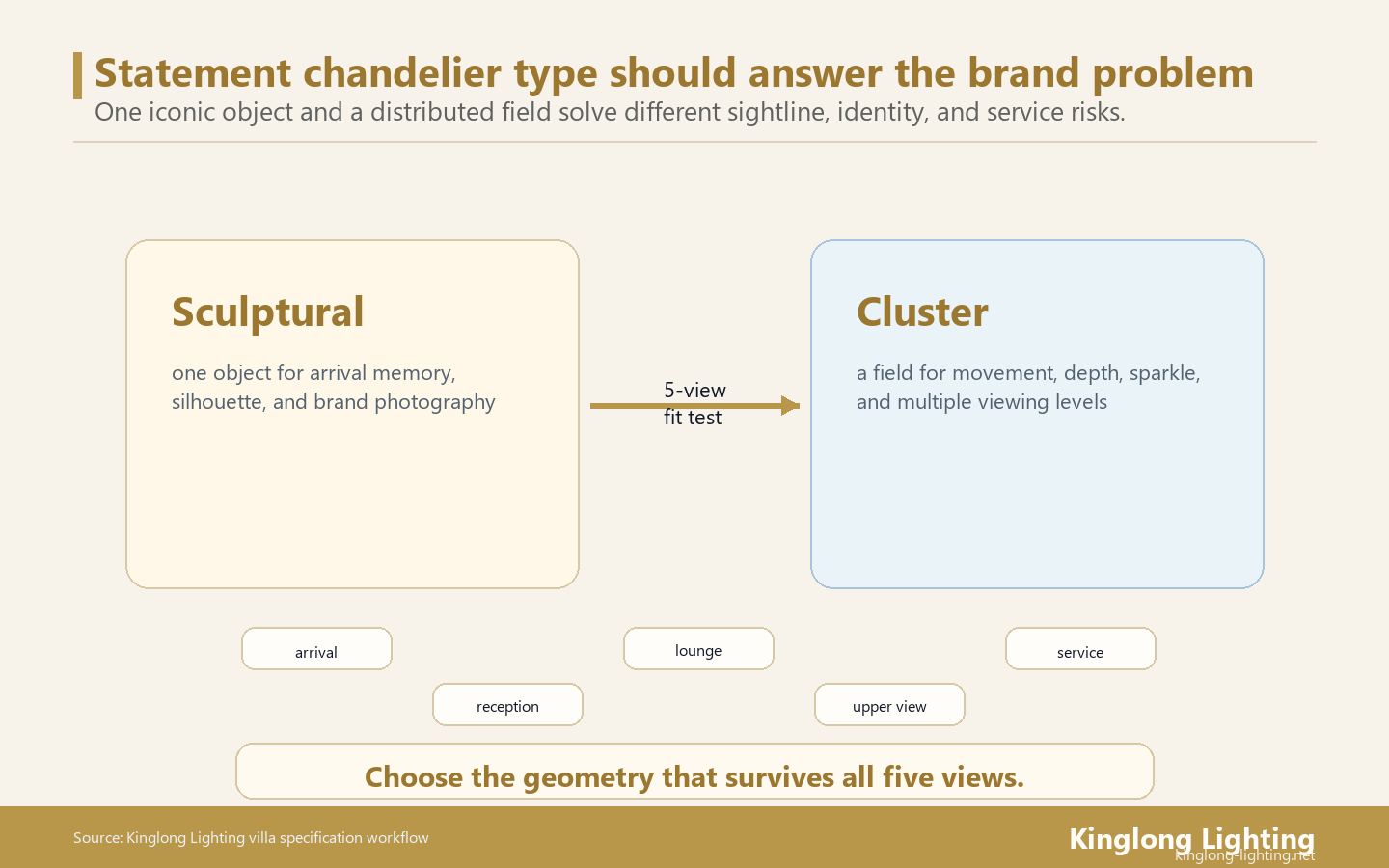
The choice is often framed as taste: one big statement versus many small pendants. That framing is too shallow for hotel work. The real decision includes ceiling height, structural points, crate route, installation labor, replacement access, dimming zones, reflected ceiling plan, brand voice, and how the lobby will be photographed. A chandelier is not only what guests see; it is what the project team can actually build and keep aligned over time.
Key Takeaways
- Sculptural fixtures: Best for iconic arrival, strong silhouette, cultural storytelling, and controlled focal points.
- Cluster fixtures: Best for long spaces, distributed sparkle, modular installation, and flexible ceiling geometry.
- Brand fit: A formal luxury hotel may need a single visual authority; a resort or lifestyle hotel may need a softer field.
- Risk split: Sculptural fixtures concentrate load and fabrication risk; clusters multiply alignment, suspension, and maintenance points.
- Proof before release: Choose the approach after 3D views, sample details, load assumptions, module map, and cleaning plan agree.
Choose the statement approach from the brand problem
The right chandelier type is the one that expresses the hotel’s brand promise with the least geometry, installation, and maintenance contradiction.
A sculptural chandelier says, “remember this object.” It can become the lobby signature, the social-media photograph, the cultural motif, or the premium arrival cue. A cluster chandelier says, “feel this atmosphere.” It can create movement, depth, canopy, rhythm, and sparkle across a wider field. The IES Lighting Library is useful here because it reminds teams that lighting is an application decision involving perception, controls, construction, maintenance, and visual performance.
Kinglong Lighting’s hospitality lighting solutions fit this decision because custom hotel chandeliers are not fixed catalog objects. The project can adjust module count, material language, suspension density, color temperature, and installation sequence to match the property story. The business question is not “which type is more luxurious”; it is “which type carries this brand story with less project risk?”
When a sculptural chandelier is the stronger choice
Choose sculptural when the hotel needs one controlled icon that can own the lobby without needing many visual repetitions.
Sculptural chandeliers work well in compact grand lobbies, heritage hotels, high-end reception spaces, cultural boutique properties, and villas where the fixture is intended to act like a commissioned object. The shape can echo local craft, water, crystal, botanical forms, architecture, or a brand motif. Because the visual authority is concentrated, the design team can control silhouette, finish, color, and photography more easily than with a wide field of pendants.
The risk is also concentrated. A large sculptural piece may need stronger ceiling coordination, higher crate complexity, special lifting, custom suspension, and tighter fabrication tolerance. A late size change can affect the entire piece. For this reason, the RFQ should request a shop drawing, weight estimate, module breakdown, material sample, fixing-point assumption, packing plan, and installation method before price comparison.
When a cluster chandelier is the stronger choice
Choose cluster when the hotel needs a field of light that can adapt to a long, high, irregular, or multi-view space.
Cluster chandeliers are powerful in double-height lobbies, long arrival axes, stair voids, resort lounges, restaurants, atriums, and spaces where guests move around the installation from several levels. The cluster can distribute sparkle without one heavy object. It can follow a ceiling curve, create a canopy, extend along circulation, or soften a very tall void. It may also be easier to package and install in modules.
The risk is multiplied rather than concentrated. More suspension points mean more alignment checks. More pendants mean more driver, cable, cleaning, and replacement questions. If the cluster has too many unique lengths or shapes, installation becomes a sequencing problem. If it has too little variation, it can look like a generic decorative grid. Cluster specifications should therefore include a coordinate map, pendant schedule, cable length tolerance, driver access note, and replacement logic.
| Decision factor | Sculptural chandelier | Cluster chandelier | Release evidence |
|---|---|---|---|
| Brand message | One iconic object | Atmospheric field or rhythm | One-sentence brand role and 3D views |
| Space geometry | Works best with strong focal zone | Works well in long or multi-view spaces | Entrance, reception, lounge, and upper-level views |
| Installation risk | Concentrated load and lift risk | Multiple suspension and alignment points | Load path, module map, and site sequence |
| Maintenance | One major access strategy | Many repeated cleaning points | Access method and spare-part schedule |
Compare the options through five views
A statement chandelier should be approved only after it wins the lobby from the views guests and operators actually use.
Use five views: arrival approach, reception desk, lounge seating, stair or balcony, and maintenance access. A sculptural piece may win the entrance view but feel too heavy from the lounge. A cluster may create wonderful sparkle from below but feel weak from outside the glass facade. The WELL v2 Light concept helps keep the decision connected to visual comfort and human experience, while safety and certification sources such as UL luminaire testing and IEC 60598 remind teams that a statement object still needs a proof path.
For early geometry review, Kinglong Lighting’s Mofun Design Platform can help teams compare sculptural and cluster options before production evidence is frozen. The goal is to prevent a design preference from becoming a late load, access, or alignment dispute.
Based on our analysis of a 5-view statement review, the approach should compare each option against 4 proof groups: brand signal, geometry fit, installation risk, and maintenance access. A sculptural option may be excellent on arrival memory but weak on installation flexibility if the ceiling has limited fixing points. A cluster option may be excellent on spatial rhythm but weak on maintenance if every pendant has a different drop, driver path, or cleaning method. This means the decision is not aesthetic democracy; it is a weighted trade-off where one weak proof group can overturn the prettiest rendering.
The specification should also define what “statement” means for the brand. A formal urban luxury hotel may need one centered object that communicates authority and order. A resort lobby may need a constellation that feels relaxed, fluid, and layered. A cultural boutique hotel may use either approach, but the motif must be legible without turning into a literal theme prop. Ask the supplier for 3 geometry options: one sculptural, one cluster, and one hybrid. Then compare them from 5 views and against 5 release requirements: load path, module map, source data, packing method, and cleaning access. If the project cannot explain why one option wins those 10 checks, it is too early for production release. The strongest option should also leave a maintenance story behind: who cleans it, how components are replaced, where drivers sit, and what the hotel team can do without reopening finished ceiling work. A statement chandelier should create memory for guests, but it should leave clarity for the people who must install, operate, and repair it.
The final brief should include a rejected-option note. If the cluster was rejected because it weakened the entrance photograph, say so. If the sculptural piece was rejected because it overloaded one ceiling zone, say so. Those notes protect the design choice when budget, value engineering, or late stakeholder preference tries to reopen the decision.
Related Guides
- Hotel Lobby Chandelier Design Decisions
- Hotel Lobby Chandelier Volume Formula
- Hotel Lobby Color Temperature Standards
Statement Chandelier Action Card
- Write the brand role before choosing a shape.
- Compare sculptural and cluster options from five views.
- Request load, module, driver, cleaning, and packing evidence.
- Ask Kinglong Lighting to review the statement approach before RFQ release.
- Send lobby drawings, ceiling height, views, material direction, and destination through the custom chandelier project inquiry.
A statement chandelier packet should protect the brand story from the wrong geometry
Sculptural and cluster chandeliers are not interchangeable statement gestures. A sculptural piece concentrates memory into one object. A cluster distributes atmosphere across a field. The wrong choice can make a boutique hotel feel generic or make a large lobby feel under-scaled. The approval packet should therefore connect the brand story to guest movement, ceiling geometry, installation risk, and maintenance access before the team freezes the visual direction.
Use the arrival view to test memory
The arrival view asks what the guest remembers after walking through the lobby. If the hotel needs a single cultural motif or signature object, sculptural geometry may be stronger. If the hotel needs movement, glow, and layered sparkle along a long axis, a cluster may be more natural. The approval should include arrival renderings and real sightline checks, not only a close-up product image.
Use service access to test realism
A sculptural object may be easier to describe and harder to lift. A cluster may distribute weight and access, but it can multiply alignment, cleaning, and replacement tasks. The packet should name how parts are reached, how modules are labeled, how damaged elements are replaced, and which ceiling points carry the load. Kinglong Lighting can then advise whether the preferred geometry fits the manufacturing and installation reality.
Prevent hybrid designs from losing intention
Some projects try to combine a sculptural centerpiece with surrounding cluster elements. That can work when the hierarchy is clear. It fails when the centerpiece and cluster compete for the same view. The approval packet should define the primary brand signal, secondary atmosphere field, spacing logic, dimming split, and maintenance method so the hybrid reads as one composition.
Use mock-up photography to test the brand promise
The mock-up should include the hotel’s intended guest photographs, not just technical views. A sculptural chandelier may need a strong frontal image for arrival memory. A cluster may need movement shots from several angles to prove that the field feels intentional rather than random. Photography also exposes scale problems: a sculptural object can look smaller in a large void, while a cluster can look sparse when shot from the wrong height. Those checks keep the brand promise grounded in how guests will actually see and share the space.
The practical next step is to send Kinglong Lighting the brand intent, lobby views, ceiling plan, preferred geometry, fixture scale, installation access, and replacement expectation. The supplier response should confirm which statement approach can be manufactured, packed, installed, and maintained without weakening the hotel story.
If the preferred approach fails one of the five views, the team should revise the geometry rather than forcing the story. That may mean tightening a cluster, simplifying a sculptural silhouette, changing suspension height, or separating decorative and service zones. The best statement chandelier is not the boldest option; it is the option whose brand role survives the real lobby.
The packet should also explain how the chandelier relates to other lobby cues. Artwork, reception backdrop, stair feature, bar glow, and exterior view can all compete with the statement fixture. If the chandelier is meant to be the primary memory cue, the surrounding lighting should support that role. If it is meant to create atmosphere, the design should not judge it like a single object sculpture.
Frequently Asked Questions
Is a sculptural chandelier more luxurious than a cluster chandelier?
No. Sculptural chandeliers feel luxurious when one iconic object fits the brand and space. Cluster chandeliers feel luxurious when the hotel needs atmosphere, movement, and distributed sparkle. Fit matters more than type.
Which approach is easier to install?
Neither is automatically easier. Sculptural fixtures concentrate lifting and load risk; clusters multiply suspension and alignment points. The easier option is the one with clearer drawings, module plan, access method, and site sequence.
Can a hotel use both sculptural and cluster chandeliers?
Yes, but the roles should be different. A lobby may use one sculptural centerpiece, while stair voids, restaurants, or lounges use clustered compositions. The material and color language should still feel coherent.
What should be approved before production?
Approve brand role, 3D views, dimensions, weight, fixing assumptions, material sample, light source, driver access, module map, packaging, and maintenance plan before production release.