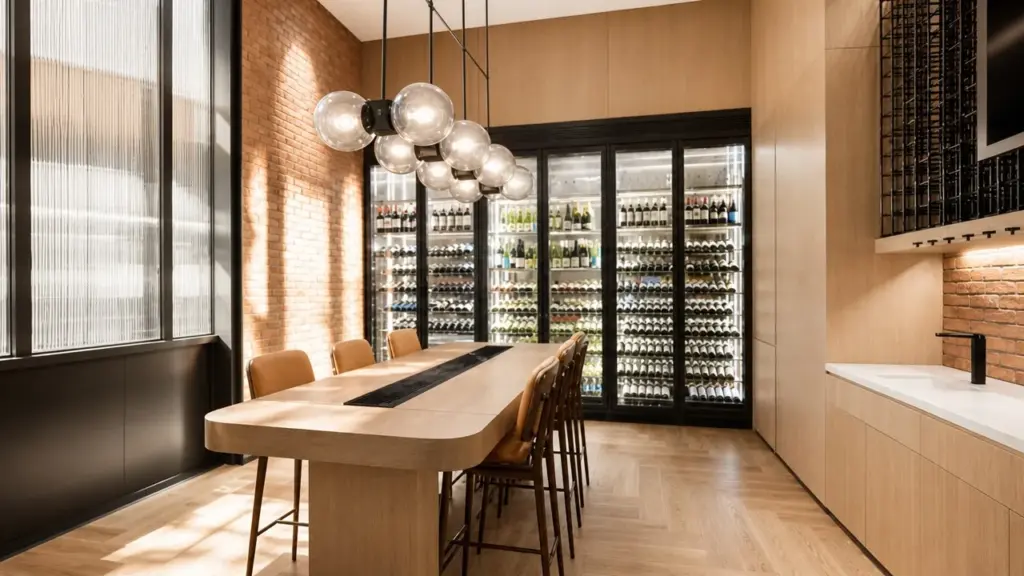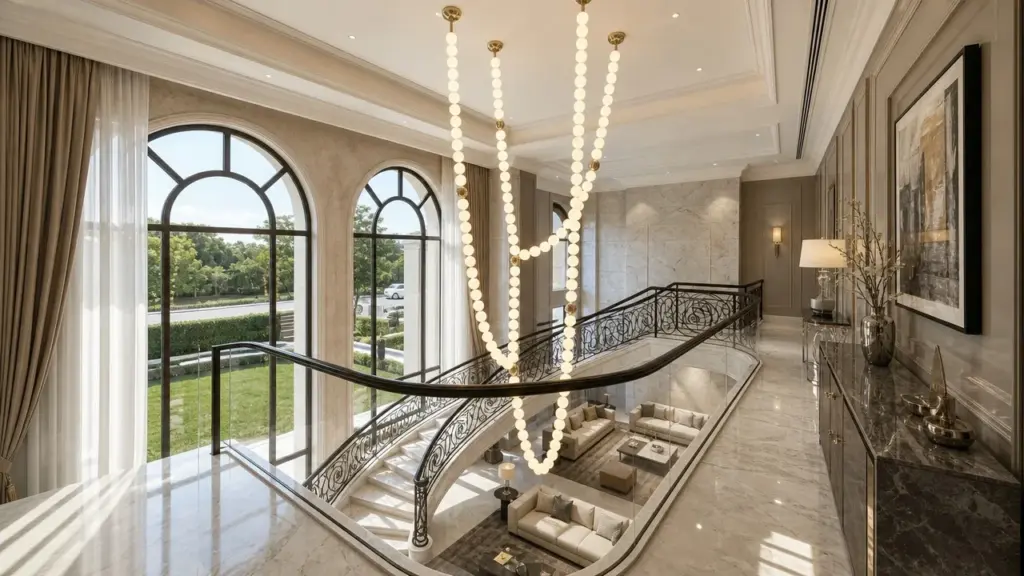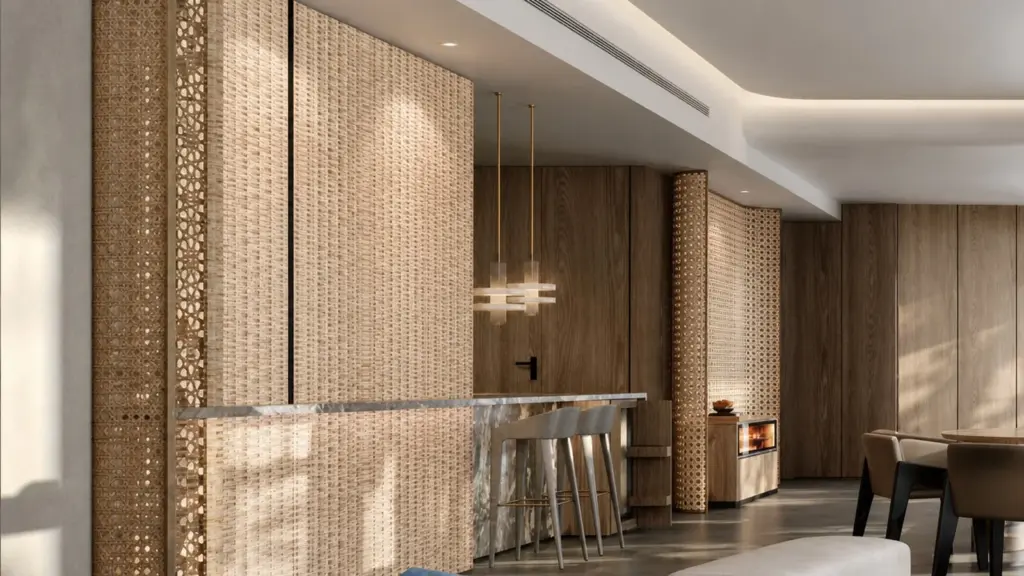
A luxury hotel lobby color temperature standard is not a universal 2700K rule; it is a warm-white decision band that must be proven against materials, dimming, daylight, and color rendition. The 2700K-3000K range defines luxury because it usually protects warmth, skin tone, metal richness, and evening atmosphere better than cooler lobby light. Based on our analysis of a 5-zone lobby, the release decision should test at least 2700K, 3000K, and one cooler control sample before production, because a 300K shift can change brass, stone, crystal, leather, and guest photography in different directions.
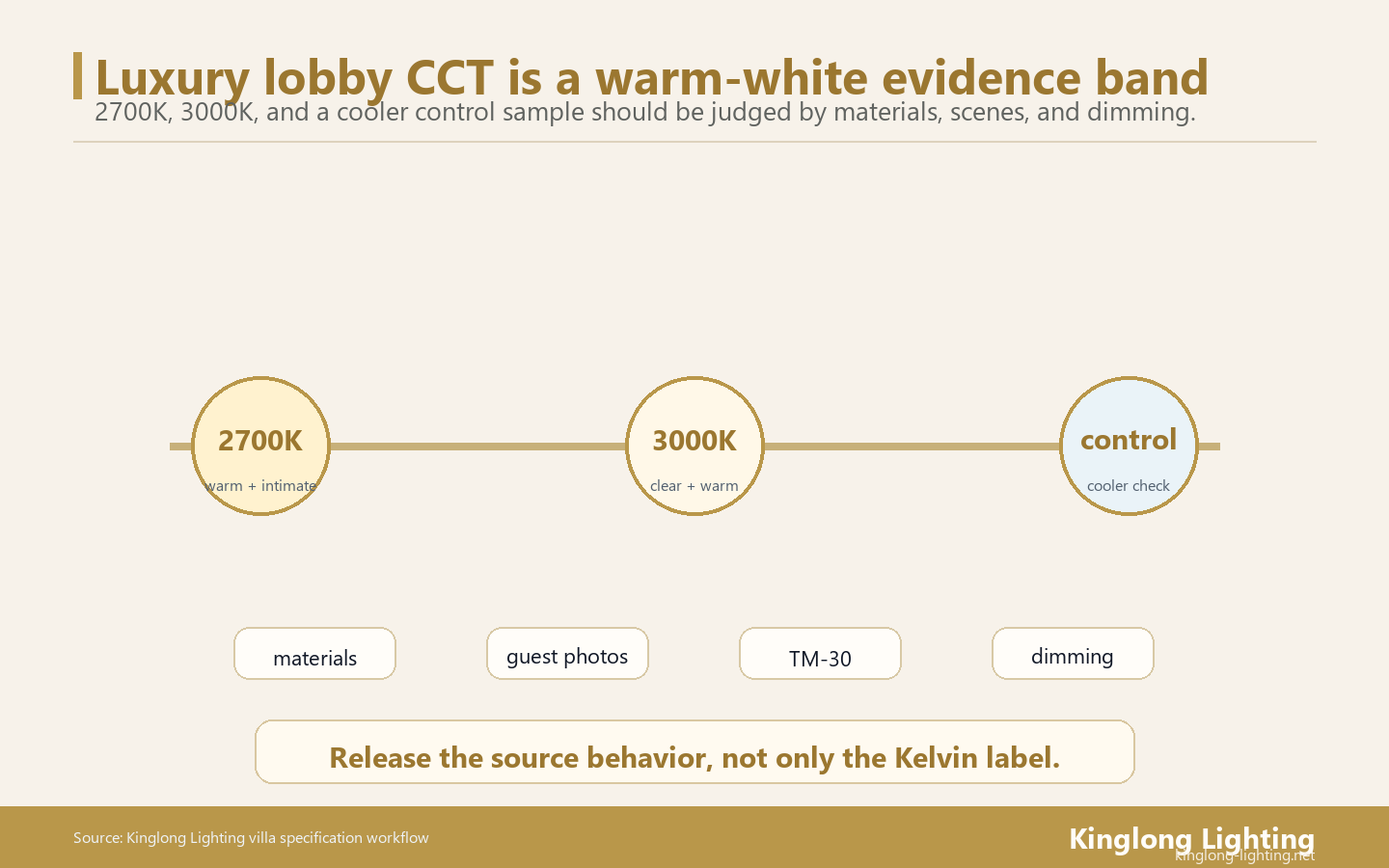
Hotel owners often ask for “warm luxury” as if color temperature alone can deliver it. It cannot. A 2700K source with poor color rendition may flatten red, gold, and wood tones. A 3000K source with a greenish tint may make stone and skin feel tired. A lobby with daylight, reflective marble, large crystal fixtures, and warm brass may need a different balance than a dark boutique lobby with leather, timber, and low evening light.
Key Takeaways
- 2700K-3000K is a decision band: Treat it as the normal luxury starting range, not as an automatic standard.
- Material proof matters: Test the CCT against crystal, brass, stone, wood, fabric, art, and skin tone.
- Color rendition matters: Ask for source data beyond a vague CRI claim; TM-30 language can improve review quality.
- Dimming changes perception: A warm source can still feel wrong if it shifts, flickers, or loses color quality when dimmed.
- Release evidence: Approve the final CCT only after mock-up photos, sample boards, scene notes, and driver data agree.
Treat 2700K-3000K as a luxury decision band, not a blind rule
Luxury is not created by picking the warmest number; it is created when the light supports materials, faces, arrival mood, and operational scenes at the same time.
The IES Lighting Library frames color science, vision, controls, maintenance, and commissioning as part of lighting practice. That is why a lobby color-temperature standard should define a review method rather than only naming a Kelvin value. The standard should say what samples will be tested, under what scenes, from which guest views, and who can approve the final source.
Kinglong Lighting’s hospitality lighting solutions are relevant because custom hotel fixtures must coordinate decorative warmth with architectural lighting, lobby material boards, and the whole arrival sequence. If the chandelier, sconces, downlights, wall washers, and table lamps use unrelated CCT or tint behavior, the lobby may feel expensive in pieces but incoherent as a guest experience.
Why 2700K feels more intimate
2700K tends to support evening warmth, brass richness, amber crystal sparkle, timber, leather, and residential luxury cues. It can be strong for boutique hotels, resort lounges, bars, and low-light arrival experiences. The risk is that it may feel too dim, too yellow, or too weak against bright daylight, cool stone, high ceilings, or a business-hotel lobby that needs crisp reception clarity. The right use case is usually mood-led and material-led.
Why 3000K often becomes the safer hotel standard
3000K often protects a broader range of lobby tasks: check-in, wayfinding, luggage movement, photography, day-to-evening transition, and mixed-material interiors. It still reads warm enough for luxury in many properties, but it gives designers more clarity and less amber shift. The trade-off is that a poor 3000K source can feel commercial if the spectrum, dimming, or fixture optics are weak. That is why source quality must be reviewed together with CCT.
Go beyond CCT: specify color rendition and tint
CCT describes color appearance; it does not prove that faces, art, food, stone, brass, and crystal will render well.
The US Department of Energy’s TM-30 FAQ explains that ANSI/IES TM-30 uses a system of related measures and graphics to communicate color rendition. The IES position on TM-30 also warns against relying only on average color fidelity in every case. For a hotel lobby, this matters because a chandelier can look warm but still distort reds, golds, floral colors, artwork, or skin tone.
Ask for source data, not only a catalog claim. If a supplier says “high CRI,” the specifier should ask what that means, whether TM-30 data is available, how the source behaves when dimmed, and whether the sample matches the final production driver and LED bin. The decision rule is simple: no final CCT approval without seeing the actual source or a controlled sample under the project material palette.
| CCT choice | Luxury signal | Risk to check | Release evidence |
|---|---|---|---|
| 2700K | Warm, intimate, residential, evening-led | Can feel yellow or underpowered in bright public lobbies | Material board, face check, evening scene photo |
| 3000K | Warm but clearer; often balanced for hospitality | Can feel commercial if spectrum or optics are weak | Source data, dimming test, multi-view mock-up |
| 3500K control sample | Useful comparison for daylight-heavy lobbies | Often too cool for luxury arrival mood | Side-by-side sample only, not default approval |
Test the lobby by scene, not by daytime sample alone
A color-temperature mock-up should include arrival, reception, lounge, evening, and cleaning scenes before the fixture is released.
Color temperature can look correct at 3 p.m. and wrong at 8 p.m. Daylight, dimming level, wall finish, mirror surfaces, crystal refraction, and guest clothing all change perception. The WELL v2 Light concept is helpful because it keeps light connected to visual comfort and human experience. For hotels, the experience includes faces at reception, calm in the lounge, and clear movement through the lobby.
For custom chandeliers, ask the supplier to confirm the light source, driver, dimming range, CCT bin, finish sample, and whether the production source is the same as the mock-up source. If the project uses multiple fixture families, keep a CCT and tint schedule so the lobby does not become a patchwork of warm whites.
Based on our analysis of a 5-zone luxury lobby, the practical review set should include at least 3 CCT samples, 5 scene photographs, and 2 evidence files: source color data and driver dimming data. This means the team is not approving “2700K” or “3000K” as a label; it is approving how that source behaves at the entrance, reception, lounge, evening bar edge, and cleaning scene. If the chandelier uses one warm source while downlights, sconces, and table lamps use different bins or dimming curves, the guest sees a lobby with 4 or 5 versions of warm white. A useful standard therefore names the acceptable CCT band, the color-rendering evidence, the sample-board materials, the scene owner, and the production source that must match the mock-up.
There is also a procurement reason to slow down the color decision. A custom chandelier may lock the source, diffuser, crystal cut, metal finish, and driver access before the rest of the lobby lighting package is finalized. If the warm-white decision changes after production, the project may need new samples, new driver checks, or changed fixture optics. When the hotel has a high ceiling, reflective stone, or daylight-heavy facade, ask for one controlled comparison outside the preferred band. A 3500K sample does not become the default luxury choice, but it helps prove that 2700K-3000K is intentional rather than habitual. For large custom fixtures, safety and production evidence such as UL luminaire testing may also affect source and driver documentation. The final approval note should record the rejected CCT options, because those rejected samples explain why the chosen warm-white source is defendable when owners, designers, and operators review the lobby later. The same note should name the approved dimming level and photographed materials, so future replacement sources can be judged against evidence rather than memory.
That replacement logic matters after opening. Hotels do not want a lobby that slowly changes color as drivers, lamps, modules, or decorative components are replaced at different times. The approved CCT file should therefore become part of the maintenance record, not only the design archive.
Related Guides
- Hotel Lobby Chandelier Design Decisions
- Hotel Lobby Chandelier Volume Formula
- 5-Star Hotel Chandelier Specification Guide
Lobby CCT Action Card
- Test 2700K, 3000K, and one cooler control sample.
- Photograph brass, crystal, stone, fabric, art, and faces.
- Check dimming, driver data, and color rendition evidence.
- Ask Kinglong Lighting to review the material board and fixture source before production.
- Send CCT target, sample photos, finishes, control intent, and quantity through the custom hotel lighting inquiry.
A color-temperature approval file should prove the warm-white choice by scene
A luxury lobby should not approve 2700K or 3000K as a label alone. The file should show how the source behaves against metal finishes, stone, glass, leather, wall color, daylight, and evening dimming. A warm-white band can support luxury because it protects intimacy and skin tone, but it can also make brass too yellow, stone too dull, or crystal too amber if the rest of the room is not tested.
Separate CCT from color quality
CCT describes the apparent warmth of the source, but it does not tell the whole story. Color rendition, tint, dimming curve, binning, and the actual production source can change the result. The approval file should therefore include source data, sample photos, dimming behavior, and the CCT tolerance that will be used in production. If the mock-up source and production source are not the same, the file should say how the difference will be controlled.
Test the lobby at the moments guests remember
Arrival, check-in, lounge seating, evening bar edge, and photo moments may need different scene levels. A 3000K source may feel refined at reception and too clear in a lounge. A 2700K source may feel intimate at night and too amber in daylight. The approval file should compare those moments before release so the team is not deciding from a daytime sample alone.
Keep the standard usable for procurement
The final color-temperature standard should name target CCT, acceptable tolerance, color-quality evidence, dimming range, sample condition, and who approves a replacement source later. Kinglong Lighting can use that information to connect the design intent with source selection, driver coordination, and production consistency. Without those controls, the lobby can become a patchwork of warm whites after procurement substitutions or future maintenance.
Protect replacement consistency after opening
Luxury color standards should survive the first maintenance cycle. If a driver, module, lamp, or LED board is replaced later, the property team needs to know which CCT, tolerance, dimming behavior, and visual sample still control the room. The standard should therefore include a replacement source rule and a simple photo reference. This prevents a future repair from introducing one slightly greener or cooler fixture into a carefully tuned lobby.
Before final approval, send Kinglong Lighting the material palette, scene list, target CCT range, dimming protocol, sample photos, and source evidence requirement. The useful answer is not just whether 2700K or 3000K is available; it is whether the chosen source can stay consistent from mock-up to production and future replacement.
The buyer should also ask which evidence will be repeated at production release. A mock-up can use one source batch while mass production uses another. Asking for production-source confirmation, sample comparison, and driver compatibility keeps the approved warm-white impression attached to the actual fixtures that will ship.
The approval file should name the fallback option too. If the preferred 2700K or 3000K source becomes unavailable, the team needs a replacement rule rather than a rushed substitution. A clear fallback can specify acceptable CCT tolerance, tint direction, dimming performance, and sample comparison method before the hotel is under opening pressure.
Frequently Asked Questions
Is 2700K or 3000K better for a luxury hotel lobby?
2700K is warmer and more intimate; 3000K is often clearer while still feeling warm. The better choice depends on daylight, materials, ceiling height, guest views, and dimming scenes. Test both before release.
Is 2700K-3000K an official hotel lighting standard?
No. It is a practical luxury design band, not a universal code requirement. Local code, project design intent, visual comfort, source quality, and mock-up evidence should decide the final specification.
Why is color rendition important if the CCT is already warm?
Warm CCT does not guarantee accurate material or face rendering. Poor color rendition can flatten brass, stone, textiles, flowers, art, food, and skin tone. Ask for source data and sample review.
Should lobby chandeliers and downlights use the same CCT?
They do not always need the exact same CCT, but they should feel coordinated. If the chandelier is warmer than the architectural layer, the contrast should be intentional and tested in all key scenes.