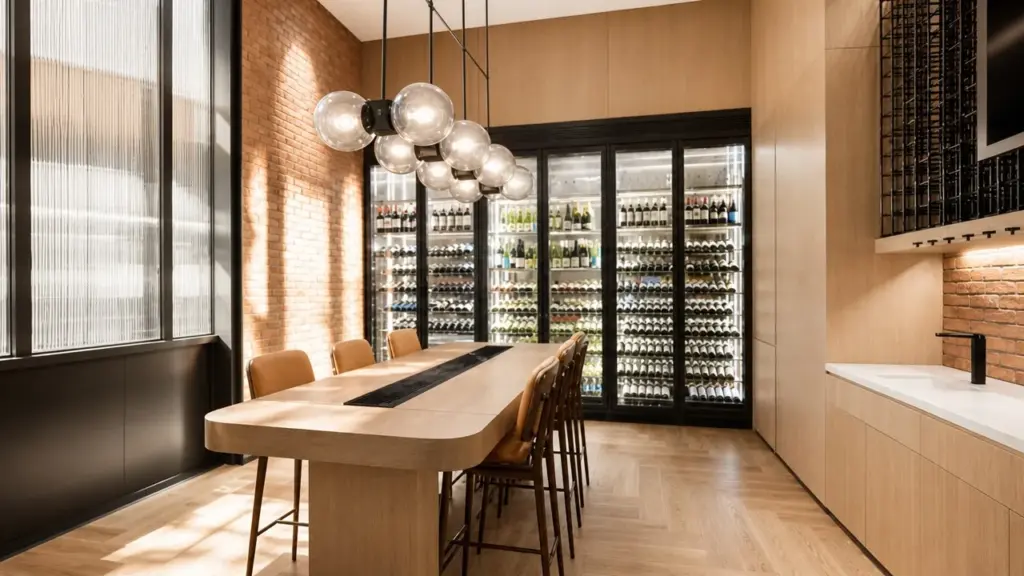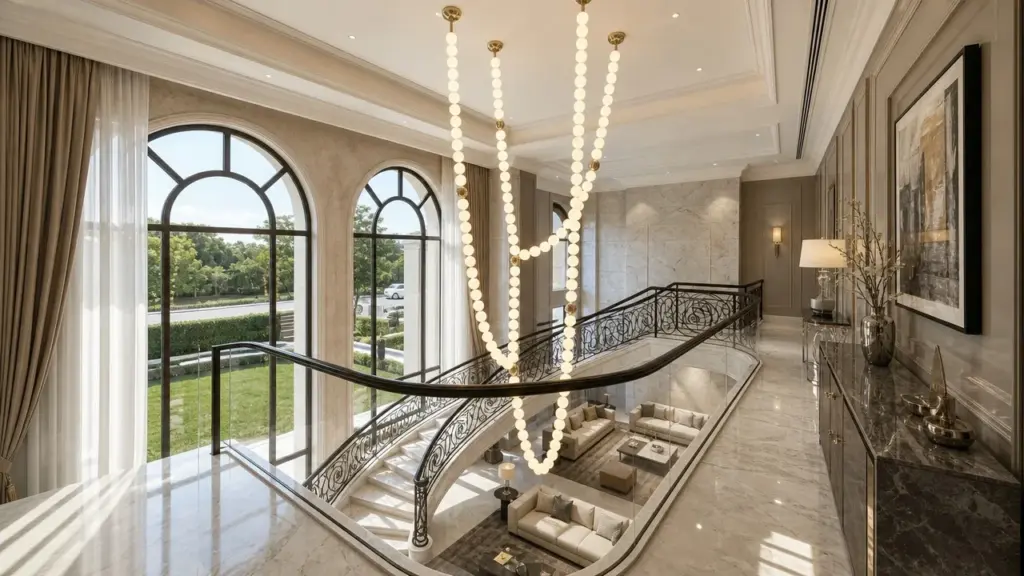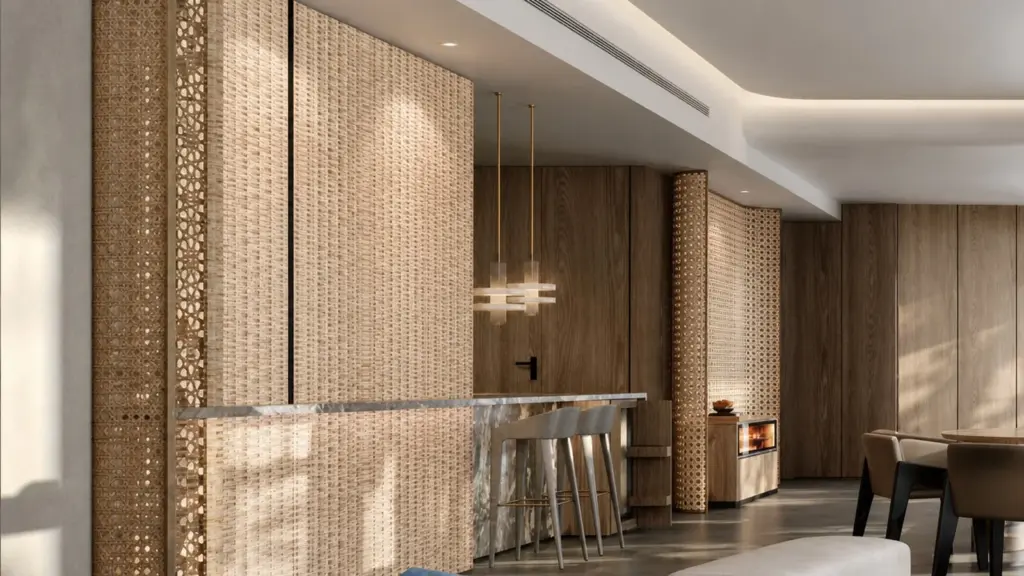
A five-star hotel chandelier specification is not a style document; it is a risk-control package that translates guest impression, ceiling structure, safety evidence, maintenance access, and procurement responsibility into one buildable file.
Luxury hotels rarely fail because the chandelier is not beautiful enough on a rendering. They fail when the rendering, reflected ceiling plan, electrical schedule, rigging load path, mock-up approval, control scene, packaging plan, and site installation sequence describe different versions of the same fixture. The purpose of a good specification is to make those versions converge before money, ceiling work, and opening dates are committed.
Kinglong Lighting writes hospitality specifications from a manufacturing point of view: the buyer needs a design that feels memorable, the designer needs a fixture that protects the concept, the engineer needs a safe and serviceable assembly, and the hotel operator needs a light that can still be cleaned, dimmed, repaired, and re-lamped years after handover. That is why a five-star specification must cover the complete hotel path from lobby to ballroom, corridor, restaurant, spa, and guestroom.
Key Takeaways
- Specification scope: Treat every chandelier as an architectural system with visual, electrical, structural, control, logistics, and maintenance evidence.
- Room-by-room logic: A lobby chandelier sells arrival drama; a guestroom chandelier must protect comfort, glare control, maintenance speed, and brand consistency.
- Proof before price: The RFQ should request drawings, material samples, load assumptions, light-source data, certification path, packaging method, and installation responsibilities before final price comparison.
- Hidden risk: The biggest avoidable cost is often not the fixture itself, but the field coordination lost when ceiling openings, suspension points, controls, or access panels change late.
- Supplier fit: A hospitality chandelier supplier should be evaluated by how well it closes handoff gaps between designer, procurement, factory, engineer, contractor, and hotel operations.
A five-star chandelier spec begins with the guest journey
The right first question is not “which chandelier looks premium?” It is “what should the guest feel, notice, and safely navigate at this exact moment of the hotel journey?”
In a five-star property, decorative lighting is part of wayfinding, memory, dwell time, and perceived service level. A lobby fixture may need to announce arrival from 20 meters away; a ballroom fixture may need to support gala, conference, wedding, and cleaning scenes; a corridor fixture must guide movement without glare; a guestroom fixture must feel intimate without disturbing sleep or reading comfort. The IES Lighting Library is useful because it reminds specifiers that lighting quality is a professional design discipline, not only a fixture catalog choice.
The specification should therefore begin with a room schedule that defines visual role, viewing distance, ceiling condition, maintenance frequency, control scene, and proof required for release. Kinglong Lighting positions its hospitality lighting solutions around this whole-project view because hotel buyers usually need a coordinated family of decorative fixtures, not one isolated showpiece.
| Hotel area | Primary job of the chandelier | Specification fields that matter most | Release evidence to request |
|---|---|---|---|
| Grand lobby or atrium | Arrival identity and vertical landmark | Diameter, suspension height, load path, cleaning access, scene control, glare angle | Shop drawing, ceiling interface drawing, sample finish, packing and installation method |
| Reception and lounge | Brand atmosphere without visual noise | Color temperature, dimming curve, shade opacity, finish consistency, reflection control | Material board, light-source data, dimmer compatibility note, mock-up photo |
| Ballroom | Flexible luxury across events | Scene presets, rigging clearance, maintenance zones, modularity, emergency-lighting coordination | Control schedule, module map, lift access plan, electrical certification path |
| Corridor | Rhythm, orientation, and low-glare movement | Mounting repeat, lumen output, glare shield, ceiling depth, cleaning interval | Spacing drawing, photometric note, replacement component list |
| Guestroom and suite | Comfort, intimacy, and brand memory | Scale above bed or lounge zone, dimming, warm material tone, serviceability, shade safety | Prototype approval, spare parts list, installation guide, finish control sample |
Specify engineering evidence before approving the artwork
Luxury does not remove the need for evidence. It raises the penalty when evidence arrives late.
A chandelier rendering can be approved in a design meeting, but the fixture is not ready for a five-star project until engineering evidence supports the same design. For large lobby pieces, the spec should state fixture mass, suspension points, canopy detail, seismic or local anchoring assumptions when applicable, access method, packaging break-down, and on-site assembly sequence. For electrical safety, specifiers should separate decorative preference from certification evidence. UL luminaire testing and certification, the OSHA NRTL program, and the international luminaire vocabulary around IEC 60598 are useful reference points for discussing what kind of safety proof may be expected in the target market.
Load path and ceiling interface
The fixture weight should never be hidden inside a decorative description. The specification should identify the load-bearing ceiling structure, all suspension points, canopy size, access zones above the ceiling, and whether the decorative element is shipped as one piece, modules, or knock-down assemblies. For chandeliers above 3 meters in diameter, the most dangerous gap is usually between the decorative drawing and the contractor’s ceiling opening. If the suspension geometry changes after the ceiling is closed, the hotel may lose several crew-days even before any replacement parts are made.
Electrical and certification package
The spec should request light-source type, wattage, driver location, dimming protocol, voltage, thermal assumptions, certification path, and testing evidence. A component certificate is not the same as evidence that the assembled luminaire is acceptable for the project. For cross-border projects, the buyer should ask early whether the supplier can support the documentation path needed by the receiving market. Kinglong’s brand kit allows the statement that the company is CNAS-accredited, but the article should still push buyers to request project-specific reports rather than relying on a logo or certificate image alone.
Maintenance access and replacement logic
Hotel operations teams inherit the fixture after the opening ceremony. A good specification names how the chandelier will be cleaned, which parts are replaceable, where drivers are located, what spare parts are included, and whether ordinary maintenance requires scaffolding, a lift, or factory technician support. For guestroom fixtures, replacement logic matters even more because the hotel cannot take rooms out of service for a decorative detail that was never designed for fast servicing.
Control the experience with light quality, not only fixture shape
A luxury chandelier should be specified by what it does to faces, materials, wayfinding, and nighttime mood, not only by what it looks like when switched off.
The best hotel chandeliers are coordinated with ambient, accent, task, and emergency lighting layers. A lobby chandelier may supply sparkle and vertical identity while downlights, coves, and wall washers carry functional brightness. A guestroom chandelier may be primarily atmospheric, with reading and bathroom tasks handled elsewhere. The WELL v2 Light concept is not a hotel chandelier buying manual, but it is a useful reminder that visual comfort, glare, and occupant experience deserve explicit specification language.
Do not stop at “warm white.” State a color temperature range, dimming requirement, acceptable color consistency, and a method for discussing color rendition when material accuracy matters. For premium lobbies with stone, brass, leather, crystal, or art glass, a method such as ANSI/IES TM-30 gives the project team a more precise vocabulary than a generic “high CRI” claim. The practical buyer question is simple: will guests, designers, and operators see the same warmth and material depth after installation that they approved in the mock-up?
Translate design intent into a factory-ready procurement file
A five-star RFQ should make weak suppliers reveal missing evidence before they win the order.
Procurement teams often compare chandelier suppliers by price, delivery time, and catalog similarity. That is too shallow for a luxury hotel project. The RFQ should ask each supplier for a same-format response: drawings, size tolerances, material samples, finish control method, light-source and driver package, testing path, packaging method, on-site support, spare-parts policy, and a responsibility matrix. Kinglong’s OEM/ODM customization positioning and Mofun Design Platform are relevant internal links when a buyer needs early visualization, quotation structure, and drawings before formal production.
Energy and code coordination should also be made visible. A decorative chandelier may be only one part of the total lighting power and control package, but it still belongs in the broader compliance conversation. ASHRAE Standard 90.1 and the U.S. Department of Energy’s COMcheck workflow are useful references for project teams that need structured lighting compliance documentation in U.S.-linked projects. In other markets, the same principle applies: define the compliance owner before the fixture is ordered.
Where the hidden cost appears
The avoidable cost is often a coordination delay, not a manufacturing defect.
Consider an illustrative scenario estimate. A 6-meter lobby chandelier is approved visually, but the ceiling interface drawing is not reconciled with the final reflected ceiling plan. When the site team discovers the mismatch, three groups are affected: the ceiling contractor pauses the closure work, the electrical team waits for driver and access confirmation, and the factory technical representative must re-check suspension geometry. If each group loses three days, the project consumes 9 crew-days before any rush freight, replacement canopy, lift rental, or hotel pre-opening delay is counted. The number is not a market statistic; it is a decision model for why the engineering package belongs before final price approval.
That is the commercial reason to request evidence early. A supplier with a lower fixture quote but weak installation documentation may look efficient until the opening calendar becomes the real budget. A supplier with stronger pre-production proof may look slower on paper, but it can reduce the probability of late ceiling changes, control confusion, missing spare parts, and unclear warranty responsibility.
RFQ action card for a hotel chandelier package
- Request room-by-room fixture schedules, not only hero lobby renderings.
- Ask for load, suspension, access, and packaging evidence before price ranking.
- Require material samples under project lighting, not showroom lighting.
- Separate component certification from assembled luminaire evidence.
- Assign one owner for controls, spare parts, and site support.
For buyers shortlisting a custom manufacturer, Kinglong Lighting’s project gallery and hospitality pages can be used as trust-navigation links, while the final inquiry should still request project-specific drawings and evidence through the contact page.
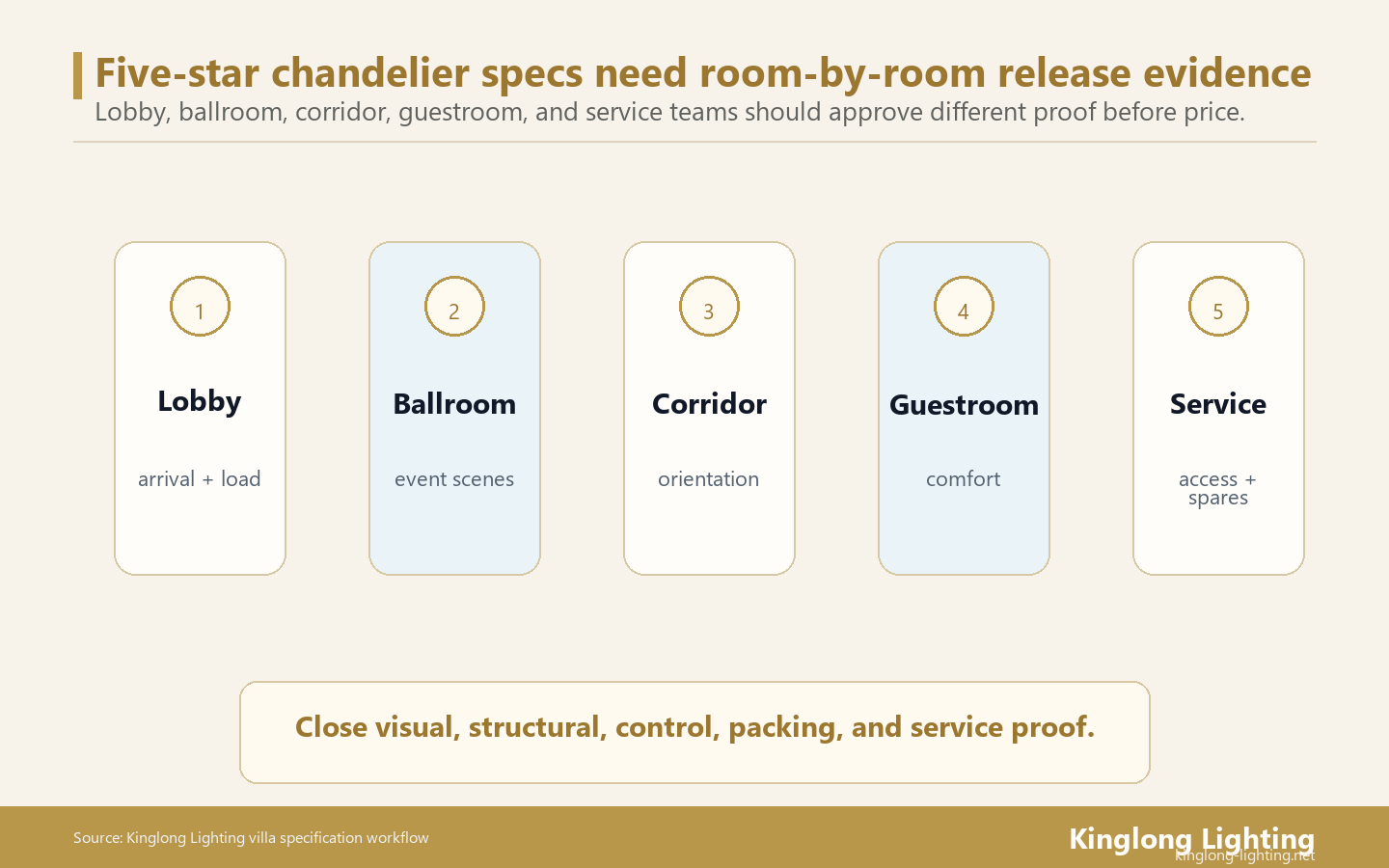
A complete chandelier specification should close room-specific release evidence
A five-star chandelier package should not be approved as one decorative family with a few finish notes. Each hotel area creates a different release burden. A lobby needs arrival identity, vertical scale, load path, glare control, packing, and service access. A ballroom needs event scenes, rigging clearance, controls, and maintenance modes. Corridors need repeatability and orientation. Guestrooms need comfort, shade safety, dimming behavior, and replacement consistency. The specification should make those differences visible before supplier comparison.
Use the room schedule as the proof index
The room schedule should become the index for evidence. For each area, the file should name the visual role, size range, finish reference, source data, control scene, access method, local approval path, and release owner. This prevents the RFQ from asking every supplier a generic question such as “Can you make this chandelier?” A better question is whether the supplier can close the exact proof needed by each room type.
Keep design intent and factory release connected
Design intent often weakens when it is translated into purchasing language. The release file should keep the original guest journey visible beside factory details such as drawings, load assumptions, finish samples, driver data, crate method, and spare strategy. Kinglong Lighting can use that combined file to protect both the hotel atmosphere and the manufacturing reality. Without that connection, the buyer may receive a fixture that is buildable but no longer matches the intended guest impression.
Make late changes trigger evidence review
A specification is useful only if it controls change. If ceiling structure, chandelier diameter, finish, source, driver, site route, or opening schedule changes, the file should say which evidence must be reviewed again. This keeps late design refinement from quietly breaking safety, packing, dimming, or maintenance assumptions. The goal is not to stop all change; it is to stop invisible change.
Before final supplier selection, send Kinglong Lighting the room schedule, guest-journey intent, reflected ceiling plans, material palette, control expectations, certification context, packing constraints, and service requirements. The supplier response should show which proof is ready, which proof is conditional, and which decision still belongs to the owner, designer, engineer, contractor, or hotel operator.
Frequently Asked Questions
What should a five-star hotel chandelier specification include?
It should include design intent, dimensions, weight, suspension method, material and finish samples, light-source data, dimming and control requirements, safety certification path, packaging plan, installation responsibilities, maintenance access, spare parts, and release evidence for each major hotel area.
How early should the chandelier supplier join the hotel design process?
The supplier should join before final ceiling coordination and before the project team freezes the reflected ceiling plan. Early involvement is especially important for large lobby, atrium, ballroom, and custom guestroom fixtures because load path, access, controls, and modular packaging can change the design.
Is the lobby chandelier more important than guestroom lighting?
The lobby chandelier is more visible, but guestroom and corridor lighting often create more operational risk because maintenance, glare, and replacement consistency affect daily guest experience. A complete five-star specification covers both the public drama and the private comfort layers.
Should a buyer request UL, CE, or other certification evidence?
Yes, but the request should be market-specific. Ask what standard, testing body, or documentation path applies to the destination country, and confirm whether the evidence covers components or the assembled luminaire. Local code professionals should make final compliance decisions.
How can a hotel compare chandelier suppliers fairly?
Use a same-format RFQ that scores drawings, material control, certification support, packaging, installation documentation, maintenance access, spare parts, and responsiveness. Price should be compared after evidence completeness is visible.