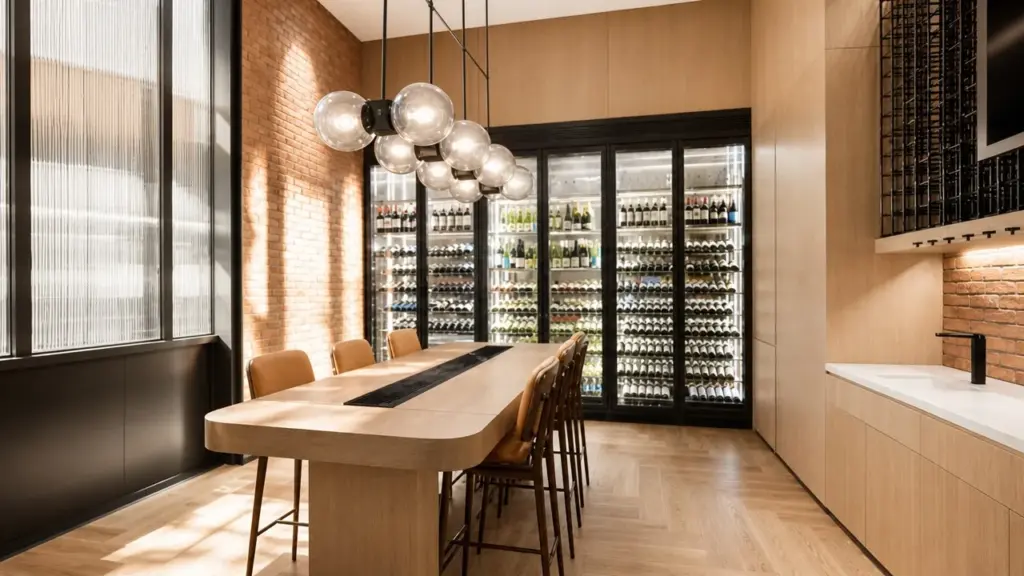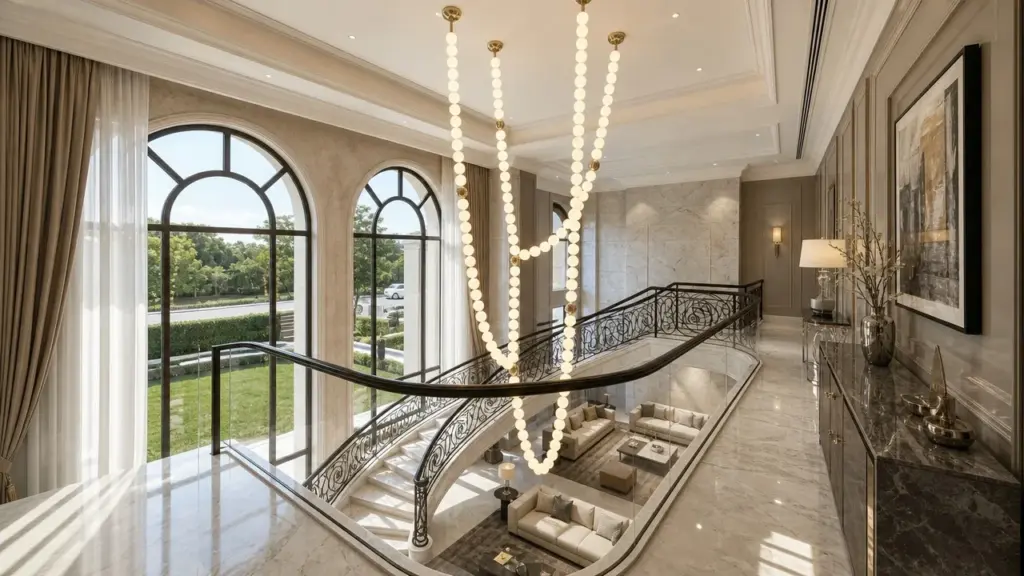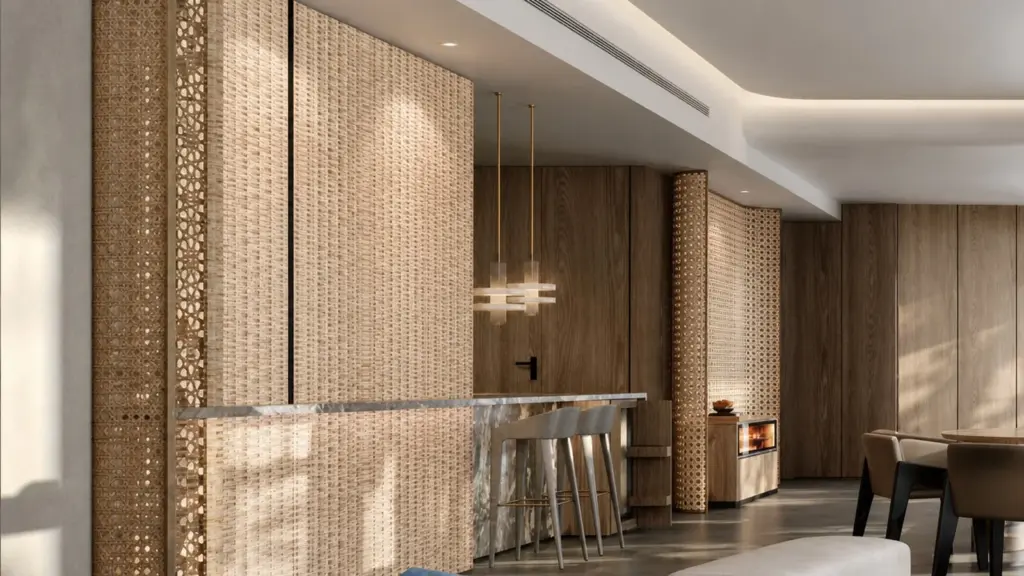
A private villa chandelier project looks personal, but it still behaves like a small construction project. The owner may begin with a mood image, a dining room dream, a stair void, or a designer’s sketch. The final result depends on structure, ceiling height, proportion, finish samples, controls, shipping, access, and future maintenance.
The workflow below is written for owners who want a custom chandelier without turning every meeting into an open-ended design conversation. It separates emotional choices from project evidence, so the owner can approve beauty without losing control of cost, timing, and responsibility.
Kinglong Lighting’s role is strongest when the villa owner and designer use the Mofun Design Platform and the custom chandelier workflow to test scale, translate intent, and freeze evidence before production. The manufacturer should help the owner decide, not simply ask for a final picture.
Key Takeaways
- Start with the room story: The owner should approve what the room must feel like before selecting diameter, drop, finish, or crystal density.
- Survey before quoting: Ceiling height, support, route, wiring, controls, and access can change the chandelier more than style preference does.
- Separate approvals: Concept, sample, engineering, and pre-shipment approvals answer different questions and should not be collapsed.
- Manage decision debt: Late owner changes may be legitimate, but the project should show what schedule, cost, and proof they affect.
- Handover protects the villa: The owner needs cleaning, spare, service, and replacement records after the installation team leaves.
The owner workflow begins before a style reference
A private villa chandelier becomes easier to customize when the owner separates desire, evidence, and approval timing.
A style reference is useful only after the owner knows what problem the chandelier must solve. A stair void may need vertical movement. A dining room may need intimacy. A double-height living room may need visual mass without glare. A master suite may need quiet luxury rather than spectacle.
The DOE lighting design page gives a useful boundary because lighting decisions should be judged around the whole space and its use, not only fixture appearance. For project buyers, the practical action is to turn the owner's mood into whole-room lighting intent, viewing angles, and use scenarios.
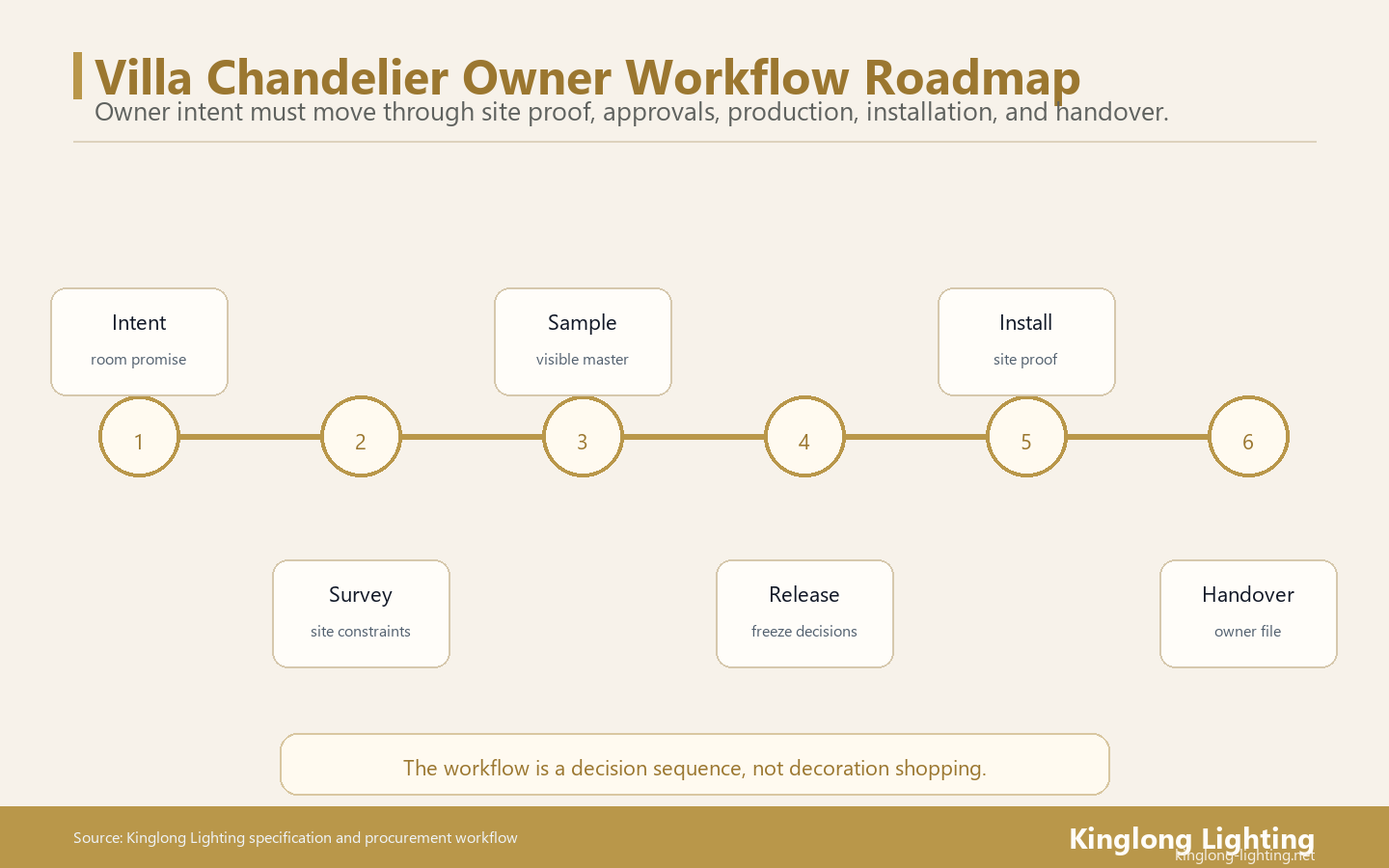
Write the one-sentence room promise
The owner should begin with a sentence such as: the stair chandelier should create a warm vertical rhythm without blocking the view from the landing. That sentence is more useful than ten reference images because it gives the designer and manufacturer a stable target.
The room promise should include emotional tone, viewing position, brightness level, material relationship, and any restraint. A villa chandelier can be dramatic, but drama still needs boundaries. Without those boundaries, every later sample becomes a new argument about taste.
Separate inspiration from instruction
Owners often send images of famous chandeliers or luxury interiors. Those references should be translated into attributes, not copied. Useful attributes include vertical rhythm, cluster density, glass texture, warm metal tone, low-glare sparkle, or a floating silhouette.
This protects the owner legally and creatively. A manufacturer should not be asked to reproduce a protected design. The better request is to solve the villa’s room problem with an original fixture that borrows only the abstract intent, not the outline of a named product.
Stage 1 turns villa mood into measurable constraints
Before a meaningful quote, the owner needs a constraint packet. A villa may have a high ceiling, but the support point, access route, staircase geometry, finish schedule, control plan, and cleaning method can still narrow the chandelier options.
The ASCE Hazard Tool gives a useful boundary because site-specific structural and environmental assumptions belong with qualified engineering review. For project buyers, the practical action is to keep site-specific structural and environmental assumptions with qualified engineering review rather than treating them as manufacturer guesswork.
Survey the ceiling, route, and service path
The survey should record ceiling height, slab or support condition, canopy location, access route, lift or scaffold possibility, door and stair limits, unpacking area, and final furniture constraints. A chandelier that cannot reach the room safely is not a design; it is a logistics problem waiting to surface.
Service path matters as much as delivery path. If a future driver, glass element, or suspension part cannot be reached without damaging finishes, the owner may inherit a beautiful but fragile asset. The workflow should identify service access before the fixture shape is frozen.
Turn proportion into a drawing decision
Villa owners often talk about diameter first. A better workflow checks diameter, drop, density, viewing angle, and furniture relationship together. A large chandelier can feel too small in a stair void and too heavy in a dining room, depending on sight lines and surrounding surfaces.
The Mofun Design Platform can help test visual mass before the owner pays for physical sampling. Digital scale review does not replace engineering or samples, but it reduces avoidable revisions by showing whether the idea fits the actual room volume.
Stage 2 approves concept, sample, and engineering separately
A common owner mistake is to approve the beautiful concept and assume everything else is included. Concept approval, sample approval, and engineering approval answer different questions. Keeping them separate gives the owner more control and makes change requests more honest.
The DOE TM-30 FAQ gives a useful boundary because color quality needs more precise language than warm, cool, or beautiful when materials are being approved. For project buyers, the practical action is to review color quality and material appearance with more precise language than warm, cool, bright, or premium.
Concept approval answers whether the room direction is right
Concept approval should cover silhouette, scale, material family, approximate finish direction, light character, and relationship to the interior. It should not pretend that every detail is final. The owner can approve the direction while still marking finish, suspension, driver, and installation details as open.
This prevents two opposite errors. The owner does not freeze too early and regret details. The manufacturer does not begin production based on a mood image that lacks technical evidence. The signed concept becomes a direction, not a trap.
Sample approval answers what eyes and hands can judge
Samples should cover the details that cameras and renderings cannot settle: glass texture, crystal quality, metal tone, leather or resin surface, light color, diffusion, and the way materials sit against stone, timber, plaster, or fabric. The owner should review samples under the villa’s expected light when possible.
Sample approval should produce a master reference. If the finish sample is accepted only in a message thread, later disputes become subjective. A signed sample code, photo set, or sample board gives the owner and manufacturer a common reference when production is inspected.
Stage 3 protects production from late owner changes
Late changes are not always wrong. A private owner may discover a better finish, a furniture shift, or a stronger proportion during design. The workflow should not forbid change; it should expose the cost, schedule, and evidence consequences before the owner decides.
The ICC Incoterms 2020 page gives a useful boundary because international delivery responsibility should be named before goods, crates, and spare parts move. For project buyers, the practical action is to connect production timing, packing, shipping responsibility, and destination handoff to owner change decisions.
Decision debt should be visible
Decision debt appears when the owner postpones choices that other teams need. Four delayed approvals can add three to six weeks if each delay affects sample revision, engineering confirmation, production slotting, and installation coordination. The exact number varies, but the pattern is predictable.
A good workflow labels each open decision as free, costly, or blocking. A free decision can wait without affecting other work. A costly decision may still be possible with a price or schedule effect. A blocking decision prevents the manufacturer from building the approved fixture responsibly.
Production release should freeze more than price
The production release should freeze drawing, finish, sample reference, component list, electrical assumptions, packing method, quantity, destination, and approval evidence. If the owner changes one of these after release, the change should be logged with its effect on cost, timing, and previous approvals.
This does not make the villa project rigid. It makes the owner’s freedom explicit. A late change may be worth it for a signature room, but the owner should decide with eyes open rather than discovering the consequence after production has already moved.
Stage 4 installs, commissions, and hands over a living asset
The installation stage should prove that the chandelier works as a villa asset, not merely that it arrived. The owner should expect careful receiving, unpacking, component check, protection, installation sequence, scene review, cleaning guidance, and handover documentation.
The OSHA aerial lifts page gives a useful boundary because overhead installation and later service require planned access and trained site practice. For project buyers, the practical action is to plan overhead access, protection, and qualified site practice before installation day.
Receiving should protect fragile design value
Custom chandeliers often contain delicate glass, crystal, metal, or resin details. Receiving should confirm crate condition, piece count, labels, damage, storage area, and unpacking sequence. If the villa is still under construction, protection from dust, trades, and movement should be part of the plan.
The ISTA 3A test procedure page gives a useful boundary because packing evidence should be selected around the distribution environment and package profile. For project buyers, the practical action is to ask for packing evidence and crate logic that match fragile components and the real route into the villa.
The handover file should belong to the owner
The owner should receive final drawings, finish references, installed photos, component map, spare part list, cleaning guidance, driver or lamp notes, warranty path, and service access instructions. That file is not paperwork. It is how the villa protects the chandelier after the original project team leaves.
If the property will be managed by household staff or a villa management company, the handover file should be written for them as well. The person who cleans or services the chandelier later may not have attended any design meeting. The file should make the approved decisions readable.
Private villa chandelier workflow table
This table gives owners a practical sequence for deciding what to approve and what evidence to request.
| Decision area | Owner risk if vague | Evidence to request | Acceptance action |
|---|---|---|---|
| Room promise | The chandelier becomes a copied object rather than a villa-specific solution | One-sentence room intent, reference attributes, viewing positions | Approve direction before discussing exact shape |
| Site survey | Diameter, drop, and access assumptions fail later | Ceiling, support, route, wiring, controls, service notes | Quote only after constraints are visible |
| Sample approval | Finish and light quality drift from the owner's expectation | Physical samples, sample code, room finish comparison | Freeze master reference before production |
| Engineering approval | Support, driver, canopy, or access problems appear on site | Weight, suspension, driver location, canopy and module drawings | Release production only after qualified review path is clear |
| Handover | Future maintenance relies on memory | Final drawings, piece map, spares, cleaning, warranty path | Give the owner a readable asset file |
Where villa owners lose weeks without noticing
The slowest part of a private chandelier project is rarely one dramatic delay. It is usually several small undecided items that appear harmless on their own: a finish still under discussion, a ceiling route not confirmed, a sample not signed, a driver location left open, or a furniture change that changes the drop. Each item waits for a different person, so the calendar quietly fragments.
Owners can control this by asking for a decision register. The register should name the open item, who decides it, what evidence is needed, what stage it affects, and the last responsible date. If the answer is not needed until installation, it can wait. If it affects production, it belongs near the top of the owner’s weekly review.
This is especially important in villas because the owner, designer, contractor, electrician, and manufacturer may not share the same working rhythm. A hotel project often has formal project management pressure. A private villa may depend on personal availability, travel, or family preference. The workflow should respect that reality by making decisions visible before they become urgent.
How Kinglong Lighting supports villa owners
Kinglong Lighting can support a villa owner by turning inspiration into a controlled project file: visual direction, scale review, sample logic, engineering assumptions, packing, and handover. The villa lighting project support page is most relevant when the owner needs a custom fixture that must fit a real room, not only a mood board.
When the owner is ready for a focused response, the better next step is to send the villa chandelier workflow brief with room photos, dimensions, ceiling notes, preferred materials, reference attributes, and decision deadlines. Kinglong Lighting can then respond around evidence and sequence instead of asking the owner to choose blindly.
Before your villa chandelier enters production
Use this short action list before the next approval meeting. It is intentionally practical, because vague approval language is the usual source of later rework.
- Write the room promise and translate references into attributes instead of copying designs.
- Survey ceiling, route, support, wiring, controls, and service access before final quotation.
- Approve concept, samples, engineering, and pre-shipment evidence as separate decisions.
- Log late changes with cost, timing, and evidence consequences.
- Keep the final handover file with the owner or villa manager, not only the installer.
FAQ
How long does a private villa chandelier project take?
Timing depends on design complexity, samples, engineering, production slot, shipping, and installation access. Delayed owner approvals can add several weeks.
Should owners approve renderings before samples?
Yes, but only as concept approval. Physical samples or material references should still be used for finish, crystal, glass, color, texture, and light quality.
What information should I send to a chandelier manufacturer?
Send room dimensions, ceiling height, photos, drawings if available, style references, desired mood, finish preferences, control expectations, route constraints, and decision deadlines.
Can a villa chandelier be changed after production starts?
Sometimes, but changes may affect cost, timing, samples, engineering, packing, and installation. The supplier should show the consequence before the owner decides.