Approve a villa lighting finish against an identified physical reference, under agreed viewing conditions, and record exactly what the decision covers. A photograph can help a remote designer compare proposals and locate a problem, but an attractive image is not a reproducible finish reference. Keep the candidate and master sample linked, identify the light used for each comparison, and request physical review when screen evidence cannot settle the question. The protocol below turns those requirements into a record the designer, procurement lead and supplier can use together.
Identify the Finish Reference Before Comparing Images
A master sample is the retained physical reference for the agreed finish scope. Give the master and candidate separate sample IDs, then link each to the relevant fixture, drawing revision, material and finish process. State which surface or detail it represents. A flat finish coupon may answer a surface-color question without representing the appearance of a curved arm, an assembled joint or every component in a whole-home package.
Begin with the room and fixture schedule rather than a folder called “final brass.” Kinglong’s lighting design and procurement resources can help organize that initial brief. For each finish reference, identify the designs and parts it is intended to cover, who can accept it and which questions remain outside the sample. The same descriptive finish name does not establish that different materials or processes will look identical.
- Fix the identity: candidate, master, represented part and current revision.
- Fix the comparison conditions: identified light, sample arrangement and disclosed camera treatment.
- Limit the decision: record the accepted features and conditions, retained reference and unresolved questions.
Put the labels beside the samples or on a reference card that remains visible in the comparison images. Link the original files to those labels. If the master is a designer-owned reference that the factory has not received, say so; do not let a photograph quietly stand in for an unexamined physical sample.
Agree the Light Conditions That Matter to the Villa
Choose a repeatable reference-light condition and identify the project-light conditions that matter to the finish decision. Record the actual source or agreed viewing setup, not just “daylight” or “warm light.” Compare the same sample pair under each condition and retain separate observations. This gives the designer a way to distinguish a reference match from the intended appearance in a particular room.
X-Rite describes metamerism as colors appearing to match under one lighting condition but not when the light changes. This is a reason to compare a candidate and reference under the relevant lights. It is not a diagnosis that can be made from two inconsistent phone images, nor a prediction that the proposed finish will mismatch.
A matching color-temperature label does not fully identify a viewing source. In its explanation of visual evaluation, X-Rite notes that lamps with the same color temperature may have different spectral power distributions and produce different visual experiences for an object. In plain terms, their light can contain different proportions of wavelengths. Ask which actual lamp or viewing source was used rather than assume the label makes two setups equivalent.
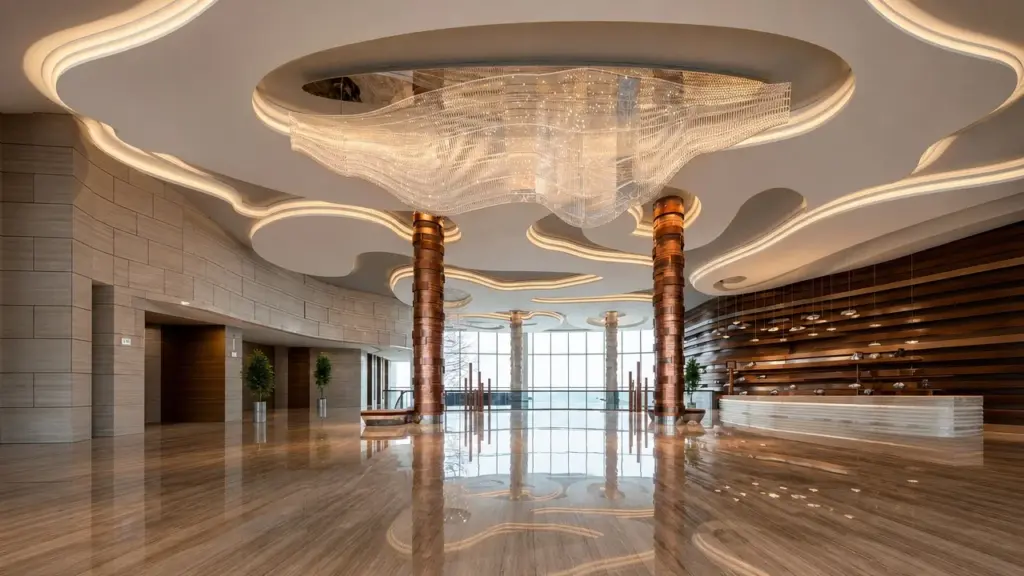
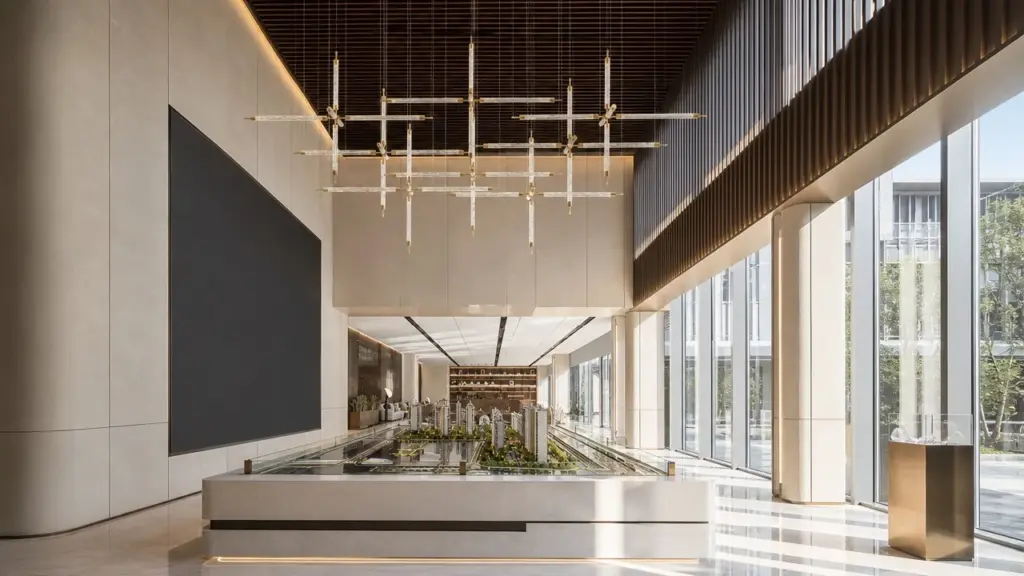
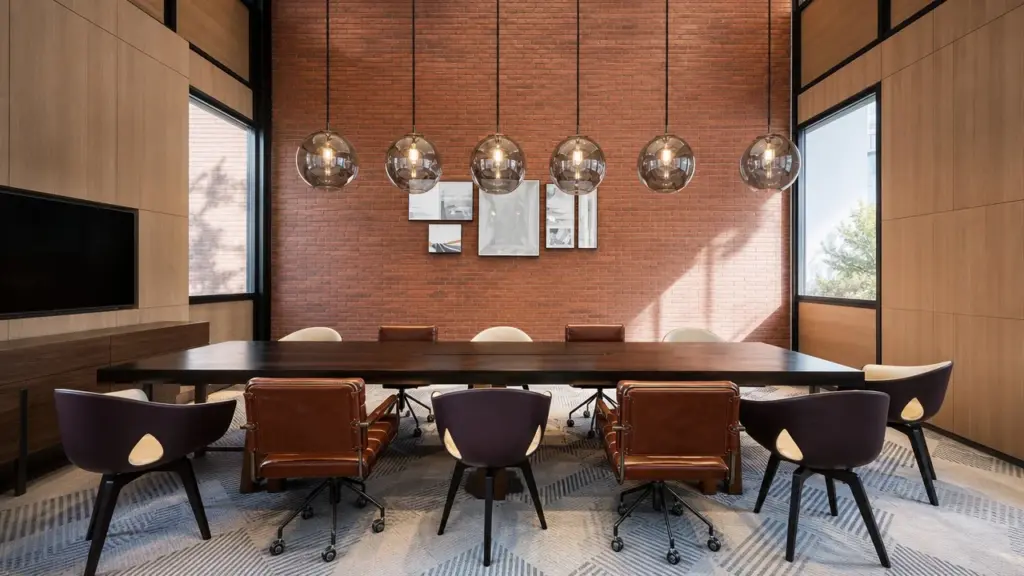
Use room references to decide which conditions deserve review. Kinglong’s published lighting projects provide useful architectural context, but a portfolio photograph is not a finish master or a measurement of the proposed room. If the villa’s final lamps are still undecided, identify that gap. A reference-light comparison can proceed within its stated scope while the room-specific appearance decision remains open.
For an informal daylight observation, record where and under what circumstances it was made. Do not describe changing window light as a controlled repeat of another site’s conditions. If repeatability is critical, agree a suitable controlled setup with the responsible reviewer and supplier. The project needs a shared comparison basis, not an unexplained claim that one room has “better” light.
Photograph a Comparison, Not an Isolated Swatch
Photograph the candidate and identified master together under the stated light. Keep their orientation and placement comparable, disclose camera treatment, and include the views needed to understand the relevant surface. This proposed capture method makes a remote exchange easier to interpret; the resulting screen impression still does not establish final physical finish acceptance.
White balance is one reason a photograph can change the apparent color. Sony’s camera help describes this function as adjusting color tones according to ambient lighting conditions. Ask the photographer to disclose the white-balance setting or treatment used for a comparison. That is a practical documentation request, not a requirement to use Sony equipment or proof of a particular color temperature in the photographed fixture.
X-Rite’s visual-evaluation advice calls for neutral surrounding colors and parallel, side-by-side samples, with particular attention to curved or unusually shaped parts. For a villa finish review, use that principle to request an uncluttered comparison and enough views to reveal the represented surface. Agree useful orientations for the actual part rather than treat a general viewing angle as a universal acceptance rule.
Request an overall view showing the pair and labels, followed by detail views that retain a clear connection to that setup. Where a reflection hides the surface, ask for another relevant view of both samples. If a curved part looks different as it turns, show that change rather than selecting only the flattering frame. State filters, retouching and any editing; keep the original files for later questions.
A video can clarify how an appearance changes with orientation, provided the operator identifies the sample pair and light. It does not remove the camera and display limitations. If different reviewers disagree while viewing the same files on different devices, record that disagreement and arrange appropriate physical comparison instead of voting for the most reassuring screenshot.
Copy This Finish Approval Record Into the Project File
Use a finish approval record that links sample identity, viewing conditions, files and the actual decision. Copy the table below for each candidate/master pair, filling in the project’s real references. The entries are fields to complete, not proof that a supplier has performed a check. If identity or conditions are missing, return the affected comparison for clarification before relying on it.
| Record item | Complete with project information | What the reviewer checks | If information is missing or inconsistent |
|---|---|---|---|
| Candidate identity | Sample ID: ___; fixture/part: ___; drawing revision: ___; material/process: ___ | The sample represents the actual proposed surface or detail | Request identification or a representative sample before judging that feature |
| Master reference | Master ID: ___; holder/location: ___; agreed represented features: ___ | Both parties mean the same retained physical reference | Resolve which reference governs; do not substitute a finish name or screen image |
| Viewing lights | Reference source/setup: ___; project source/setup: ___; unavailable conditions: ___ | Observations are assigned to an identified light condition | Request source details or leave the affected room-light decision open |
| Placement and capture | Pair arrangement/orientation: ___; surroundings: ___; camera/white balance/editing: ___ | The comparison is interpretable and important differences are disclosed | Repeat the affected capture with a documented arrangement |
| Comparison files | Original file references: ___; sample/light shown: ___; visible observation: ___ | Each observation links to the correct pair, light and relevant view | Request the missing view or file link; do not infer a pass from silence |
| Physical review and dispatch | Required sample/detail: ___; recipient/destination: ___; receipt condition: ___; comparison result: ___ | The reviewer can assess the decision-critical feature against the master | Agree dispatch terms or an appropriate alternative, keeping the unresolved decision visible |
| Decision and retained master | Reviewer/date: ___; accepted feature/light scope: ___; exclusions: ___; retained reference/access: ___ | The decision covers only supported features and conditions | Request clarification, reject the stated feature or record a limited acceptance; retain the reason and next action |
Write observations in terms another person can investigate. “Candidate appears warmer than the master in the identified project-light view” is more useful than “color wrong.” It states the pair, direction of difference and condition without pretending to measure a numerical tolerance. If the image is too ambiguous to make even that observation, record the ambiguity and specify the missing comparison.
Use starting models from Kinglong’s decorative-lighting collections to identify the fixture concerned. Mark any proposed change to its material, finish or visible geometry. A collection image may establish the starting design, but it does not show that every customized component shares the same process or falls within one sample’s scope.
Send the Physical Sample When the Screen Cannot Settle It
Request physical comparison when the screen cannot resolve a decision-critical finish question. Send a representative sample or relevant detail and identify exactly what it covers. The reviewer should compare the same candidate/master pair under each agreed viewing condition, keeping the observations separate. A small coupon may be sufficient for its defined feature; a question about a curved surface or assembled detail needs evidence representing that feature.
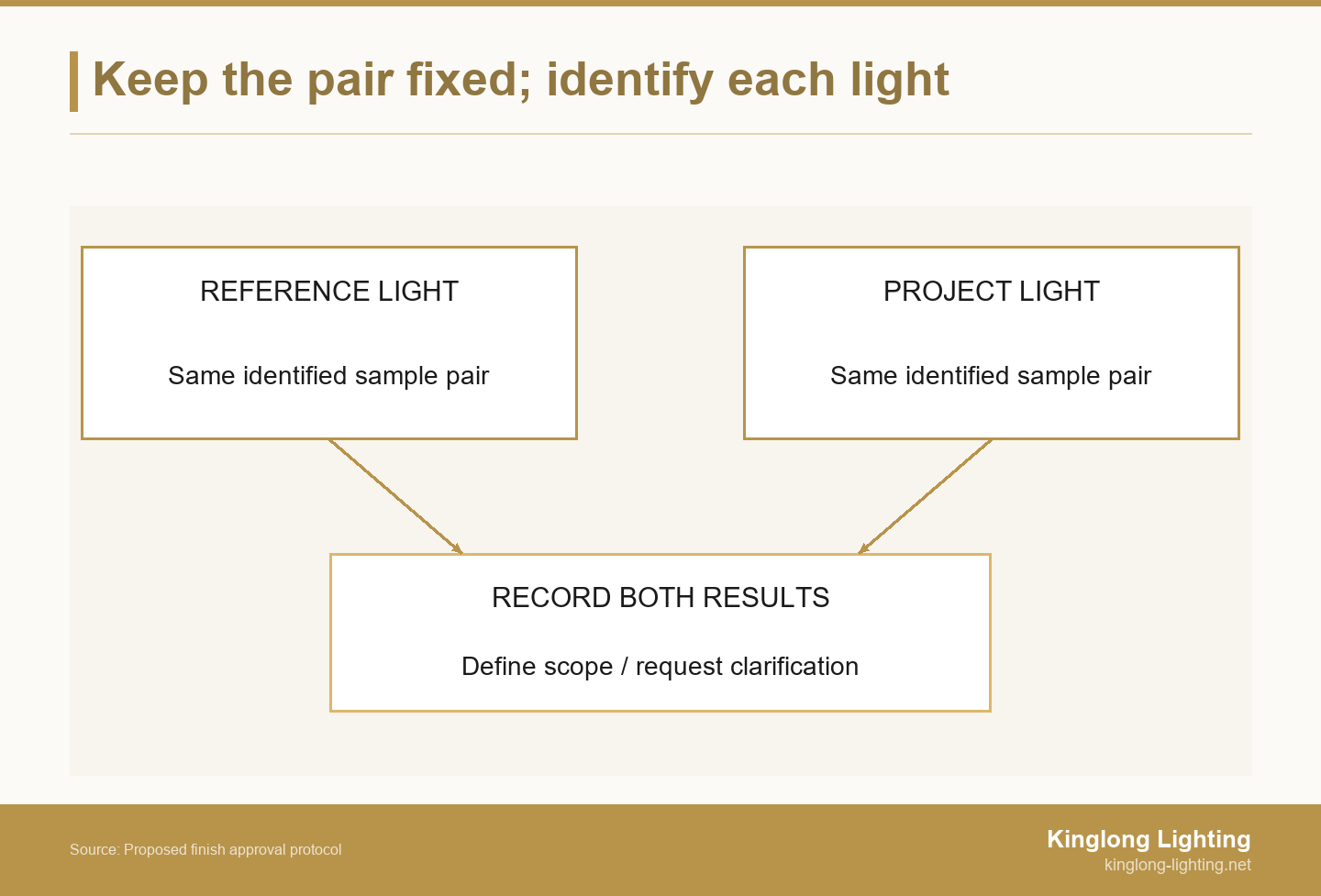
A controlled viewing setup can support this comparison. X-Rite describes light-booth evaluation of parts next to each other under different light sources. That explains the purpose of such equipment; it does not establish that Kinglong uses a particular booth or require a designer to buy one. Agree an appropriate method for the material and decision, and record which sources were actually used.
Before dispatch, agree who receives which sample, whether the master travels or an agreed counterpart is available, and how identification will remain attached. On receipt, check the label and visible condition before using it as a reference. Record damage or an identification problem and obtain clarification. Sample provision, shipping, charges and handling remain project-specific arrangements with the supplier.
If the review needs numerical color control, gloss measurement or another specialist method, have a competent reviewer define the suitable method and acceptance criteria. A visual finish decision does not establish coating durability, corrosion resistance, electrical suitability or installation readiness. Keep those requirements attached to their relevant technical evidence rather than let a successful appearance comparison stand in for them.
Record a Limited Acceptance and Keep the Master Traceable
If a finish alternative changes the design or commercial scope, Kinglong’s decorative-lighting value engineering guide can help discuss its consequences against agreed functions. Keep the reason for the alternative visible. A different process or material should not inherit acceptance merely because the finish name remains unchanged.
Consider an illustrative finish review, not a real client case. S-A and M-A are invented labels for a candidate and master. They look similar in one file and different in another, but the second file does not identify its light source. The designer cannot yet conclude that the physical pair matches under the villa’s intended light or diagnose metamerism. Keep that acceptance open and request a repeat comparison showing the labeled pair under identified conditions.
The returned evidence should show which pair and light produced each observation. If the photographs still leave the important question unresolved, arrange representative physical comparison against the master. If a physical difference persists under an agreed condition, record that finding and decide whether the feature is unacceptable or needs an agreed alternative. If suitable evidence supports acceptance, record its actual feature and light scope. These are conditional paths, not a claim that repeating the photos will produce a match.
Retain the accepted physical master with the approval record and agree its holder, storage and future access. Link it to the represented material, process, part and revision. When any of those change, or a new relevant light condition is introduced, identify which comparison needs reopening. Preserve genuinely unchanged evidence rather than discard everything, but do not treat an earlier sample as permission for an unreviewed version.
Bring Kinglong the Finish References and Open Decisions
Kinglong’s villa-lighting page describes design and visualization, physical sample or detail mock-up review, progress photography and installation documentation. Ask which steps and deliverables apply to the proposed designs. Bring the room and fixture schedule, candidate/master IDs, represented materials and processes, current drawings and the intended viewing lights. Include comparison files, the decision owner, destination and the questions still open. These inputs support a focused discussion when you review the whole-home villa lighting brief with Kinglong. Use the proposed record to request a clear response on available evidence and sample scope, then agree availability and commercial terms. The public service description is not a guaranteed sample service or a blanket finish approval.
Frequently Asked Questions
What if the final room lighting has not been selected?
Keep the affected room-appearance decision open. You may agree a reference-light comparison for a defined feature while recording that it does not cover the unknown final light. Identify who will supply the eventual source details and what comparison must then be completed. Do not replace that missing information with a general “warm white” description.
Can one finish sample approve metal, glass and painted parts together?
Only where its agreed scope actually represents the relevant materials and surfaces. A shared finish label is not evidence that different substrates, coatings or components behave identically. Ask which parts the sample covers and obtain representative comparisons for uncovered features. Retain separate decisions where the material or visible construction changes the question.
Should we specify a numerical color tolerance?
If numerical control is needed, ask a competent specialist to agree a material-appropriate measurement method and tolerance. A number without the relevant measurement conditions is not a complete acceptance criterion. Keep the agreed instrument-based assessment connected to visual appearance and the represented sample scope; do not adopt a universal limit from an unrelated material or process.
What if the master sample is damaged or a later batch looks different?
Identify the affected reference or batch and preserve the earlier records. Agree how a replacement master will be established or how the new sample will be compared before relying on it. Record any change of reference explicitly, including what remains applicable. A later difference deserves investigation against the agreed criteria, rather than automatic acceptance or rejection of every item.